The expensive part is the bit you cannot see
Aluminum trough is cheap and long lived. The timber it hangs from is neither, and it fails quietly behind a gutter that looks perfectly acceptable.
Written by Everett Sandlin, Lead Gutter Technician. Reviewed by Boyd Kessinger, Installation Supervisor. Last updated 2026-08-12.
Short answer
Water held in a sagging or blocked run soaks the board the gutter hangs from. Once that timber softens no fastener holds, so the run sags further and holds more water. It is a loop, and it only ends when the board is replaced. Capping soft wood with aluminum trim hides it and traps the moisture, which is why a neat looking fascia cover tells you nothing at all.
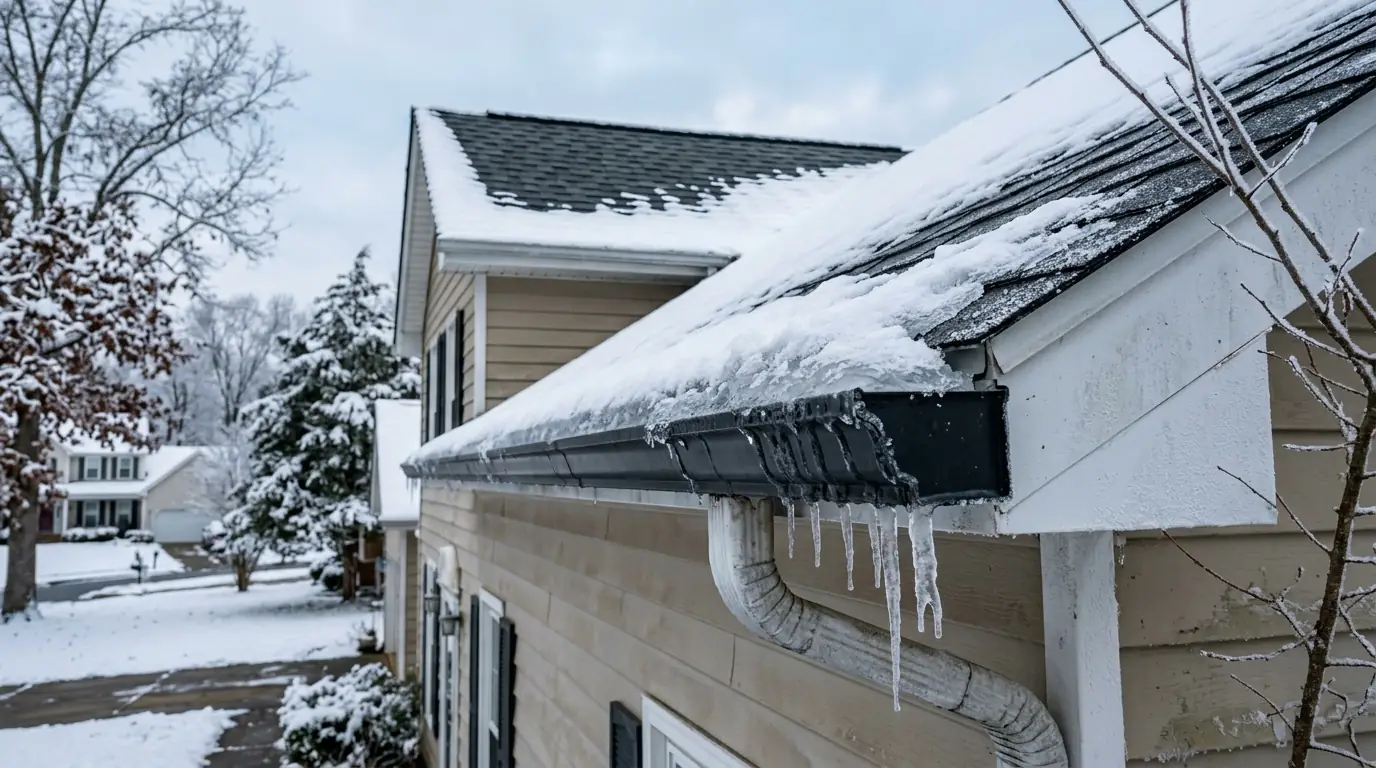
How to tell without a ladder
Paint blistering or peeling along the roof edge is the earliest visible sign. Board that has been wet for a long time cannot hold a finish, and the paint gives up before the timber does.
Hangers pulling out repeatedly is the second. If the same section has been refastened more than once, the wood rather than the fixing is the problem.
A visible dip in the gutter line is the third. A run follows the board it hangs from, so a line that waves is usually reporting on the timber rather than the metal.
Why it happens behind a working gutter
Water gets behind a run more often than into it. A trough that has tipped slightly away from the fascia, or one where the back edge sits low, sheds water onto the board rather than into the gutter.
Blocked runs do it too. Once a trough fills, water spills over the rear edge first, which puts it directly against the timber and out of sight from the ground.
Shade decides how fast it progresses. A north facing or canopy covered elevation stays damp for hours longer after every storm, and drying time matters more to timber than rainfall totals do.
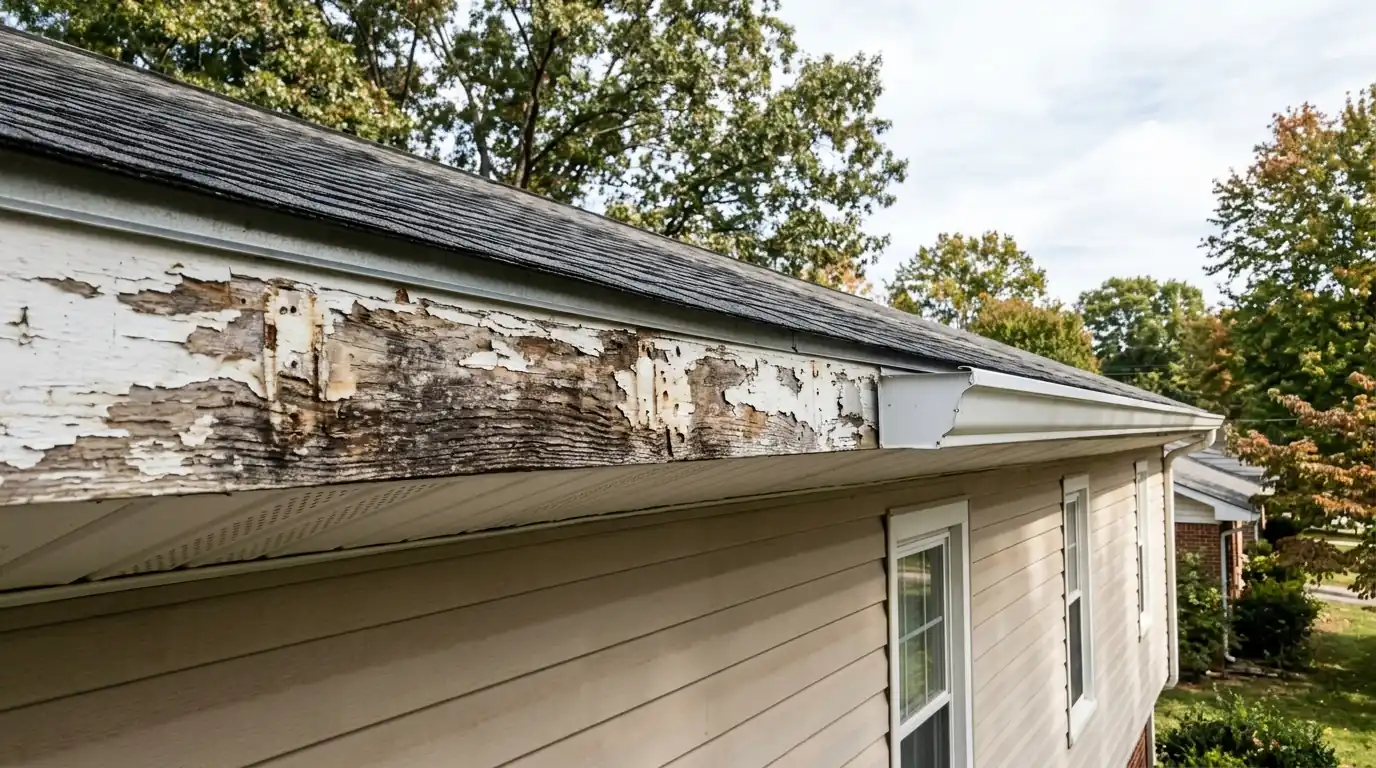
Why capping is the wrong answer
Aluminum or vinyl cladding over sound timber is a legitimate finish. Over timber that is already going, it is a way of not looking at it.
Capping also slows drying. Wood that was drying slowly between storms now stays damp, and the decay accelerates out of sight while the exterior looks freshly finished.
The practical danger is fasteners. A hanger driven through capping into failed wood feels solid, holds for a season or two, and then lets go all at once, usually taking a length of gutter with it.
What proper repair involves
Failed sections get cut back to sound wood rather than to the visibly bad part. Leaving decay a foothold means the same repair again in a few years.
Rafter tails get checked while the board is off. Where decay has reached them the job becomes structural, and that is scoped separately rather than absorbed quietly.
Ventilation gets preserved. Some soffit work closes off airflow into the roof space entirely, which affects the whole roof rather than just the edge, and it is easy to do by accident.
The economics of catching it early
Board repair is priced by the foot and it escalates in steps rather than smoothly. A short section replaced early is carpentry. A full elevation is a bigger job. Decay that has reached the rafter tails is structural and it is a different order of cost.
The gap between those steps is years rather than months, which is what makes early inspection worth so much here. There is usually a long window in which the cheap version is still available.
The other economy is sequencing. Board work while a gutter is already off costs considerably less than the same work as a standalone visit, because the run does not have to come down twice.
That is why a replacement quote and a board quote belong in the same conversation. Doing them together is nearly always cheaper than doing them a year apart.
What to take from this
- Blistered paint at the roof edge is the earliest visible sign
- Hangers that pull out repeatedly mean the wood, not the fixing
- Water gets behind a run more often than it overflows the front
- Shaded elevations decay faster because they dry slower
- Capping soft board hides it and traps moisture
- Cut back to sound wood, not to the visibly bad part
- Check rafter tails and preserve soffit ventilation
Questions this raises
Press it. Sound board resists and soft board gives. Blistered paint and hangers that keep pulling out are the other reliable signs.
Only over sound wood. Over timber that is already failing it seals moisture in and hides decay that keeps going underneath.
Yes. Failed sections are cut back to sound wood and replaced, which is usually far cheaper than a full elevation.
Because it is carpentry rather than metalwork, and it escalates once decay reaches the rafter tails.
Services this relates to
Fascia & Soffit Repair
The board itself, cut back and replaced properly.
Gutter Hanger Replacement
Fasteners hold only once the wood behind is sound.
Gutter Slope Correction
Standing water is what keeps the board wet.
Gutter Replacement Service
The cheapest time to fix board is while the run is off.
Gutter Cleaning Service
Clearing before a blocked run starts spilling backward.
Get the board checked
Describe what you see at the roof edge and we will tell you how far the damage runs.