Roof Debris & Leaf Removal in Knoxville, TN
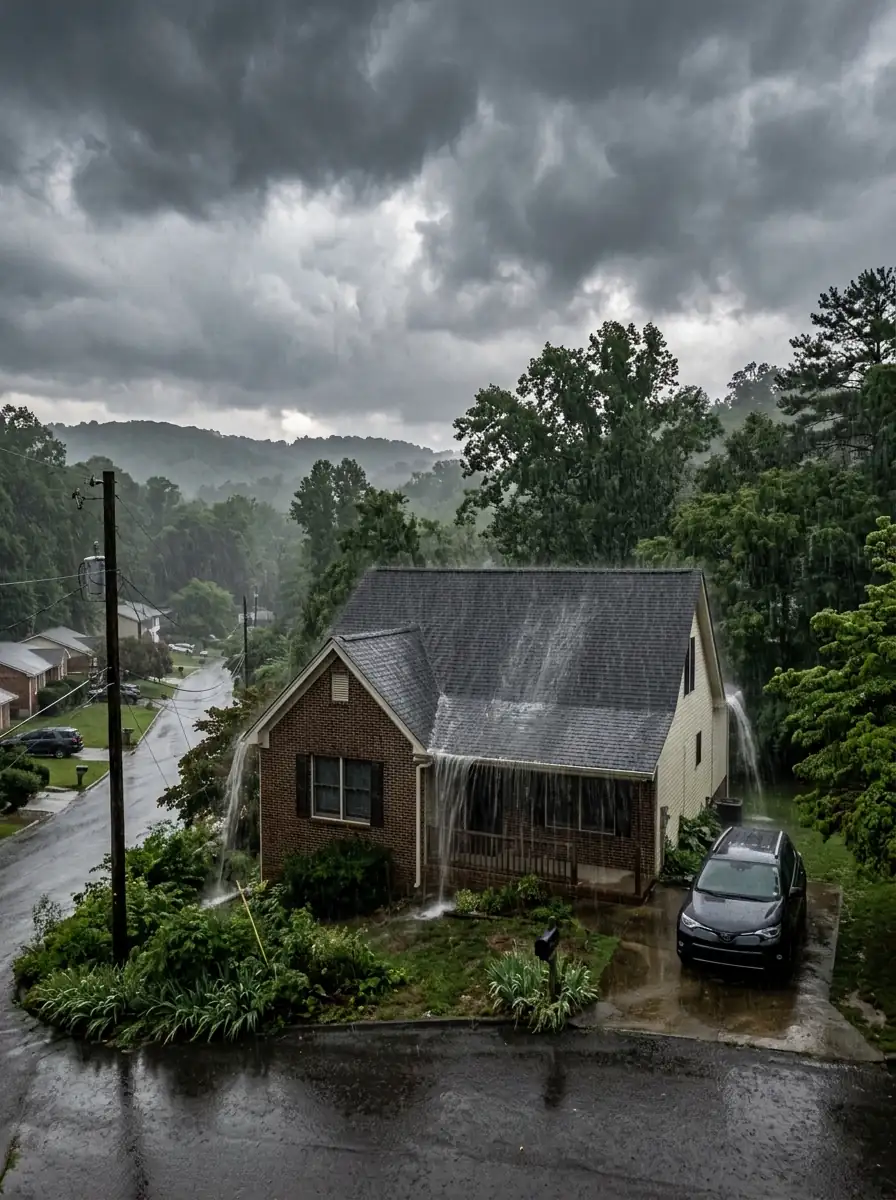
Clearing the gutter while the roof above it is still loaded means the trough refills with the next rain. The roof has to be cleared too.
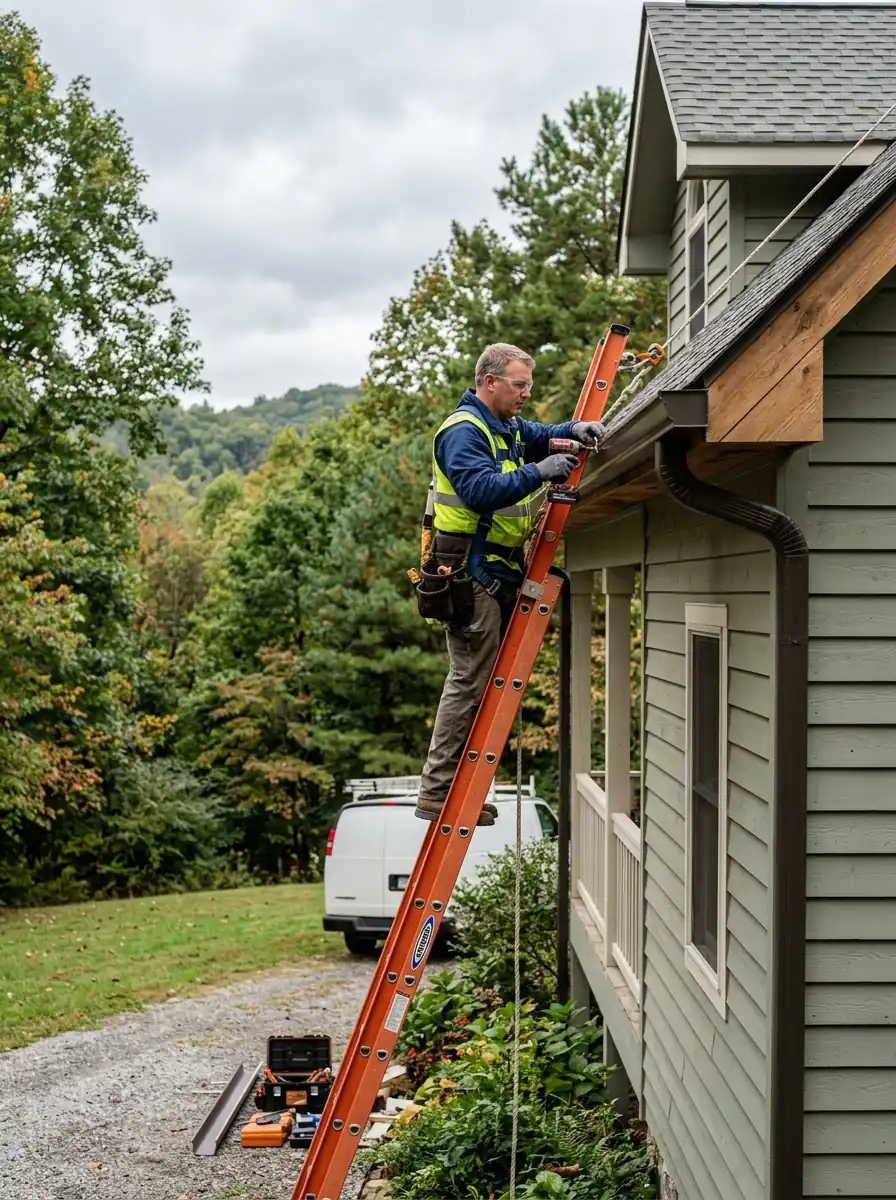
Why roof debris matters as much as gutter debris
Anything sitting on a roof washes into the gutter at the next storm, so a trough cleared under a loaded roof refills almost immediately. Worse, debris held against the covering keeps it damp between storms, and in valleys and behind chimneys that sustained moisture is what shortens a roof's life rather than the water itself.
Where debris actually collects
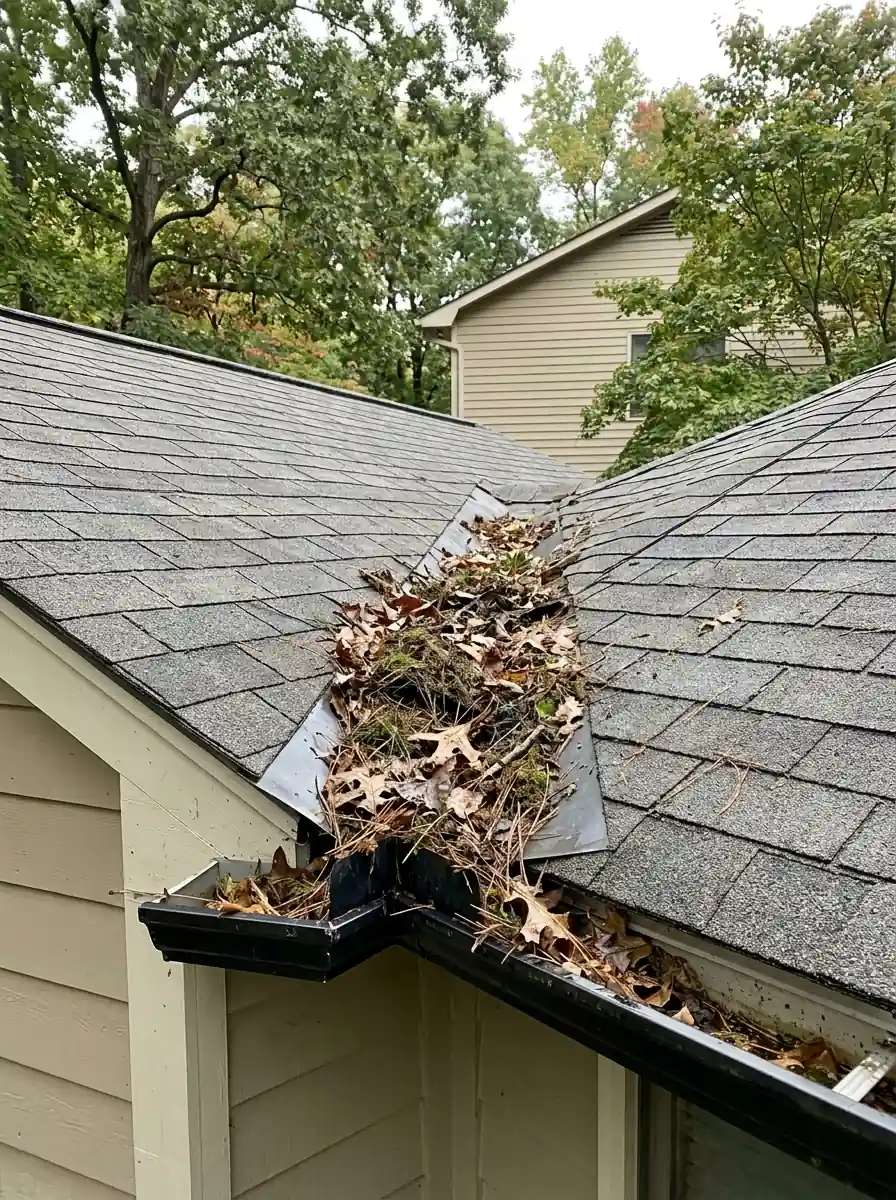
Valleys are the main collection point. Two planes deliver into a narrow channel and anything that does not wash through simply builds up.
Behind chimneys and dormers is the second. Any obstruction on a roof creates a still area on its uphill side where material piles against the flashing.
Low pitch sections are the third. Water moves slowly on a shallow plane, so it drops what it is carrying rather than washing it to the edge.
What clearing the roof changes
The gutter stays clear longer
Nothing is waiting upstream to wash down.
The covering dries between storms
Retained debris is what keeps it damp.
Valleys carry properly
A blocked valley diverts water across the plane instead.
Flashing stays visible
Material packed against flashing hides developing problems.
Moss gets less foothold
Damp retained material is what moss establishes in.
Roof life is protected
Sustained moisture shortens a covering more than rain does.
Problems are spotted
Being on the roof is when lifted shingles and flashing faults are seen.
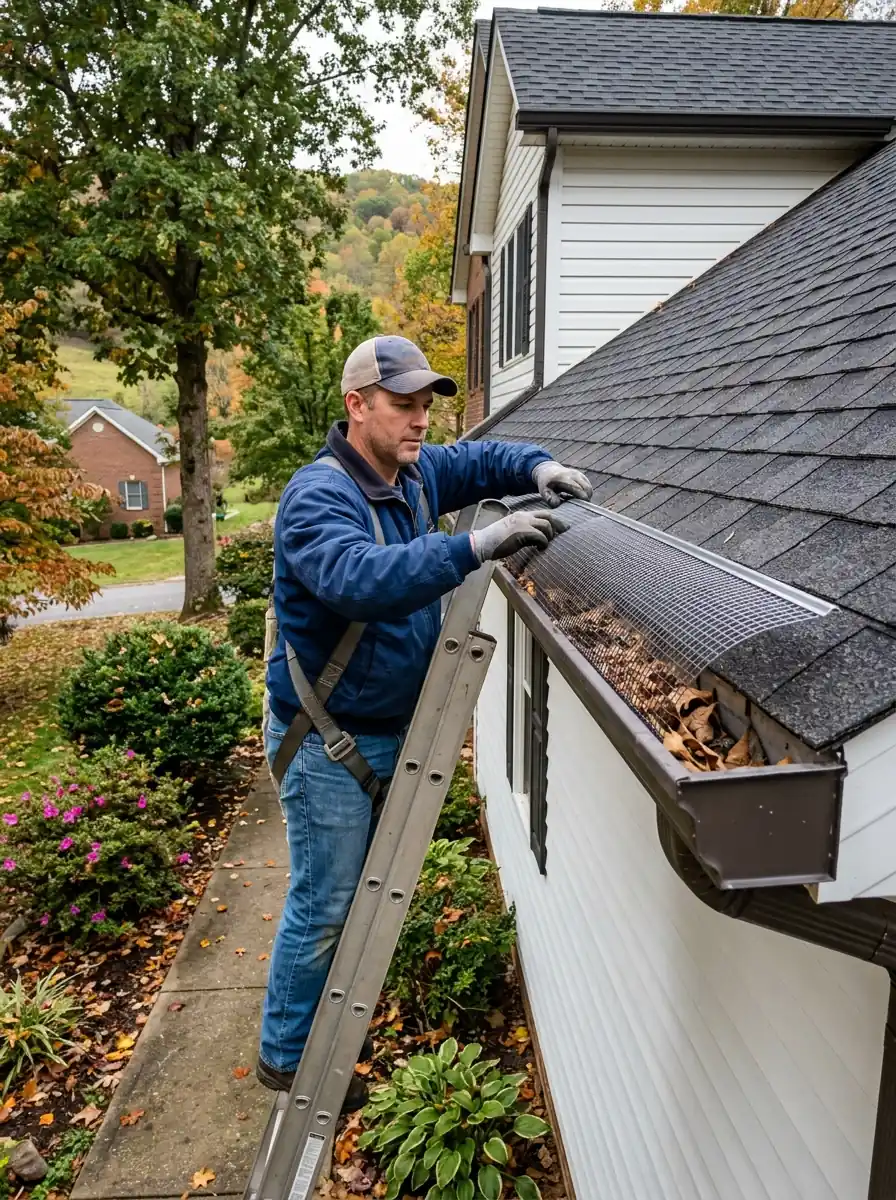
Why blowing debris into the gutter is not clearing it
Blowing roof debris into the gutter is common and it is not clearing. The material moves from a place you can see to a place you cannot, and the trough then has to be cleared anyway.
It also concentrates the load. Debris spread across a plane arrives at the gutter gradually; the same material blown down at once packs the outlet immediately.
The correct sequence is roof first, then gutter, with material collected and removed rather than relocated. Doing it the other way round means clearing the trough twice.
What a roof debris visit covers
- Valleys cleared along their full length
- Uphill side of chimneys, dormers and vents cleared
- Low pitch sections checked and cleared
- Debris collected and bagged rather than blown into the gutter
- Flashing inspected while the material is off it
- Gutters cleared afterward, in that order
- All material removed from site, beds and paths left clean
Want the gutters done at the same time?
Clearing both in one visit is the only sequence that actually leaves the system clear.
Signs the roof needs clearing
Visible piles in the valleys
The most obvious sign and the most consequential one.
A gutter that refills within weeks
The roof above it is still loaded.
Debris behind a chimney or dormer
Material packed against flashing holds water there.
Moss or algae on a shaded plane
Sustained damp, usually under retained debris.
Granules collecting in the gutter
Debris abrading the covering as it moves.
Plants growing on the roof
Soil has formed from years of retained material.
Water tracking oddly during rain
Debris is diverting flow across the plane.
What roof debris removal depends on
Roof area and pitch
The main drivers. Steep roofs need different access.
Debris load
Years of accumulation takes far longer than a seasonal clear.
Number of valleys
Each one is cleared along its full length by hand.
Obstructions
Chimneys, dormers and vents each create a collection point.
Roof covering type
Some coverings limit how they can be walked and worked.
Height and access
Staging on a three story roof is a different job.
Whether gutters are included
Doing both in one visit costs less than two visits.
Roof debris removal commonly plans at $180 to $460 depending on area, pitch and accumulation, and less per visit when combined with gutter clearing. Planning ranges rather than quotes.
How a clearing visit runs
You describe the roof
Pitch, covering, and how long since it was last cleared.
Access is planned
Some roofs are walked, others are worked from the edge.
Valleys are cleared first
The main collection point and the highest priority.
Obstructions are cleared
Uphill of every chimney, dormer and vent.
Material is collected
Bagged and removed rather than blown into the gutter.
Flashing is inspected
While it is visible, which is rarely.
Gutters follow
Cleared afterward, in that order, and everything hauled away.
Clearing the gutter only against clearing both
| What it involves | Doing it yourself | Bringing us in |
|---|---|---|
| How long the gutter stays clear | Weeks, until the roof washes down | Through the season, because nothing is waiting upstream |
| The covering | Stays damp under retained material | Dries between storms as it should |
| Valleys | Blocked and diverting water across the plane | Carrying as designed |
| What is found | Nothing, since nobody was on the roof | Lifted shingles and flashing faults spotted |
How long roof clearing takes
A single story roof with moderate accumulation is usually two to three hours.
Heavy accumulation on a complex roofline takes most of a day, particularly where several valleys are packed.
Combining roof and gutter clearing in one visit adds less time than booking them separately, because the access is already set up.
Knoxville canopy and what it drops
The hardwood canopy is what makes this a real service here rather than an occasional one. Oak, maple, sweetgum and tulip poplar all shed heavily across Knox County.
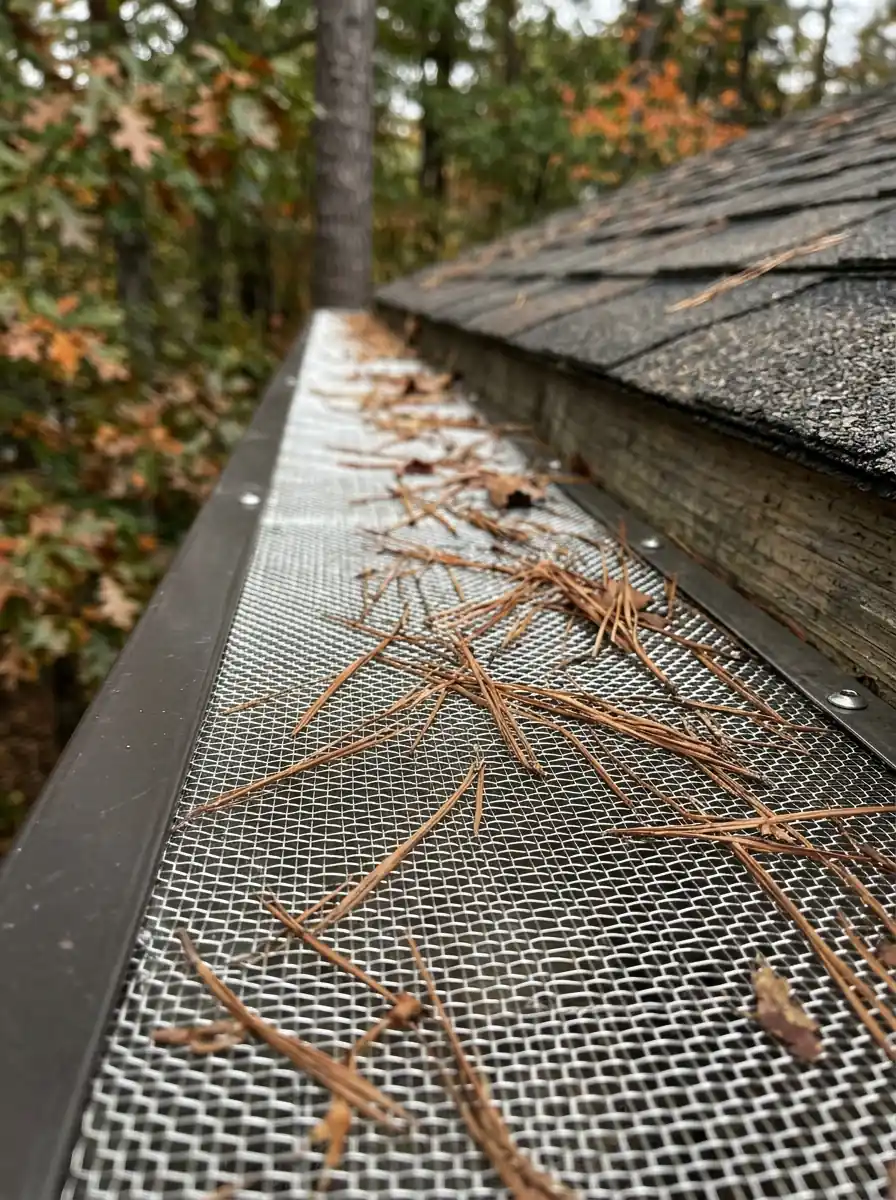
Under pine and hemlock the problem is continuous rather than seasonal. Homes in Mount Olive, Lindbergh Forest and the wooded lots off Northshore accumulate needles every month of the year.
Valleys are where it concentrates on the older housing stock. Porch roofs and rear additions in Old North Knoxville and Island Home Park create valleys that collect far more than the original roof ever did.
Where we take roof debris & leaf removal calls
Roof Debris & Leaf Removal is available across these Knoxville area ZIP codes and the towns around them.
- Bearden (37919)
- West Hills (37909)
- Fountain City (37918)
- Sequoyah Hills (37919)
- Cedar Bluff (37923)
- Hardin Valley (37932)
- Karns (37931)
- Halls Crossroads (37938)
- Powell (37849)
- South Haven (37920)
- Downtown Knoxville (37902)
- Holston Hills (37914)
- Rocky Hill (37919)
- Inskip (37912)
- Farragut (37934)
- Maryville (37804)
- Oak Ridge (37830)
- Alcoa (37701)
How we clear a roof
Roof first, then gutter
The only sequence that leaves the system genuinely clear.
Collected, not blown down
Blowing debris into the trough relocates the problem and packs the outlet.
Valleys done by hand
The main collection point deserves more than a pass with a blower.
Flashing looked at
Being on the roof is the moment to see what is normally hidden.
Roof debris questions from Knox County
Because anything left on the roof washes into the gutter at the next storm. A trough cleared under a loaded roof refills within weeks.
Yes, mainly through sustained damp. Material held against the covering keeps it wet between storms, and that shortens its life more than rain does.
Where the pitch and covering allow. Some roofs are worked from the edge instead, and we will tell you which yours is.
No. It is collected and removed. Blowing it down relocates the problem and packs the outlets immediately.
Under heavy canopy, at the same interval as the gutters. On open ground it is rarely needed at all.
Light moss can be cleared with the debris. Established growth is a different treatment and worth discussing separately.
Yes, plainly, along with whether it belongs with a roofer rather than with us.
It should be, and it costs less than two visits because the access is already set up.
Work that goes with roof clearing
Gutter Cleaning Service
The second half of the same visit, in the right order.
Gutter Maintenance Plans
Scheduled visits covering both roof and trough.
Roof Valley Drainage Repair
Valleys are where debris and water both concentrate.
Gutter Guard Installation
Reducing what reaches the trough in the first place.
Gutter Inspection Service
A documented check while access is already set up.
Get the roof cleared as well
Tell us the pitch and how long since it was last done, and we will clear the roof before the gutters rather than after.