Downspout Installation in Knoxville, TN
Downspouts decide whether a gutter drains or backs up. Size and position are worked out from roof area, not from where the old ones happened to be.
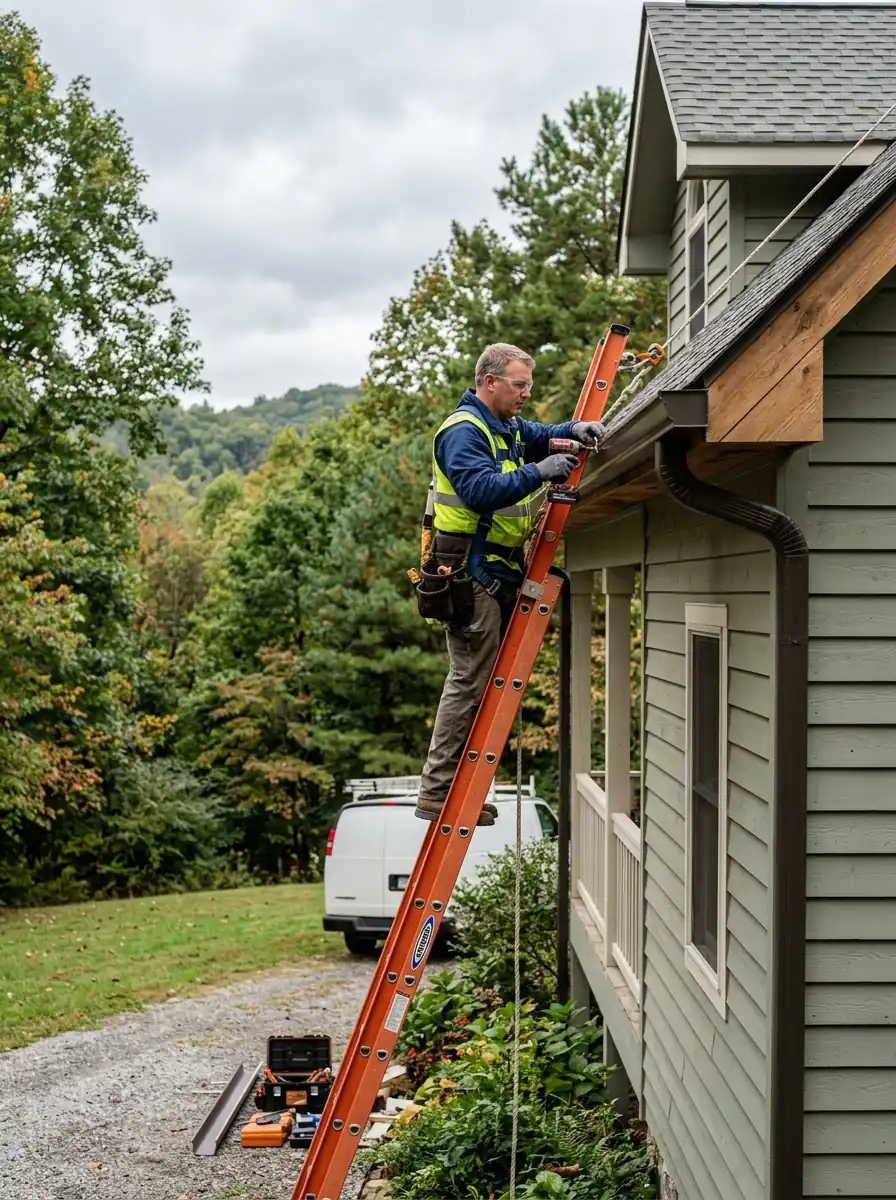
Why downspout size matters more than trough size
Water leaves a gutter only as fast as the leaders can take it. A six inch trough fed into two by three inch downspouts will still overflow in a Knoxville summer storm, because the restriction is at the outlet rather than in the trough. Roof area decides how many leaders you need and what size they should be.
Sizing and placing leaders
The rule of thumb here is one downspout for roughly every thirty five feet of run, and closer than that where the roof above is steep or heavily valleyed.
Size follows area. Two by three inch leaders suit modest single story roofs. Three by four inch moves substantially more water and belongs on larger or steeper roofs.
Placement is the part most often got wrong. A leader at the wrong end of a run forces water uphill, and a leader discharging onto a walkway creates a winter problem that nobody wanted.
Adding a leader yourself against having it placed
| What it involves | Doing it yourself | Bringing us in |
|---|---|---|
| Choosing the size | Matching whatever was there | Calculated from roof area, pitch and valley count |
| Choosing the position | Wherever the pipe reaches | At the low end of the run, away from paths and doors |
| Fixing to the wall | Two straps and hope | Strapped at proper intervals for the material and height |
| The discharge point | Straight onto the ground | Extension, emitter or buried line decided at the same time |
What a downspout installation depends on
Number of leaders
The main driver. Adding one to an existing run is a short visit.
Leader size
Three by four inch costs more per foot than two by three and is often the right call.
Height of the run
Two and three story drops need more material and more strapping.
Wall material
Brick and stone take longer to fix into than siding.
Outlet cutting
Adding a new outlet into an existing trough is hand work at height.
Discharge arrangement
An extension, an emitter or a buried line each price differently.
Color and profile matching
Matching an older or non standard profile takes longer than current stock.
Individual downspout installations commonly plan at $135 to $340 each in this market, more for three story drops and buried discharge. Planning ranges rather than quotes.
What correctly sized leaders change
The trough actually empties
Removing the restriction is what stops mid run overflow.
Less standing water
A run that clears fully holds less weight and less debris.
Discharge lands where you chose
Away from paths, doors and the foundation.
Fewer blockages
Larger leaders pass the stem and needle debris that jams narrow ones.
Ice has less to work with
A run that drains does not hold water through a freeze.
Straps that hold
Correct intervals stop the swinging that tears out fixings.
Ready for buried drainage
A properly placed leader is the starting point for routing water away.
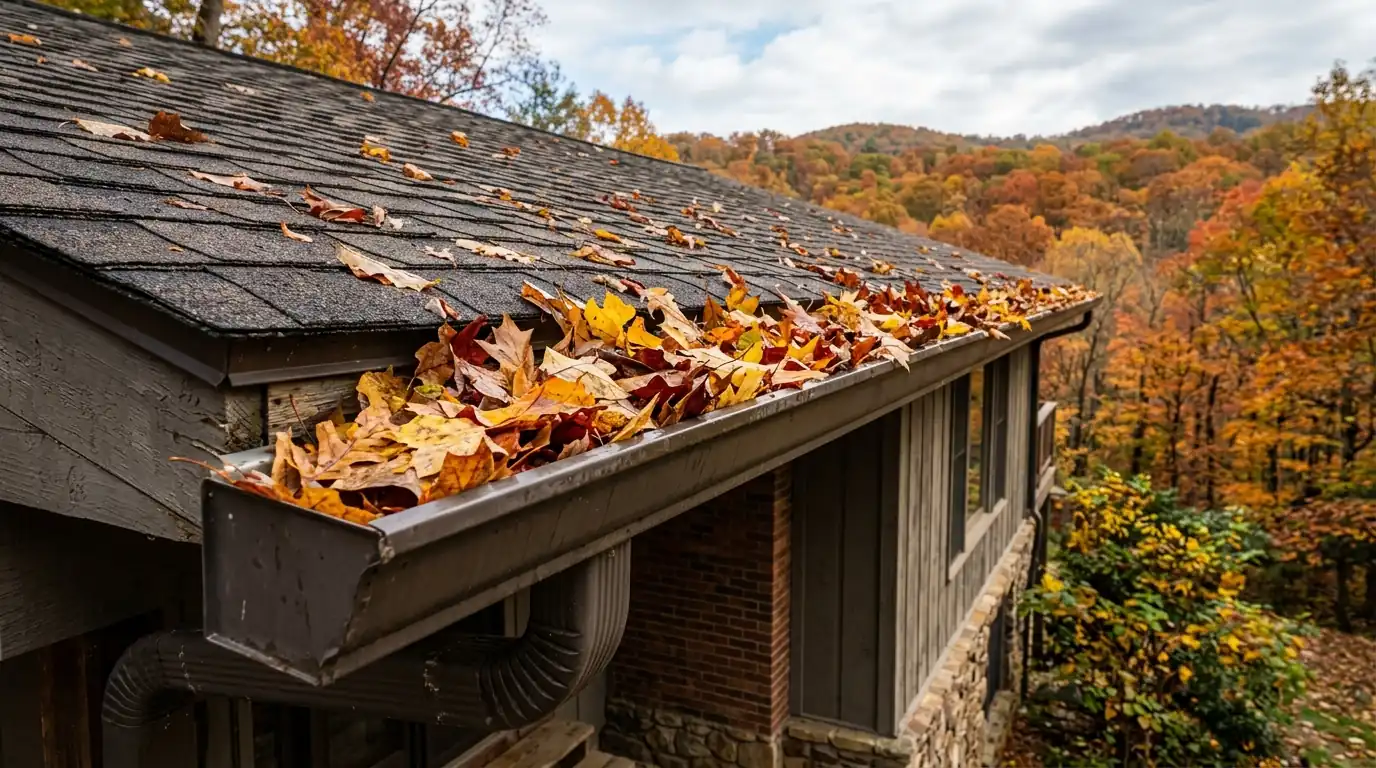
Water pooling where the leader lands?
Placement is only half of it. Where the discharge goes is the other half.
Where a downspout should actually go
The low end of the run is the starting point, because water should reach the leader with gravity rather than against it. That single decision solves more overflow problems than any increase in trough size.
After that the constraints are practical. Leaders should not discharge across a walkway, beside a door, or onto a driveway that ices in January. They should not land on a slope that runs back toward the house either.
Appearance matters too, and it is usually compatible. A leader tucked at a corner or against a downpipe line reads as part of the house rather than an addition, and there is nearly always a position that satisfies both.
Signs the leaders are the bottleneck
Overflow mid run in heavy rain
The trough is filling faster than the leaders can empty it.
One downspout on a long elevation
Thirty five feet is the working limit, and many runs exceed it.
Water backing up at the outlet
A restriction at the opening rather than in the trough.
Leaders that block every season
Narrow two by three inch pipe jams on stems that larger leaders pass.
A downspout at the high end
Water is being asked to travel uphill to reach it.
Ice on a path below a leader
Discharge is landing somewhere it should not.
Straps pulled out of the wall
Under strapped leaders swing and destroy their own fixings.
What a downspout installation includes
- Roof area, pitch and valley count measured for each elevation
- Leader count and size calculated rather than copied
- Positions chosen at the low end of each run and away from paths and doors
- Outlets cut cleanly into the trough and sealed
- Leaders hung with straps at proper intervals for height and material
- Elbow and discharge arrangement fitted at grade
- Water run through every new leader with the discharge watched
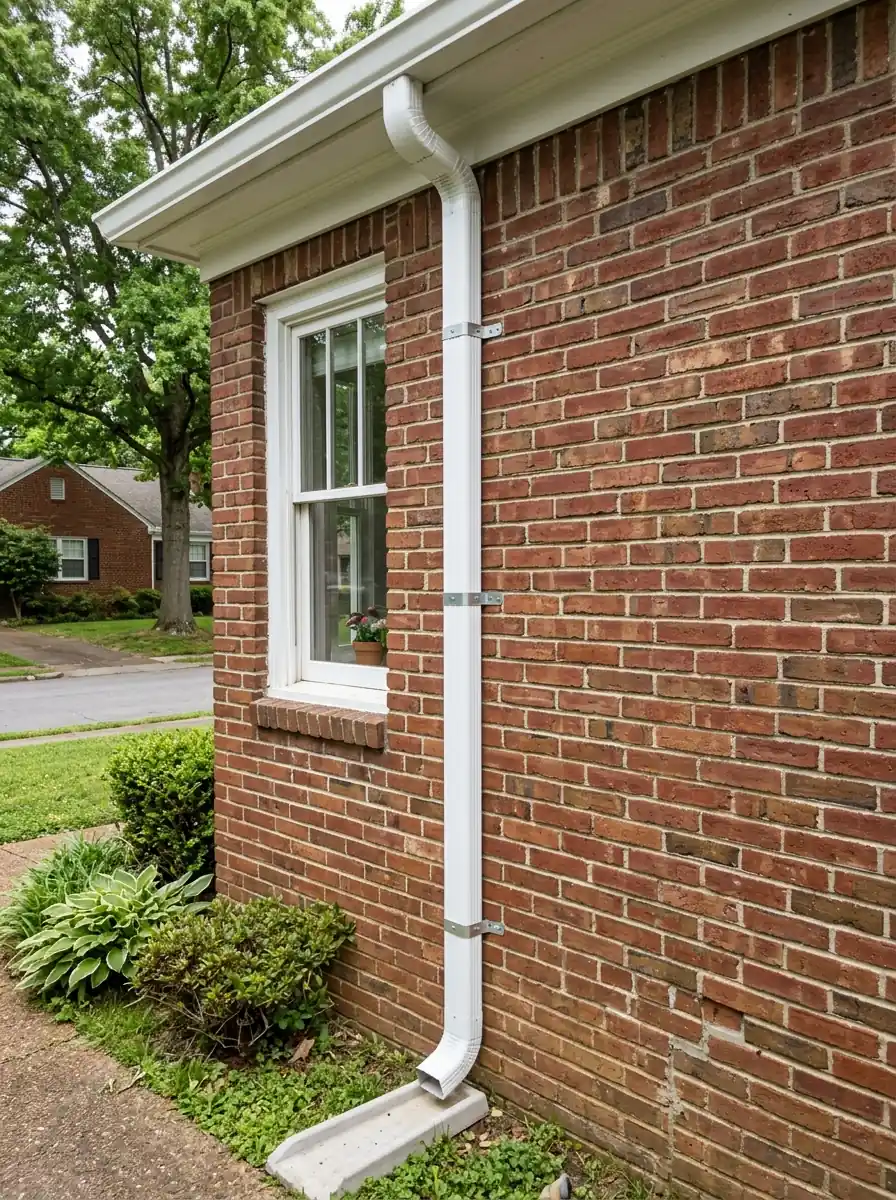
From measurement to proven discharge
You describe the problem
Where the overflow happens and how many leaders the elevation has now.
We measure the roof
Area, pitch and valleys for each plane feeding the run.
Count and size are calculated
How many leaders and what size, with the reason explained.
Positions are agreed
Marked out so you can see where each one will land.
Outlets are cut
Cleanly into the trough and sealed rather than punched.
Leaders are hung and strapped
At intervals suited to the height and the wall material.
Discharge is proved
Water through each leader with the outlet watched at grade.
How long downspout work takes
Adding a single leader to an existing run is usually two to three hours including the flush test.
Fitting leaders across a full replacement is part of that day rather than a separate visit.
Three story drops and brick fixing take noticeably longer than a single story siding run, which is worth knowing when comparing figures.
Knoxville roofs and leader counts
The commonest fault we correct here is leader count on large modern roofs. Homes in Hardin Valley, Gettysvue and Farragut frequently carry two leaders where the area calls for four.
In the older parts of the city the fault reverses. Bungalows in Island Home Park and Old Sevier often have adequate leader counts but discharge arrangements from another era, emptying straight onto the base of the wall.
Winter placement matters more here than people expect. Knoxville gets enough freeze nights that a leader discharging across a driveway or a front path produces a genuine hazard several times each season.
Where we take downspout installation calls
Downspout Installation is available across these Knoxville area ZIP codes and the towns around them.
- Bearden (37919)
- West Hills (37909)
- Fountain City (37918)
- Sequoyah Hills (37919)
- Cedar Bluff (37923)
- Hardin Valley (37932)
- Karns (37931)
- Halls Crossroads (37938)
- Powell (37849)
- South Haven (37920)
- Downtown Knoxville (37902)
- Holston Hills (37914)
- Rocky Hill (37919)
- Inskip (37912)
- Farragut (37934)
- Maryville (37804)
- Oak Ridge (37830)
- Alcoa (37701)
What we get right on placement
Count and size are calculated
Leader capacity is worked out from roof area rather than copied from what was there.
Placed at the low end
Water reaches the leader with gravity instead of against it.
Discharge decided at the same time
Where the water lands is part of the job, not an afterthought.
Strapped for the wall it is on
Brick, stone and siding each take different fixing intervals.
Downspout questions from Knox County
Roughly one for every thirty five feet of run, and more where the roof above is steep or has several valleys feeding one line.
Three by four moves substantially more water and blocks far less often. On large or steep roofs here it is usually the right answer.
Yes. A new outlet is cut into the existing trough, sealed, and the leader hung from there.
Across a walkway, beside a door, onto a driveway that ices, or anywhere the ground runs back toward the house.
Yes, and they suit half round profiles on older homes. Capacity depends on the cross section rather than the shape.
Placement follows the roof, not preference. Where appearance matters we will find the least visible position that still works.
Three by four inch is visibly bigger, though color matching makes far more difference to how it reads than size does.
Not always, but on clay soil an extension or a buried line is what stops the water returning to the foundation.
Work that belongs with new leaders
Underground Downspout Drainage
Carrying the discharge away below ground.
Downspout Extension Installation
The surface option where burying is not practical.
Downspout Repair Service
Repairing leaders that have split, crushed or pulled loose.
Seamless Gutter Installation
New leaders fitted as part of a full new run.
Gutter Slope Correction
A run that ponds never reaches its leader properly.
Get the leaders sized properly
Tell us where the overflow happens and we will measure the roof and work out what the elevation actually needs.