Gutter Services in Inskip (37912)
Gutter installation, repair and drainage across Inskip, 37912, on the flat blocks either side of Inskip Road.
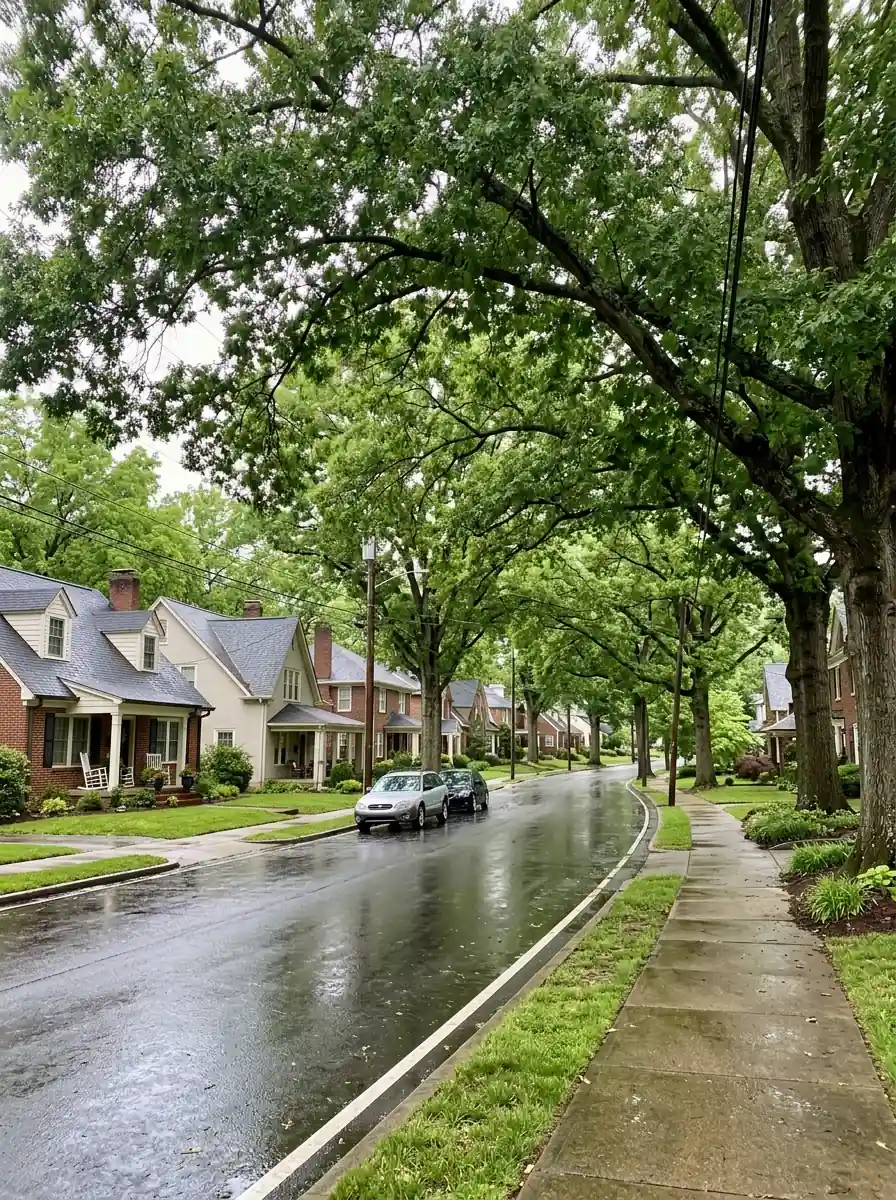
No crawlspace to absorb the mistake
A good share of Inskip, 37912, is built on slab rather than over a crawlspace, and that changes what poor drainage does. On a crawlspace house, water reaching the foundation has somewhere to go and somewhere to be noticed before it reaches the living space. On a slab there is no such buffer. The floor is the foundation, and water at the wall is water at the floor edge.
Flat blocks and slab construction
The housing is 1940s to 1965 single story, a significant proportion built on concrete slab rather than a raised floor.
The blocks are flat with shallow front setbacks, so there is limited distance between the wall and the street side of the property.
The combination is unforgiving. Little fall to work with, little distance to route through, and no crawlspace between the ground and the floor.
What we deal with in 37912
No crawlspace buffer
Water at the wall is water at the floor edge.
Damp appearing inside at the perimeter
Slab edge moisture shows up as flooring damage.
Shallow front setbacks
Very little distance available to route water forward.
Flat blocks with minimal fall
Nowhere obvious downhill to send discharge.
Slab edge undercutting
Repeated discharge washes material from the slab perimeter.
Landscaping built up against the wall
Beds raised above the slab edge trap water there.
Gutter work we do most in Inskip
Downspout Extension Installation
Getting the discharge clear of the slab perimeter.
Underground Downspout Drainage
Routing to the only points on a flat lot that can take it.
Yard Drainage Correction
Regrading where beds have been built up against the wall.
Downspout Installation
Leaders placed where the ground can actually take the water.
Gutter Slope Correction
An overflowing run puts water straight at the slab edge.
Gutter Cleaning Service
Clearing so overflow is not the reason water reaches the wall.
Gutter Repair Service
Repairs on runs discharging at the perimeter.
Why slab houses are less forgiving
The forgiveness a crawlspace provides is easy to underestimate until you work on houses without one. A raised floor gives water somewhere to sit, air to move through, and usually a few years of warning before anything inside is affected.
A slab has none of that. The concrete floor sits directly on the ground, and moisture arriving at the perimeter travels along the slab edge and into whatever flooring is laid on it.
That means the tolerance for poor discharge is much lower here. On a crawlspace house a leader emptying four feet from the wall is not ideal; on a slab house on flat ground it is the direct cause of the damp patch in the corner of the back bedroom.
Raised beds are the compounding factor and they are extremely common. Landscaping built up over the years against the wall puts soil above the slab edge, which holds water exactly where it should not be and hides the problem while it does it.
The flat ground limits the options, which is why the answer is usually distance rather than gradient. Getting discharge well away from the perimeter matters more than finding somewhere downhill, because there is no meaningful downhill available.
Interior symptoms are worth taking seriously here rather than watching. Flooring lifting at a perimeter wall, or a persistent musty smell in one corner, on a slab house on flat ground is very often a drainage problem rather than a plumbing one.
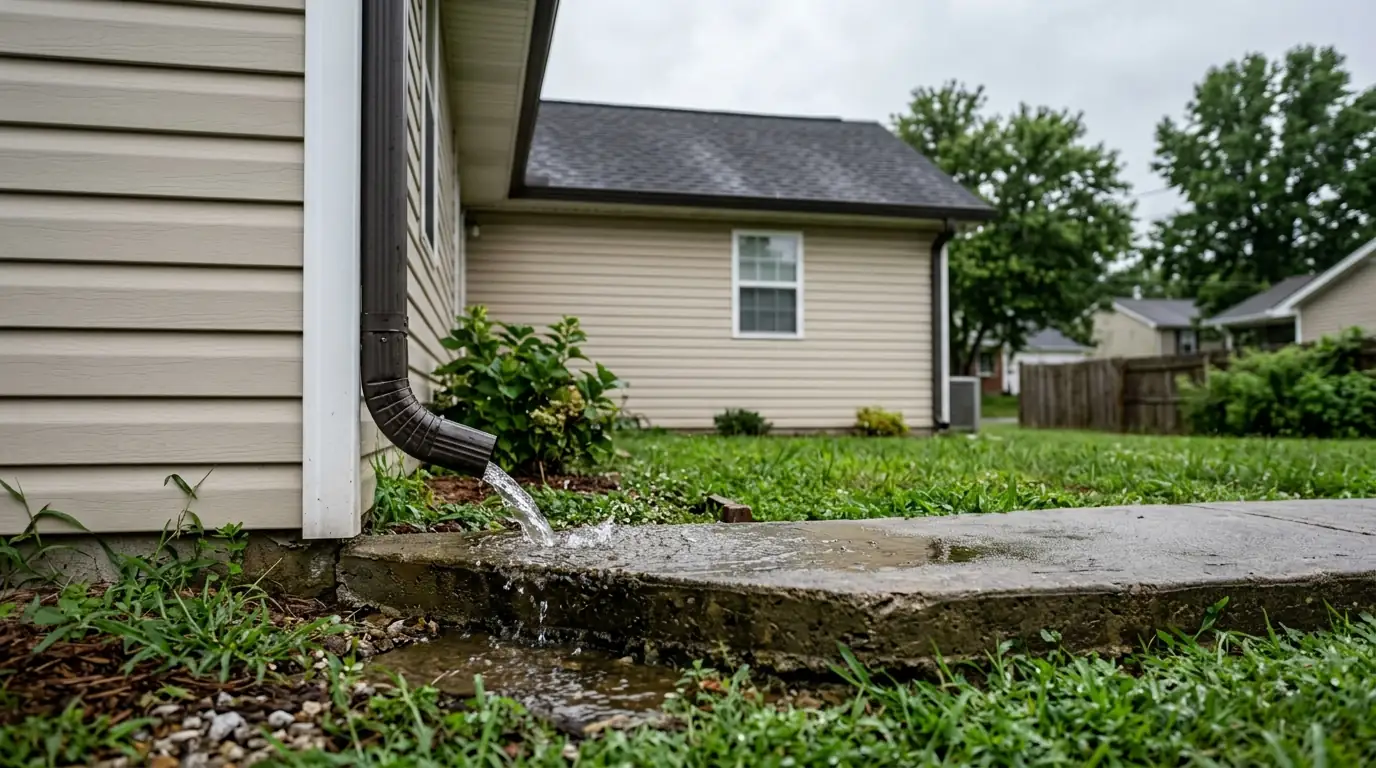
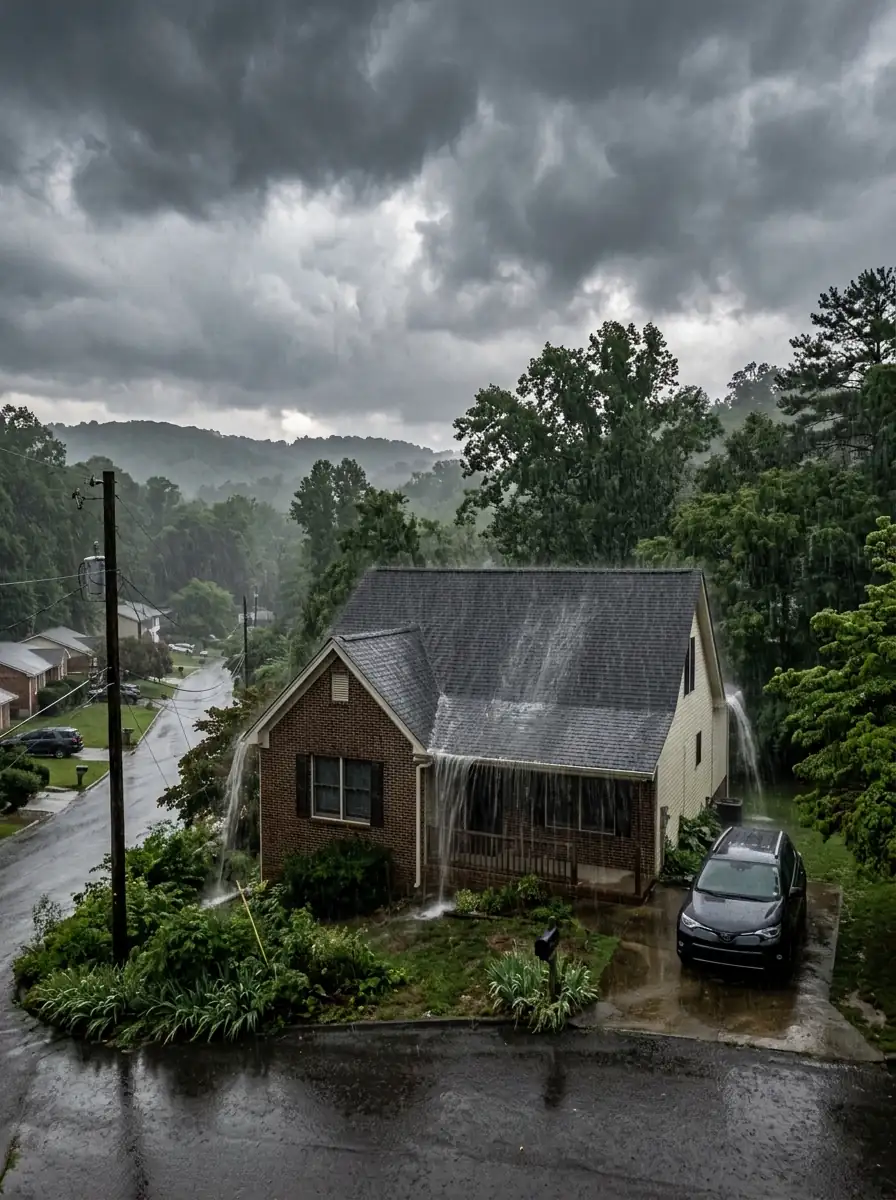
Flooring lifting at an outside wall?
On a slab house that is very often drainage rather than plumbing.
Why Inskip homeowners call us back
Slab construction treated as lower tolerance
There is no crawlspace to absorb a discharge mistake.
Raised beds flagged
Soil built up above the slab edge holds water exactly where it hurts.
Distance prioritized over gradient
On flat ground there is no meaningful downhill to use.
Inskip gutter questions
Considerably. There is no crawlspace between the ground and the floor, so water at the wall is water at the floor edge with no buffer.
On a slab house on flat ground it very often is. Water reaching the perimeter travels along the slab edge into the flooring.
Yes, and it is very common here. Soil built up above the slab edge holds water exactly where you least want it.
Distance rather than gradient. Getting the discharge well clear of the perimeter matters more than finding a fall that is not there.
Arrange an Inskip visit
Tell us whether the house is on slab and where the damp shows, and we will look at the perimeter as well as the roof.