Gutter Services in Oak Ridge (37830)
Gutter installation, repair and drainage across Oak Ridge, TN, 37830, roughly half an hour northwest of Knoxville.
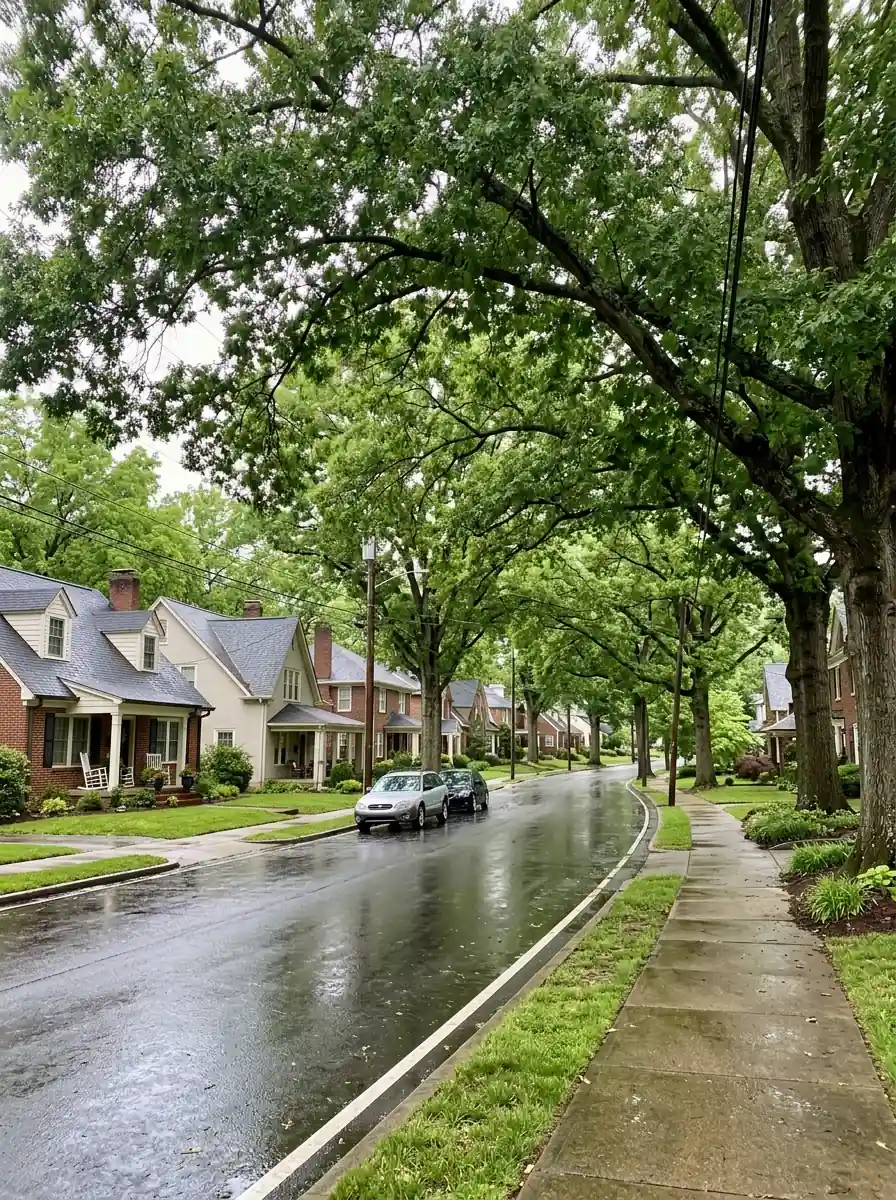
A city with one birthday
Oak Ridge, TN, 37830, was built almost entirely between 1943 and 1950, at speed and to standard designs. The original cemesto houses were designed for wartime economy rather than for longevity, and one detail matters more than any other for drainage: the eaves are shallow. Water leaving a shallow eave in a wind arrives at the wall rather than in the trough.
Wartime housing and postwar additions
The original housing is 1943 to 1950 wartime construction, standard designs built at speed with economical detailing.
Postwar and later additions have filled in around it, so the city carries several distinct build periods on ridge and valley terrain.
The wartime stock is the distinctive part. Shallow eaves and modest overhangs are consistent across whole neighborhoods.
What we deal with in Oak Ridge
Shallow original eaves
Wind driven rain skips past a short overhang.
Whole neighborhoods aging together
The city was built in a single compressed period.
Ridge and valley terrain
Properties sit at varying grades between the ridges.
Economical original detailing
Wartime construction was not built for a long roof edge life.
Later additions on original houses
Extensions added across the following decades.
Gutter work we do most in Oak Ridge
Gutter Replacement Service
Replacement on runs that have reached the end together.
Fascia & Soffit Repair
Board work where a shallow eave has been wetted for decades.
Gutter Cleaning Service
Clearing on housing that sits under mature planting now.
Seamless Gutter Installation
New runs sized properly for the original roof.
Gutter Repair Service
Repairs where the trough is genuinely still sound.
Gutter Slope Correction
Fall correction on runs that have settled.
Downspout Installation
Leaders on original houses and their later additions.
Shallow eaves on wartime construction
The shallow eave is the detail that defines gutter work here. A generous overhang throws water clear of the wall even in wind; a short one does not, so rain reaching the roof edge at an angle bypasses the trough entirely.
The consequence appears on the wall and the board rather than in the gutter. Owners frequently describe a damp problem and assume the run is failing when the run is performing exactly as it was always going to.
There is a limit to what a gutter can fix there, and it is honest to say so. Correct positioning and sizing help, and on some elevations a slightly deeper trough set properly catches noticeably more, but the overhang itself is roof construction.
The compressed build period means everything else ages together. Because the city went up in seven years, board, fasteners and original runs across whole neighborhoods reach the same point within the same handful of years.
Later additions complicate individual houses. Extensions added through the following decades brought their own roof planes and their own drainage decisions, and the junctions between eras are where water tends to go wrong.
The terrain adds the last variable. Ridge and valley ground means neighboring properties can sit at genuinely different grades, so discharge routing is a per property question rather than a neighborhood one.
Tree cover has changed the picture considerably since the city was built. What went up as cleared ground in the 1940s now carries eighty years of growth, and roofs designed with no canopy in mind sit under mature hardwood on many streets. Clearing frequency here is set by what has grown rather than by anything about the original construction.
Discharge on ridge and valley ground varies house by house in a way it does not in a flat neighborhood. Two properties on the same street can sit at genuinely different grades, so where the water goes after the leader is a per property question rather than something that can be answered for the block.
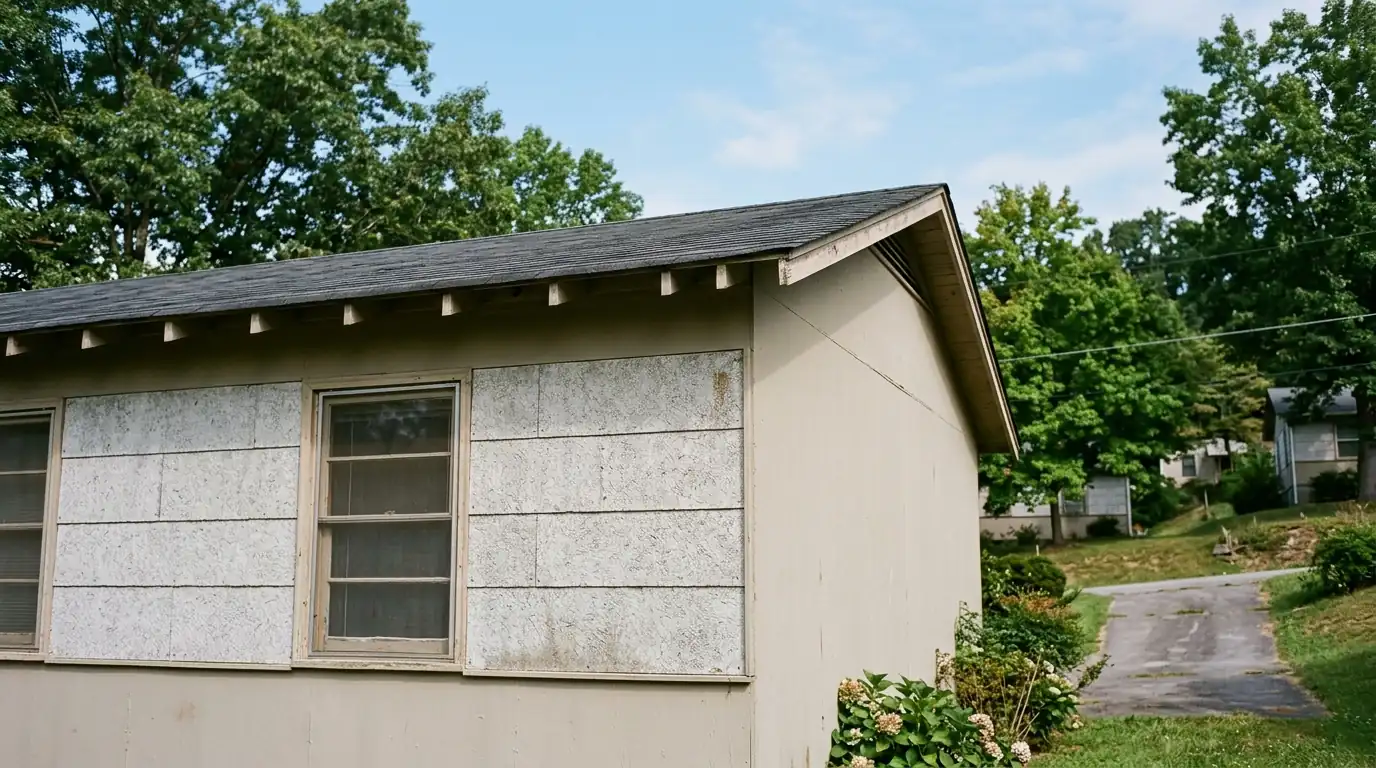
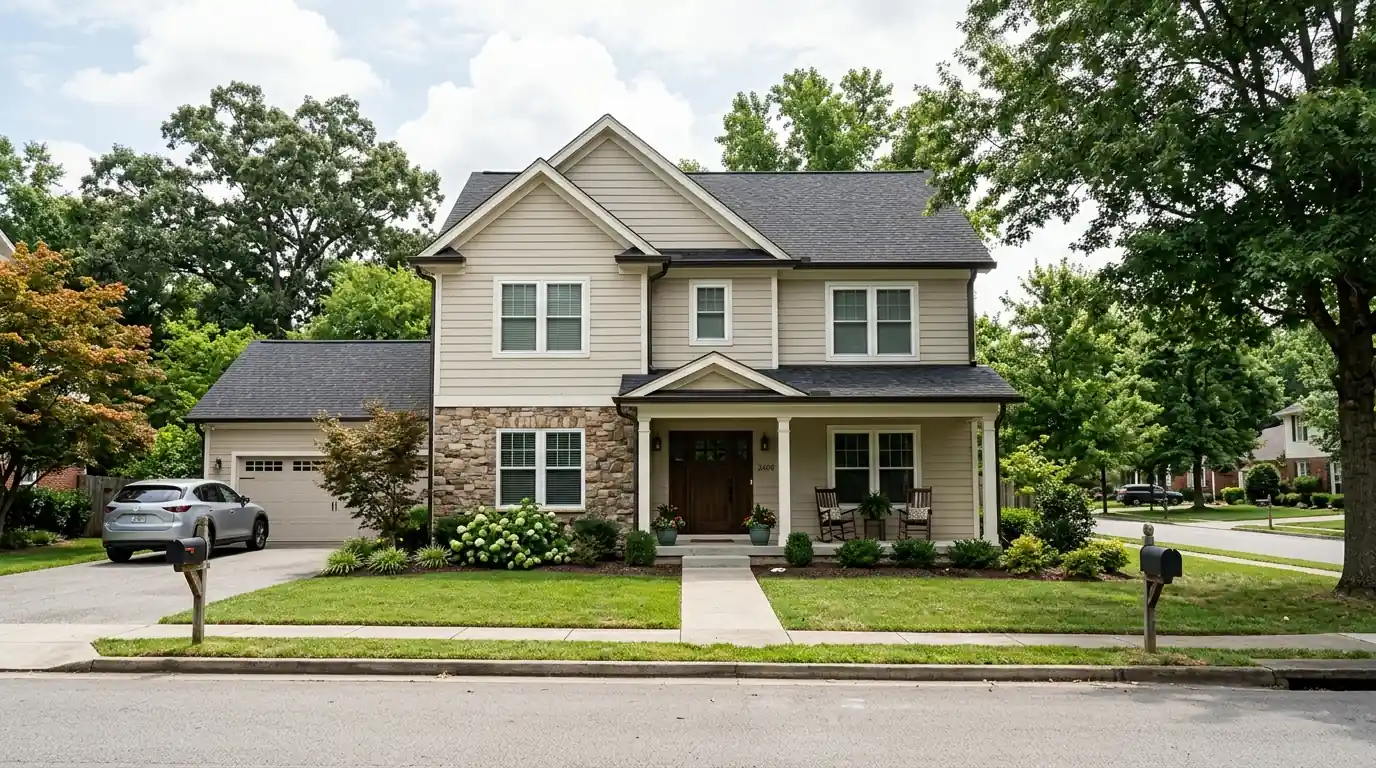
Damp wall with a working gutter?
On a shallow eave the water may be bypassing the trough entirely, which is a different problem.
Why Oak Ridge homeowners call us back
Eave depth accounted for
A short overhang lets wind driven rain past the trough.
Honest about what a gutter cannot fix
The overhang itself is roof construction.
Additions assessed separately
Extensions brought their own drainage decisions.
Oak Ridge gutter questions
Wartime houses here have shallow eaves. Wind driven rain can bypass the trough entirely and reach the wall directly.
It helps at the margin. Correct positioning and sizing catch more, but the overhang itself is roof construction rather than gutter work.
Because the city was built in seven years. Board, fasteners and original runs reach the same point within a few years of each other.
Yes. Additions brought their own roof planes and drainage decisions, and the junctions between eras are where problems concentrate.
Yes, both the original wartime neighborhoods and the later building around them.
Arrange an Oak Ridge visit
Tell us whether the house is original wartime stock and where the damp shows, and we will look at the eave as well as the run.