Yard Drainage Correction in Knoxville, TN
Sometimes the gutter is fine and the ground is the problem. Correcting grade and cutting a swale moves surface water without burying anything.
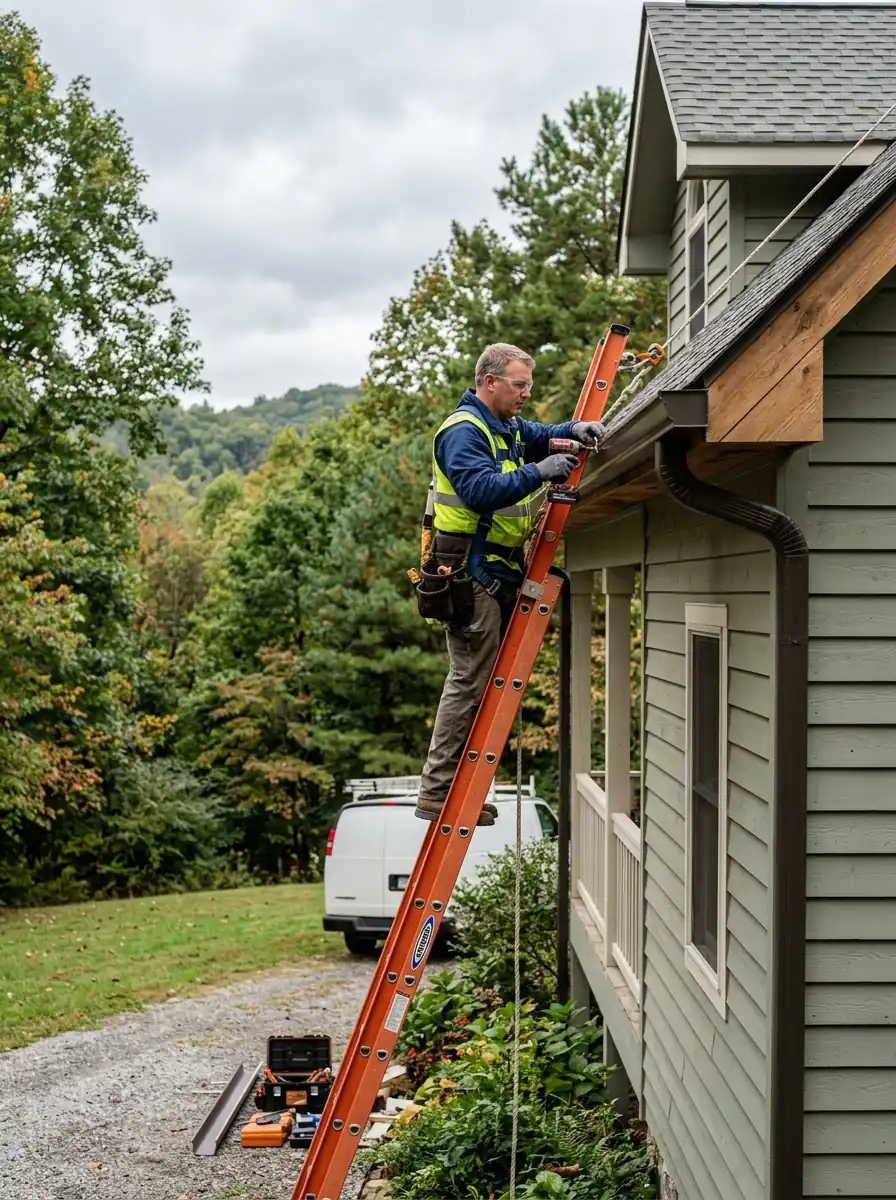
When the ground is the problem
If water reaches the ground correctly and then sits, runs back toward the house, or cuts a channel across the lawn, the fault is the grade rather than the drainage above it. Correcting that means reshaping the surface so water moves where you want, using swales, regrading and protected landing points rather than pipe.
Surface water against groundwater
Surface water runs across the ground. You can see it during a storm, and it is fixed by changing the shape of the ground.
Groundwater sits within the soil. You see it as a permanently soft area that never dries, and it needs a collecting system rather than reshaping.
Most Knoxville properties with a drainage complaint have some of both, which is why the survey comes before the recommendation rather than after it.
What correcting the ground changes
Water leaves rather than sits
The whole point of getting the surface right.
Foundations stay drier
Ground that falls away from the house keeps water off it.
Erosion stops
Controlled flow along a swale does not cut the way concentrated flow does.
Lawn becomes usable
A permanently wet patch dries and stays dry.
Nothing to block
A swale has no pipe to silt up or collapse.
Cheaper than piping in many cases
Reshaping ground can cost less than trenching it.
Boundaries respected
Water is directed to somewhere it is entitled to go.
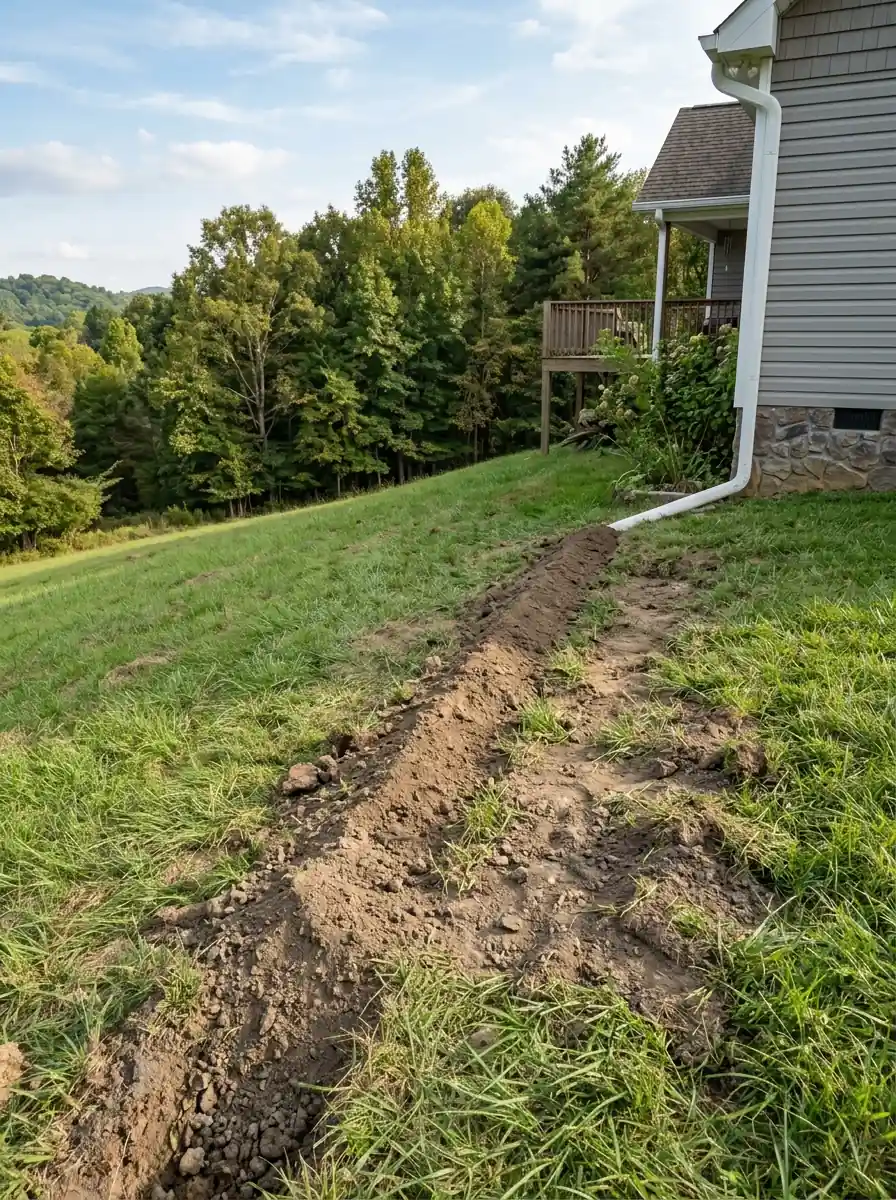
Swales, and why they beat a pipe sometimes
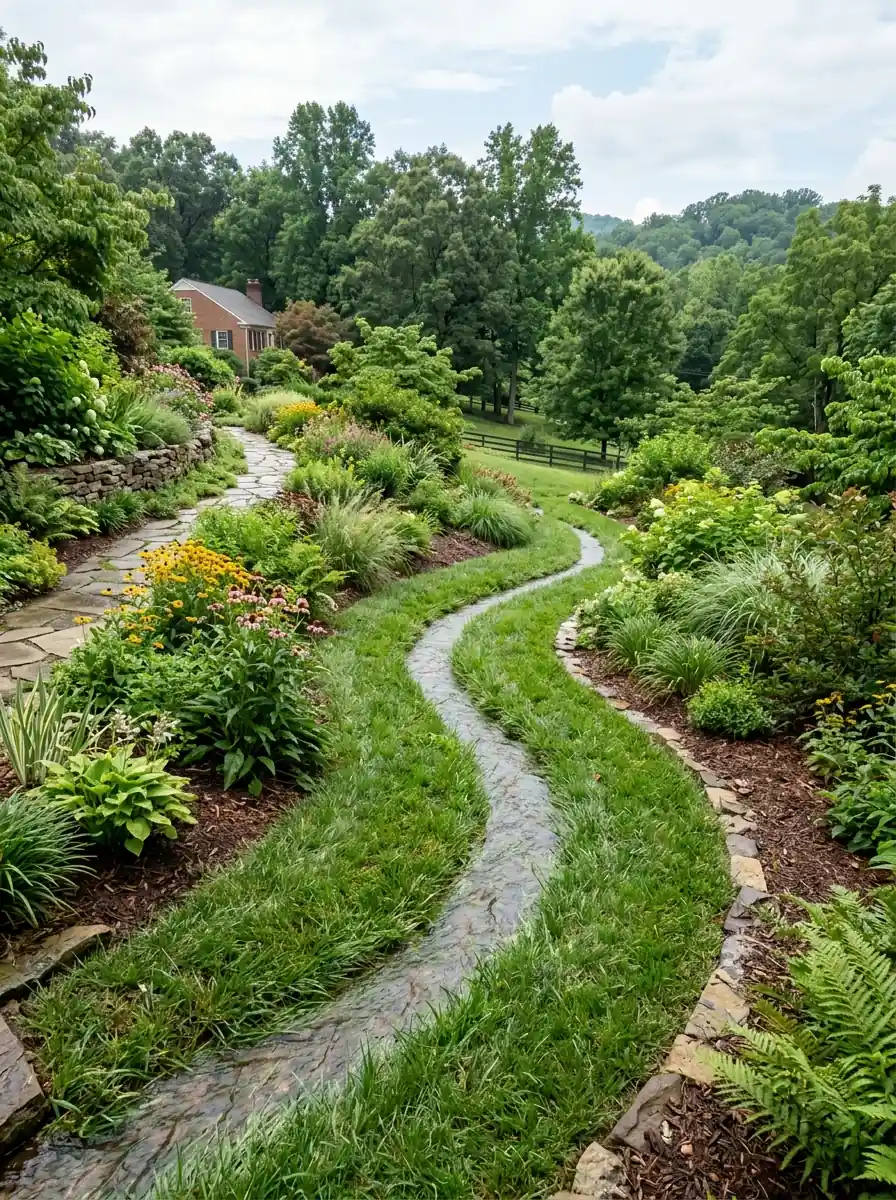
A swale is a shallow shaped channel in the ground, usually grassed, that carries surface water along a chosen line. It looks like part of the landscape rather than drainage, which is much of its appeal.
It beats a buried pipe in three situations: where the volume is surface runoff rather than concentrated discharge, where digging deep is impractical, and where you want something that never blocks and needs no maintenance beyond mowing.
It loses to a pipe where the water has to cross an area you use, where the fall is insufficient to keep water moving, or where appearance rules out a visible channel. The survey settles which case you have.
What yard drainage correction covers
- Grade survey across the affected area, including where water arrives from
- Roof discharge points identified as contributing or not
- Surface water separated from groundwater in the diagnosis
- Regrading or swale line planned and marked with you
- Ground reshaped to a fall that carries water to the chosen outlet
- Landing points and outlets protected against scour
- Turf or planting reinstated and the flow observed
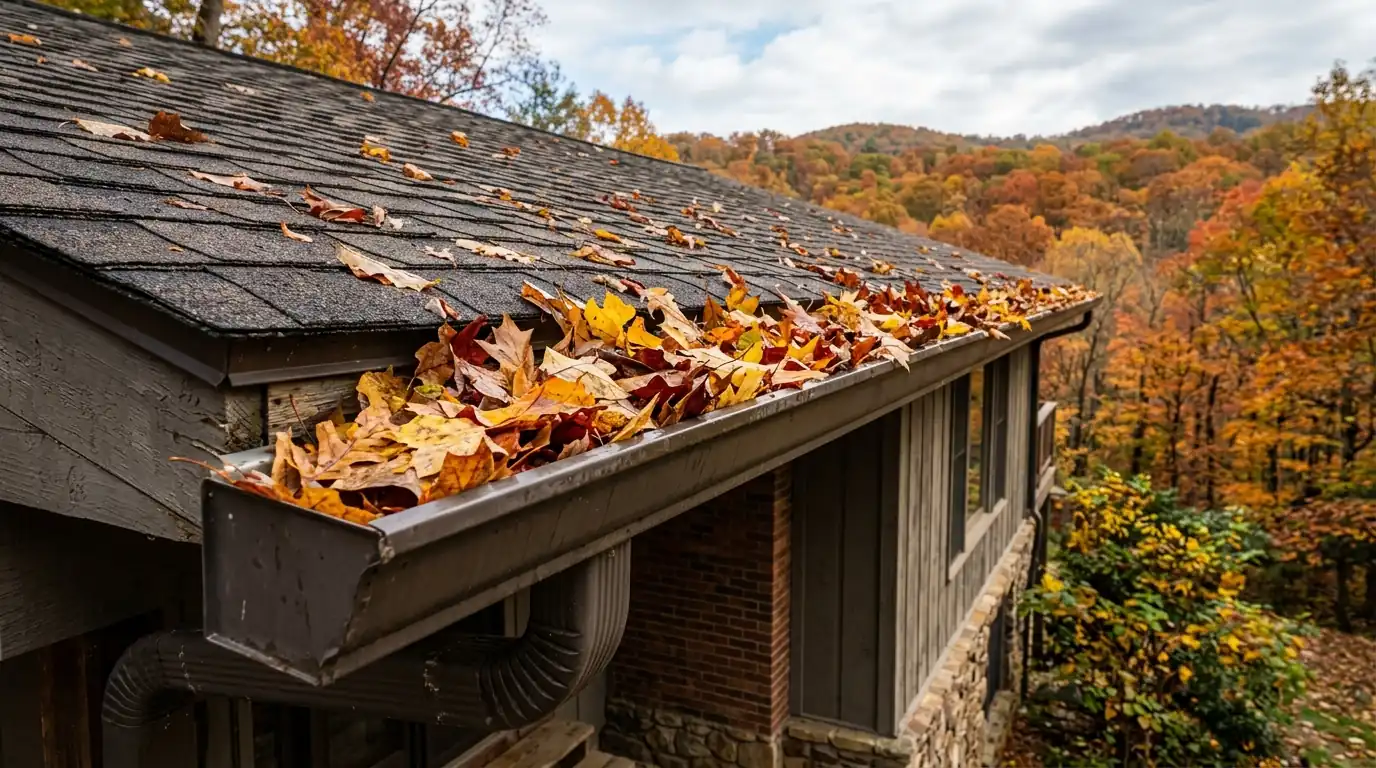
Roof water making it worse?
Grading fixes where water goes. Getting it off the roof properly is the other half.
Signs the grade is wrong
Water running back toward the house
The grade falls the wrong way, which is the worst version.
A channel cut across the lawn
Concentrated surface flow with nowhere planned to go.
A patch that stays wet for days
Water arrives faster than the ground can take it.
Mulch and gravel migrating downhill
Surface flow is moving material with it.
Soil piled against a foundation wall
Fill has settled and then been washed against the house.
A path or patio that floods
Hard surfaces shed water that the ground beyond cannot take.
Erosion at a property boundary
Water is leaving your ground onto someone else's.
What yard drainage work depends on
Area affected
The main driver, measured across the ground being reshaped.
Volume of soil moved
Regrading a slope moves considerably more than cutting a swale.
Access for machinery
Narrow side gates mean hand work, which takes far longer.
Outlet arrangement
Where the water goes at the end decides part of the design.
Reinstatement
Turf, seed or planting put back properly.
Obstacles
Mature trees, paths and services all constrain the line.
Whether pipe is also needed
Combined solutions are common and priced together.
Yard drainage correction commonly plans from $680 for a short swale, rising considerably with area and soil volume. Figures follow the survey rather than a phone description.
From survey to proven flow
You describe the wet area
Where it sits, when it appears and what it damages.
The grade is surveyed
Including where the water arrives from, which is often uphill.
Roof discharge is assessed
Because leaders often turn out to be the source.
Surface and groundwater are separated
They need different answers.
A line is planned and marked
So you can see the swale or regrade before it starts.
The ground is reshaped
To a fall that carries water to the chosen outlet.
Reinstated and observed
Turf back, and the flow watched in real conditions.
Regrading against burying a pipe
| What it involves | Doing it yourself | Bringing us in |
|---|---|---|
| What it handles | Surface runoff and roof discharge | Water held within the soil |
| Maintenance | Mowing, and nothing else | None, if built with fabric and gravel |
| Visibility | A shallow shaped channel you can see | Invisible once reinstated |
| Where it wins | Open ground with enough fall | Areas you use, or where appearance rules out a channel |
How long grading work takes
A short swale on accessible ground is usually a day including reinstatement.
Regrading a larger area takes two days or more depending on soil volume and machine access.
Where a side gate rules out machinery, hand work extends everything considerably and that is established at the survey.
Knox County clay and slope
Red clay is the constant. It sheds water rather than absorbing it, so surface flow here is heavier and faster than the same rainfall would produce on loam.
Slope decides the approach street by street. On the hillside blocks around Sterchi Hills, Kimberlin Heights and Choto there is ample fall and a swale works easily.
The flat ground is harder. Around Inskip, Norwood and the bottomland near Island Home Park there is barely any fall to work with, and correction often has to combine shaping with a piped outlet.
Where we take yard drainage correction calls
Yard Drainage Correction is available across these Knoxville area ZIP codes and the towns around them.
- Bearden (37919)
- West Hills (37909)
- Fountain City (37918)
- Sequoyah Hills (37919)
- Cedar Bluff (37923)
- Hardin Valley (37932)
- Karns (37931)
- Halls Crossroads (37938)
- Powell (37849)
- South Haven (37920)
- Downtown Knoxville (37902)
- Holston Hills (37914)
- Rocky Hill (37919)
- Inskip (37912)
- Farragut (37934)
- Maryville (37804)
- Oak Ridge (37830)
- Alcoa (37701)
How we approach a wet yard
Survey before recommendation
Surface and groundwater look similar and need different answers.
Roof discharge checked first
Leaders are the source more often than the ground is.
Line marked before digging
You see where the swale will run before anything moves.
Outlets protected
The end of a swale is where scour starts if it is left bare.
Yard drainage questions from Knox County
A shallow shaped channel in the ground, usually grassed, that carries surface water along a chosen line. It looks like landscape rather than drainage.
For surface runoff with enough fall, often yes, and it never blocks. For areas you use or where appearance matters, pipe wins.
Usually settled backfill. Ground compacted around a foundation drops over years and reverses the fall that was originally there.
Frequently. A swale affects a narrow line rather than the whole area, and turf recovers through the season.
If the source is surface water reaching the wall, yes. If the ground itself is saturated, a collecting system is needed instead.
Somewhere it is entitled to go. Directing flow onto a neighboring property is not a solution and we will not design one.
Usually not for modest work on your own ground, though larger changes near boundaries or watercourses can. We will flag it if it applies.
Turf laid straight after works within weeks. Seeded areas take a season depending on when the work happens.
Drainage work often combined
French Drain Installation
For water held within the soil rather than on it.
Underground Downspout Drainage
Carrying roof volume to a chosen outlet below ground.
Downspout Extension Installation
The surface option for moving leader discharge.
Roof Valley Drainage Repair
Concentrated valley discharge is a common ground cutter.
Gutter Inspection Service
Establishing what is roof water and what is not.
Get the ground surveyed
Tell us where the water pools or cuts and we will walk the grade and separate roof water from ground water.