Rainwater Collection Setup in Knoxville, TN
Collecting roof water is straightforward. Doing it without creating a mosquito problem, a debris problem or a new foundation problem takes a bit more thought.
What a collection setup actually needs
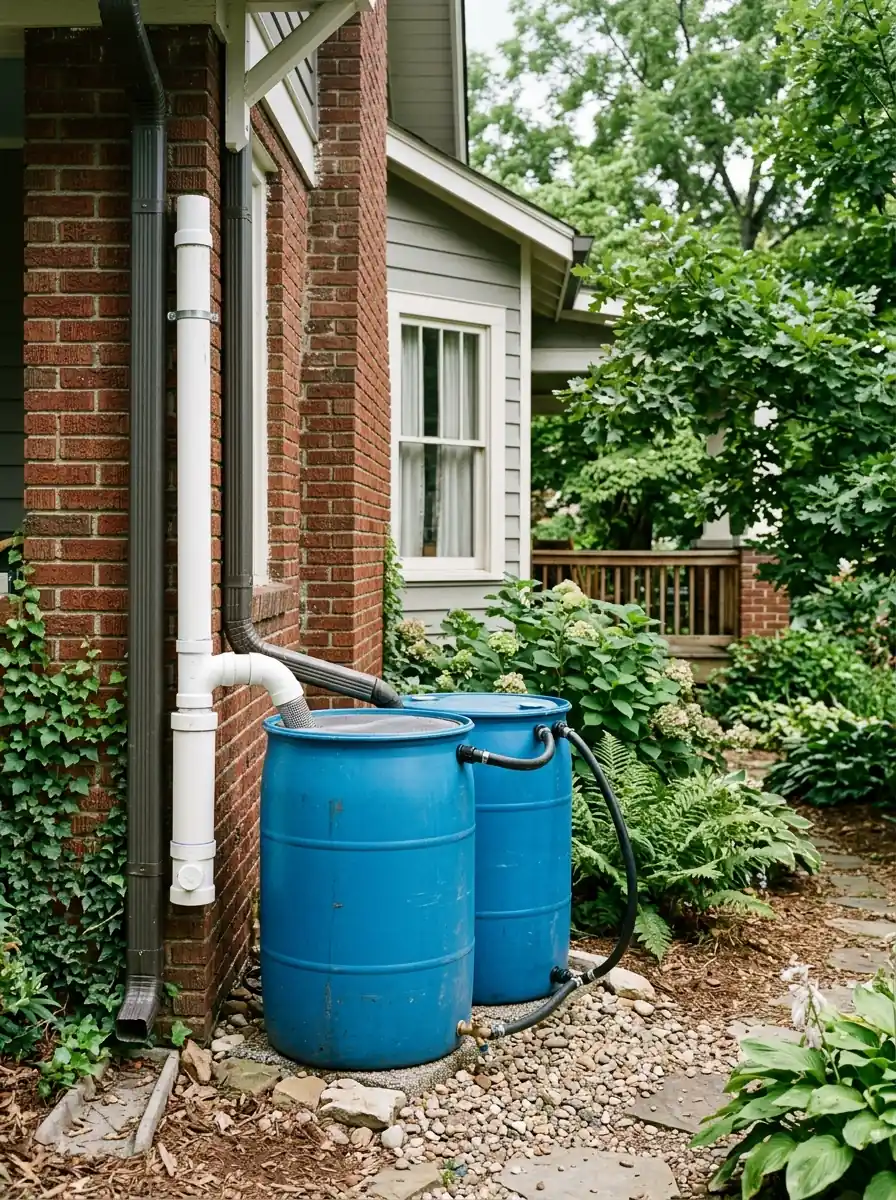
Three things beyond the barrel itself. A screened inlet keeps debris and insects out. A first flush diverter discards the initial dirty runoff that carries roof grit and droppings. An overflow route takes the excess away from the foundation, because a full barrel in a Knoxville storm overflows within minutes and that water has to go somewhere.
Barrels, cisterns and what suits
A single barrel holds a few tens of gallons and fills in one modest storm. It suits hand watering a small area and nothing more.
Linked barrels multiply that and are the common domestic setup here, with the overflow from one feeding the next and the last one routed away.
A cistern is a different scale, above or below ground, and it needs its own foundation or excavation. It is the right answer where irrigation demand is real rather than symbolic.
A barrel under a downspout against a fitted system
| What it involves | Doing it yourself | Bringing us in |
|---|---|---|
| Water quality | Roof grit and droppings settle in the barrel | First flush diversion discards the dirtiest runoff |
| Insects | Open inlet becomes a breeding site | Screened inlet and sealed lid |
| Overflow | Straight out of the top onto the foundation | Routed to a chosen discharge point |
| Stability | Sitting on soil and slowly tilting | Level load bearing base |
What a collection setup depends on
Capacity wanted
One barrel, linked barrels or a cistern are different scales.
Base preparation
A level load bearing base is real work and it is not optional.
First flush arrangement
A proper diverter costs more than a plain inlet and is worth it.
Overflow routing
Where the excess goes can be simple or can need a buried line.
Number of leaders converted
Each downspout brought into the system adds work.
Winter drain provision
A drain point so the system can be emptied before a freeze.
Cistern excavation
Below ground storage is a different order of work entirely.
Domestic barrel setups commonly plan at $240 to $680 per leader including diverter, base and routed overflow. Cisterns are quoted individually. Planning ranges rather than quotes.
What a properly built setup gives you
Usable water for the garden
Free, soft and untreated, which plants prefer.
Less roof water at the foundation
Anything collected is water not landing beside the wall.
Overflow goes somewhere chosen
The part that turns a barrel from a problem into a system.
No mosquito habitat
Screened inlets and sealed lids close the breeding route.
Cleaner stored water
First flush diversion keeps the dirtiest runoff out.
Stable and safe
A full barrel weighs several hundred pounds and needs a proper base.
Winterizable
A drain point means the system can be emptied before a freeze.
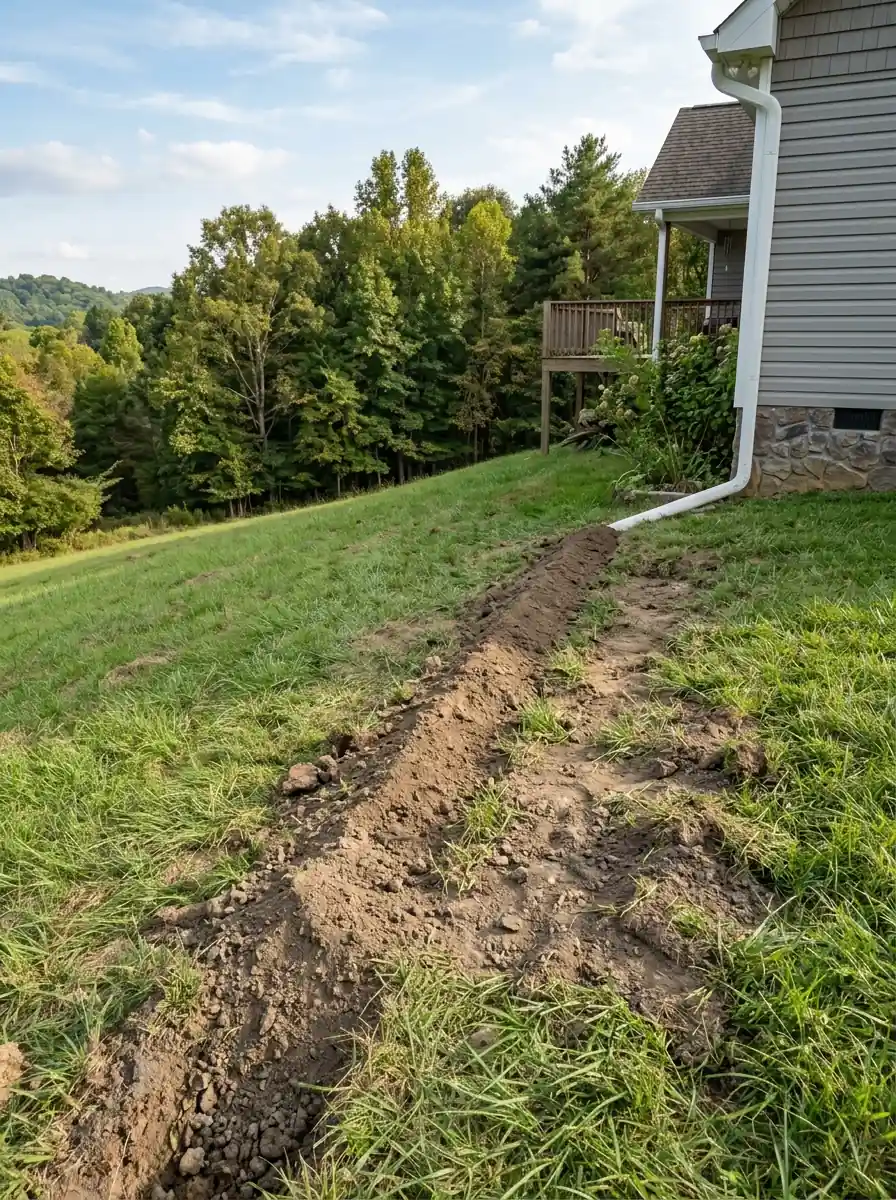

Overflow needs to go further?
The excess from a full barrel is the same volume problem as any leader. It needs routing.
First flush, overflow and the two things people skip
The first flush diverter is the component people skip and the one that decides water quality. The first few gallons off a roof carry accumulated grit, pollen and bird droppings, and a diverter discards that before the barrel starts filling.
Overflow is the one that causes actual damage. A barrel fills in minutes in a Knoxville summer storm, and after that every gallon runs out of the top. Without a routed overflow, that is the whole roof plane discharging at the base of the wall.
Both are cheap at installation and awkward to add afterward, which is why they belong in the setup rather than in a list of possible upgrades.
Signs a collection setup was done badly
Mosquitoes around the barrel
The inlet is not screened, which is the most common fault.
Overflow pooling at the foundation
The excess has nowhere planned to go.
Sediment in the bottom of the barrel
No first flush diverter, so roof grit is going straight in.
A barrel that is always full
It is doing nothing except overflowing beside the wall.
Green water
Light is reaching the inside and algae has established.
A barrel sitting directly on soil
It will settle and tilt, and a full barrel is very heavy.
No way to drain it before a freeze
Water left in over winter splits containers.
What a collection setup includes
- Demand discussed so the capacity matches what you will actually use
- Base prepared level and load bearing for a full container
- Downspout cut and a diverter or inlet fitted with a screen
- First flush diversion installed and set to discard volume
- Linked barrels connected where more capacity is wanted
- Overflow routed away from the foundation to a chosen point
- System filled and the overflow path proved with water
From demand to proven overflow
You describe the use
What the water is for, because that sets the capacity.
A leader is chosen
The one serving the roof area closest to where you need water.
The base is prepared
Level and load bearing, since a full barrel is very heavy.
The inlet is fitted
Downspout cut, diverter fitted, inlet screened.
First flush is installed
Set to discard the initial dirty runoff.
Overflow is routed
To a chosen point well away from the foundation.
The system is proved
Filled and the overflow path watched under real flow.
How long a setup takes
A single barrel with a diverter and routed overflow is usually a half day.
Linked barrels across two leaders take a full day including base preparation.
Cisterns are a different scale and are scheduled after a site visit rather than estimated over the phone.
Rainfall and collection in East Tennessee
There is no shortage of supply here. Knoxville rainfall runs well above the national average, so a barrel on almost any roof fills faster than most people expect.
That is exactly why overflow matters more here than in a drier climate. The system spends most of the storm overflowing rather than filling.
Winter is mild enough that hard freezes are occasional rather than constant, but they do happen, so a drain point is worth having rather than gambling on the season.
Where we take rainwater collection setup calls
Rainwater Collection Setup is available across these Knoxville area ZIP codes and the towns around them.
- Bearden (37919)
- West Hills (37909)
- Fountain City (37918)
- Sequoyah Hills (37919)
- Cedar Bluff (37923)
- Hardin Valley (37932)
- Karns (37931)
- Halls Crossroads (37938)
- Powell (37849)
- South Haven (37920)
- Downtown Knoxville (37902)
- Holston Hills (37914)
- Rocky Hill (37919)
- Inskip (37912)
- Farragut (37934)
- Maryville (37804)
- Oak Ridge (37830)
- Alcoa (37701)
How we build a collection setup
First flush fitted as standard
It is what decides whether stored water is usable.
Overflow routed, never left
A full barrel discharging at the wall is worse than no barrel.
Inlets screened
Open collection at roof level becomes a mosquito problem quickly.
Base prepared properly
A full barrel weighs several hundred pounds and will tilt on soil.
Collection questions from Knox County
More than people expect. A modest roof area fills a typical barrel in a single Knoxville storm, which is why overflow routing matters so much.
If you want usable water, yes. The first few gallons off a roof carry grit, pollen and droppings straight into storage.
Only if the inlet is unscreened and the lid is not sealed. A properly fitted system closes the breeding route entirely.
Away from the foundation to a point that can take the water, exactly as any downspout discharge should.
Yes, and it is the usual domestic answer. Overflow from each feeds the next and the last one is routed away.
It is generally used for ornamental and garden watering. For edible crops the roof material and treatment matter, and that is worth researching for your situation.
A drain point lets the system be emptied before a hard freeze. Water left in a container over a freeze can split it.
Yes. The leader is cut and a diverter fitted, which is straightforward on any standard downspout.
Work that goes with collection
Downspout Extension Installation
Routing the overflow away from the foundation.
Downspout Installation
The leader the collection system connects to.
Gutter Guard Installation
Cleaner roof water reaching the barrel in the first place.
Underground Downspout Drainage
Where the overflow needs to travel further.
Gutter Cleaning Service
A clean gutter is what makes collected water usable.
Set up collection properly
Tell us what the water is for and which side of the house suits, and we will fit the whole path including the overflow.