Gutter Services in Island Home Park (37920)
Gutter installation, repair and drainage across Island Home Park, 37920, through the planned riverside addition below Sevier Avenue.
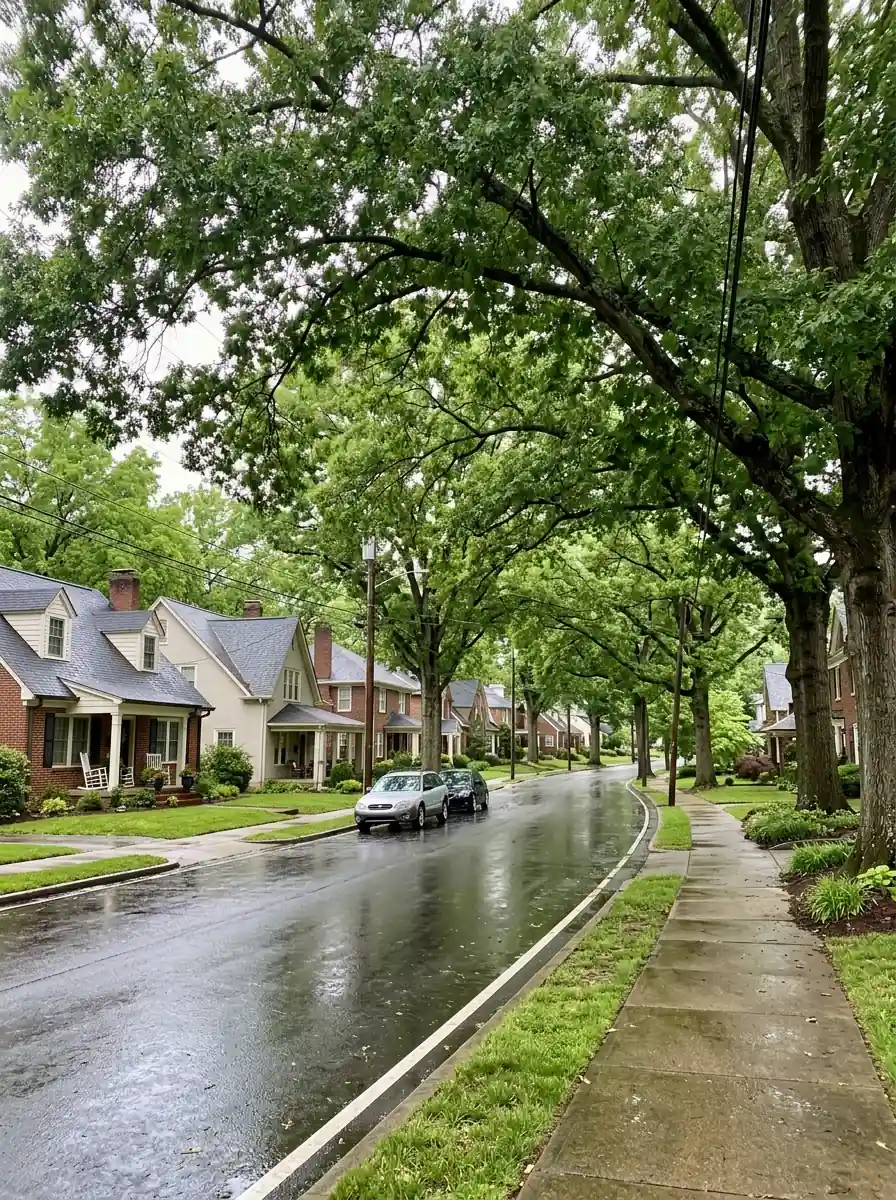
Water with nowhere to go
Island Home Park, 37920, is a planned riverside addition laid out on genuinely flat bottomland, and that is the whole drainage problem. Getting water off the roof is straightforward. Finding somewhere for it to go afterward is not, because there is very little fall anywhere on these lots and the water table sits closer to the surface than it does anywhere on the ridges.
A planned addition on bottomland
The housing is 1913 to 1930 Craftsman bungalow, built as a planned addition with consistent setbacks and generous porches along the street frontage.
The ground is the defining feature. River bottomland behind the rear lots means very little grade to work with, and standing water after rain is normal rather than exceptional.
That inverts the usual priority. On most Knoxville properties the roof drainage is the main job and the ground is secondary; here the ground question has to be answered before the roof work is worth doing.
What we deal with in 37920
Almost no fall on the lot
There is nowhere obvious downhill to send water to.
High water table behind
The ground is often already saturated before rain arrives.
Standing water at discharge points
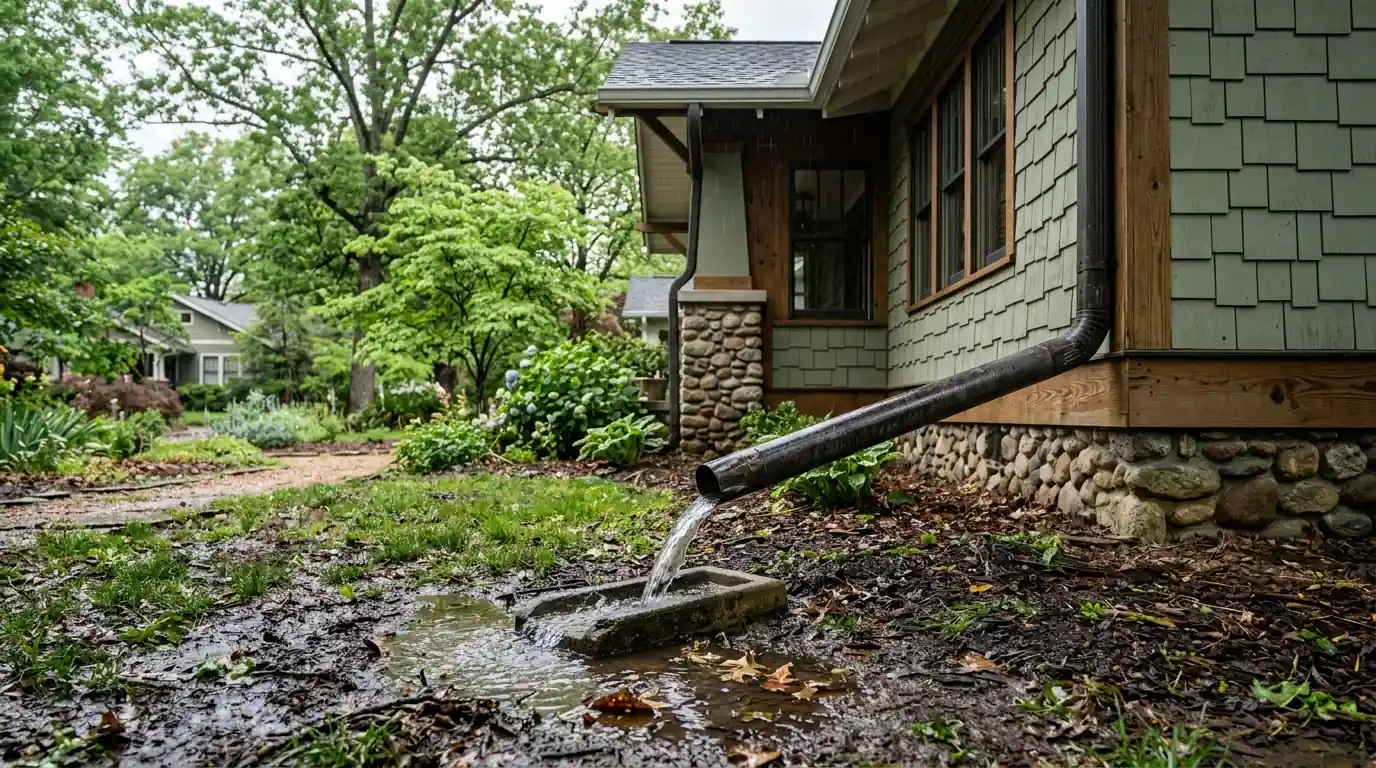
Water released beside the house simply sits.
Deep porches with their own roofs
Porch drainage adds a second system on most houses.
Crawlspace damp
Bottomland lots put the underfloor space close to the water line.
Consistent setbacks limiting routing
The planned layout leaves less room to improvise a route.
Gutter work we do most in Island Home Park
Underground Downspout Drainage
Carrying roof water to the only points on the lot that can take it.
French Drain Installation
Collecting groundwater where the table sits close to the surface.
Yard Drainage Correction
Shaping what little fall exists into something usable.
Downspout Extension Installation
The surface option where burying is impractical on a tight lot.
Gutter Cleaning Service
Clearing runs that stay damp on a low lying lot.
Fascia & Soffit Repair
Board work on bungalow fascia that has stayed wet.
Seamless Gutter Installation
New runs on porch and main roofs together.
Draining a lot that has almost no fall
The first thing we do here is walk the whole lot rather than the roof line. On a property with two feet of fall across its length, the discharge point is the entire design and everything else is plumbing.
A splash block achieves nothing on this ground. Water released four feet from the wall sits where it lands, soaks into backfill that is already damp, and finds the crawlspace rather than draining away.
Buried lines are usually the answer, but they need somewhere to end. That means identifying the lowest usable point on the property, often at a rear boundary or a street side swale, and confirming that it can actually accept the volume before committing to a route.
Where the water table is genuinely close to the surface, a collecting drain and a roof water line have to be kept as separate systems. Feeding roof volume into a drain built to collect groundwater slowly overwhelms it in the first storm and leaves both jobs unfinished.
The porch roofs are the detail most often missed. These bungalows carry deep front porches with their own roof plane, and on many houses that plane still discharges straight onto the ground at the foundation. It is a small run and it delivers a surprising amount of water to exactly the wrong place.
Crawlspace damp after every storm?
On bottomland the roof water is usually most of it, and routing it is the first thing to try.
Why Island Home owners call us back
The lot gets walked first
With this little fall, the discharge point is the whole design.
Roof water and groundwater separated
Feeding one into the other overwhelms both systems.
Porch roofs given their own route
A small plane delivering to the foundation still does damage.
Island Home Park gutter questions
Because there is almost no fall on these lots and the ground is often already saturated. It has nowhere to drain away to.
Very little. Four feet is not enough distance on bottomland, and the water simply soaks into backfill that is already damp.
Often both, but roof water is usually the larger share and it is the cheaper one to fix. A survey separates them.
Yes. It is a small plane but it delivers a lot of water to exactly the point you want kept dry.
Get the lot surveyed
Tell us where the water sits and how long it stays, and we will walk the grade before recommending anything.