Gutter Slope Correction in Knoxville, TN
If the gutter still ponds after a cleaning, debris was never the problem. The run has lost its pitch and needs resetting rather than clearing.
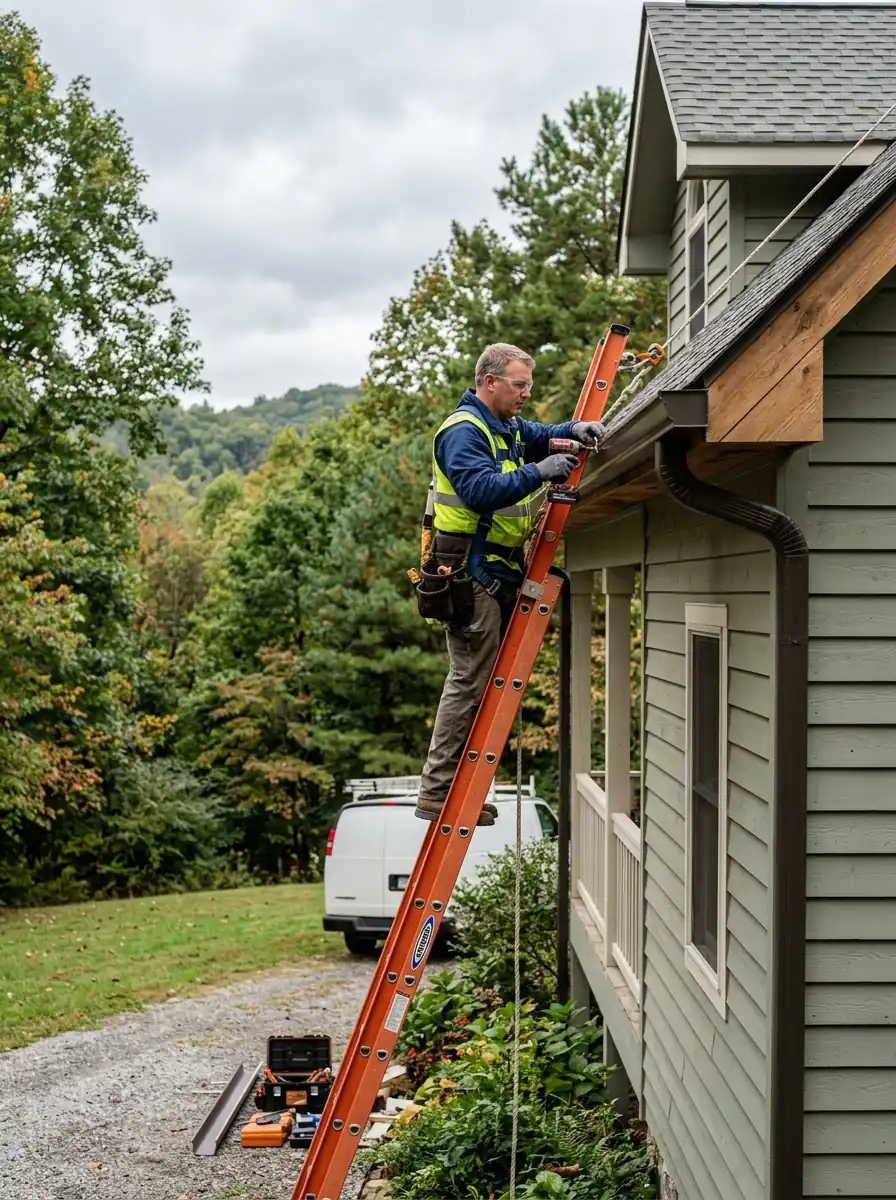
Why a clean gutter still holds water
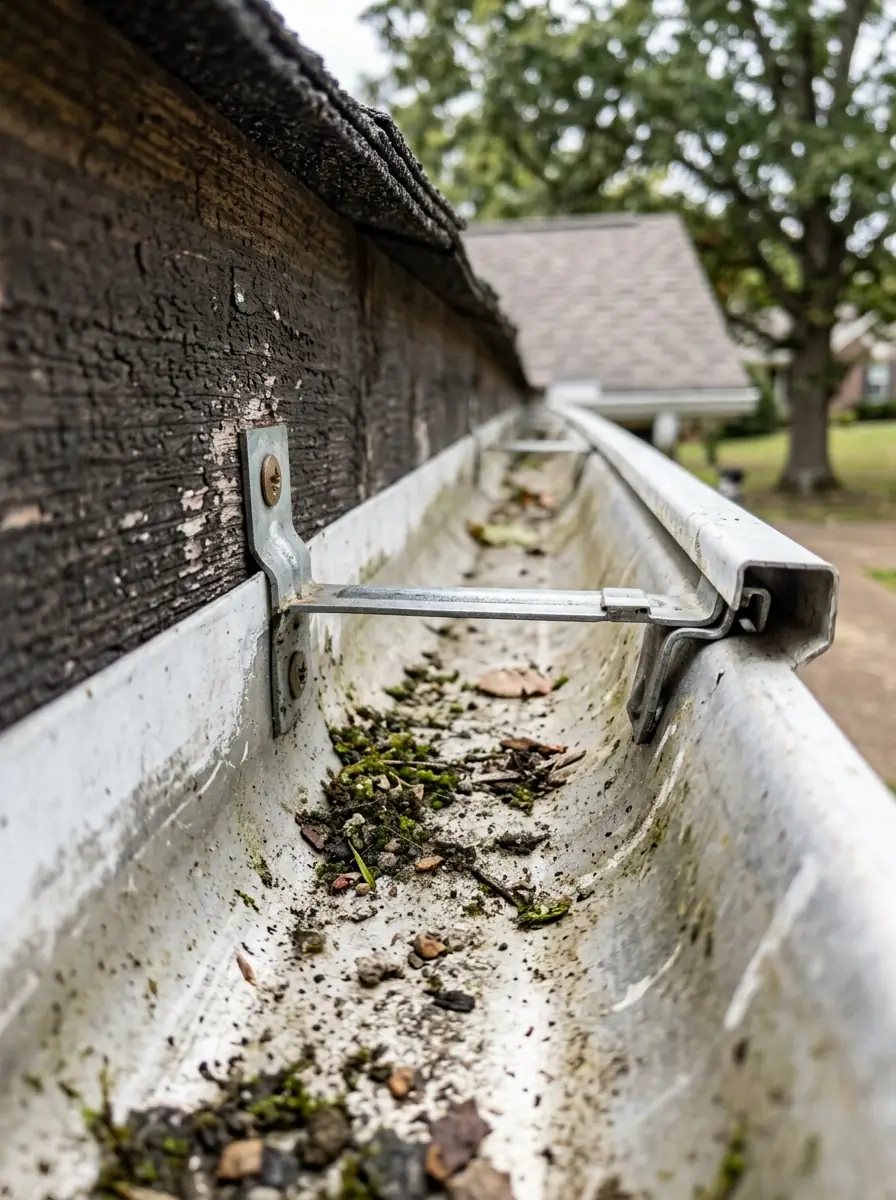
Gutters are hung with a deliberate fall toward each outlet, usually a quarter inch for every ten feet. Hangers loosen over years of debris weight and thermal movement, and the run settles into a dip. Once the low point sits away from the outlet, water stays there permanently, and that standing water is what accelerates every other failure.
What resetting the fall involves
It is not a replacement. Where the trough is straight and unperforated, the metal is fine and only the line it hangs on has moved.
The work is at the fasteners. Failed hangers come out, the run is lifted back to a measured fall, and new hidden hangers go in on fresh wood at closer spacing.
The fascia decides how far this goes. Where the board behind the run has softened, resetting the pitch on it is temporary and the board comes first.
Living with the ponding against correcting it
| What it involves | Doing it yourself | Bringing us in |
|---|---|---|
| Standing water | Sits in the run permanently between storms | Drains fully after every rain |
| Hanger load | Bends further under the retained weight | Carries only what the roof delivers |
| The fascia behind | Stays damp against the board | Dries between storms as it should |
| What it costs | A replacement sooner than necessary | A fraction of a replacement, once |
What a slope correction depends on
Length of run affected
One dip is a short visit. A full elevation is half a day.
Hanger count
Every fastener along the corrected section comes out and goes back.
Fascia condition
Soft board has to be addressed first and is priced separately.
Height and access
Upper elevations take longer to stage than a single story eave.
Outlet position
Where the outlet is at the wrong end, adding one is often cheaper than fighting the fall.
Existing hanger type
Spike and ferrule runs need converting to hidden hangers rather than retightening.
Debris clearing first
Nothing can be measured under a packed trough.
Slope corrections commonly plan at $175 to $460 per elevation in this market, rising where fascia work is needed. Planning ranges rather than quotes.
What correcting the pitch changes
The run drains fully
Water leaves at the outlet instead of sitting mid run.
Weight comes off the hangers
Standing water is heavy and it is what bends fasteners.
Fascia dries between storms
Retained water against the board is how rot starts.
Debris moves instead of settling
A pitched run carries stems toward the outlet rather than collecting them.
Ice has less to work with
A run that empties does not freeze full.
Cheaper than replacement
The trough is usually fine, so replacing it would be waste.
Overflow stops at the low point
The dip is where every storm spills, and it goes with the correction.
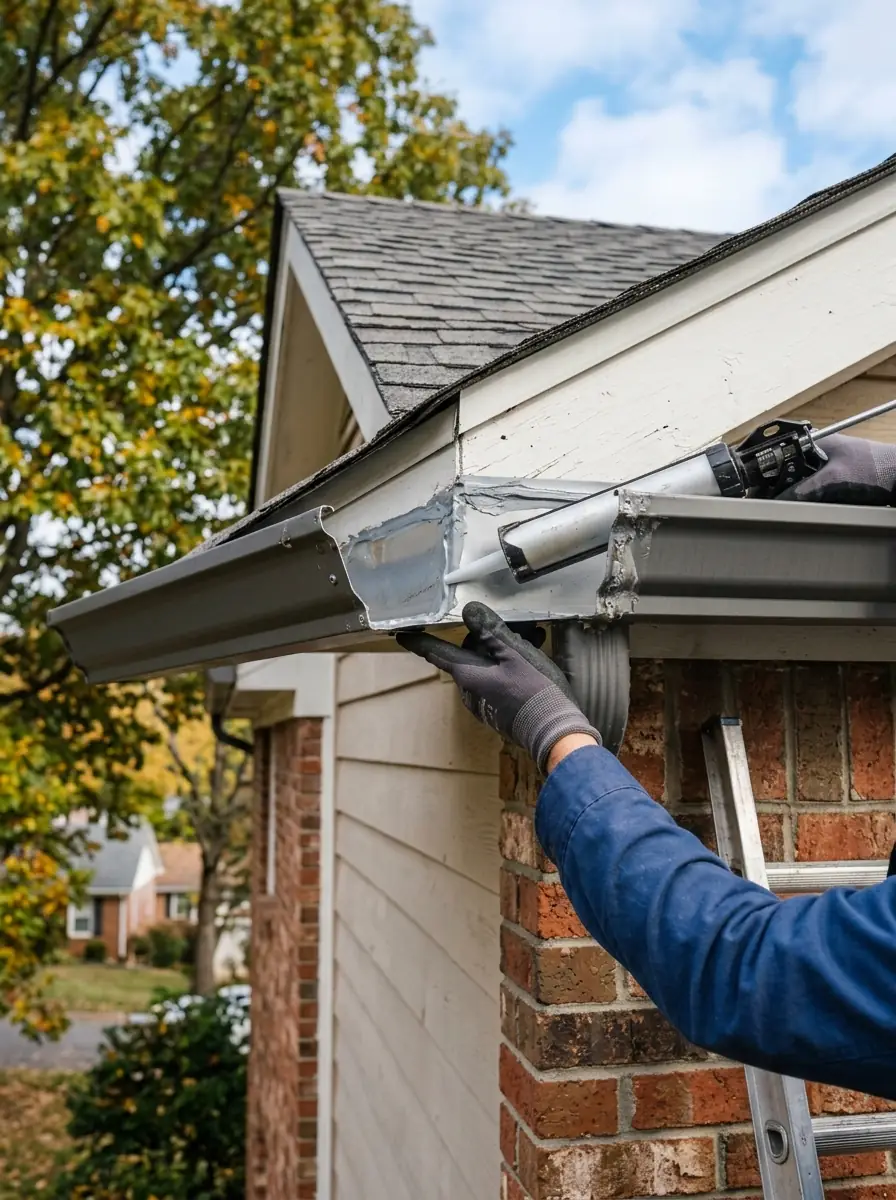
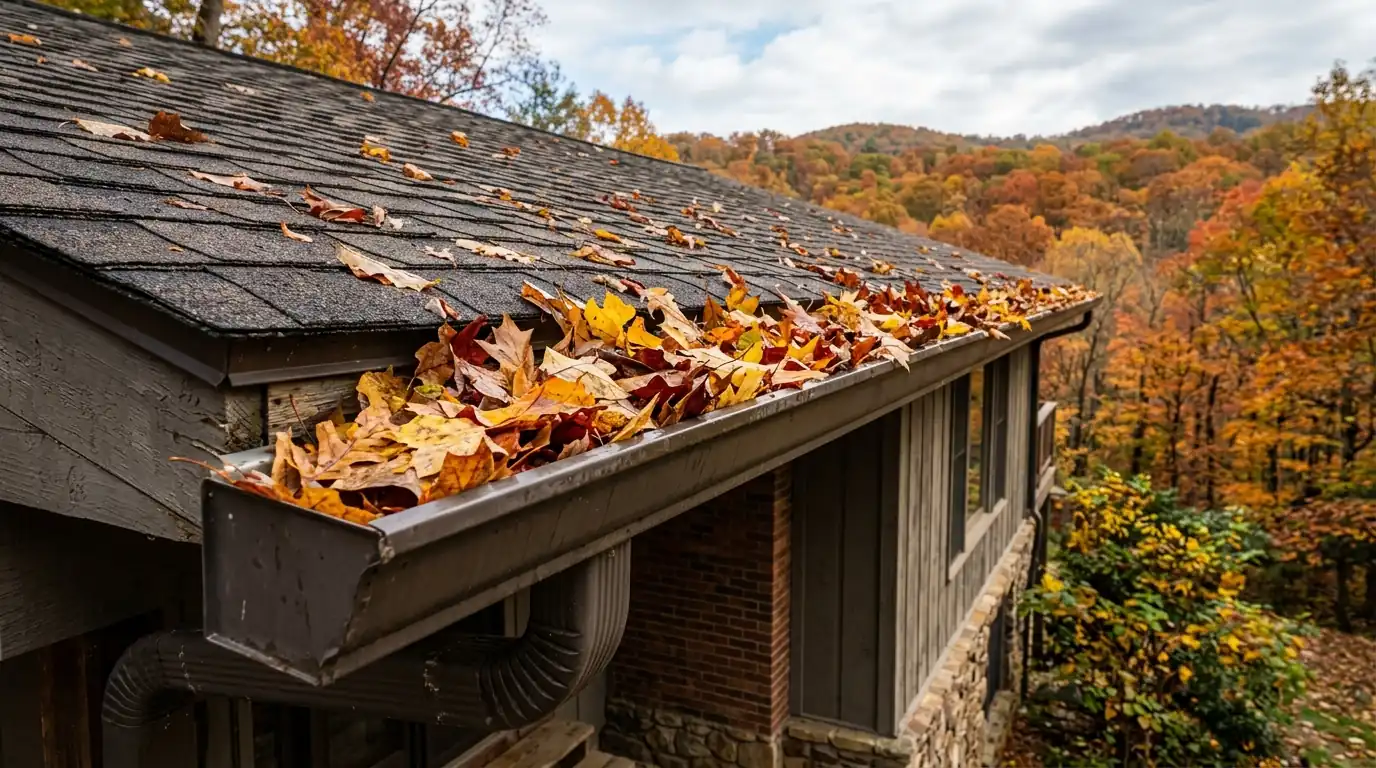
Fasteners gone as well as the fall?
A run that has lost its pitch has usually lost its fixings first. Both get put right in one visit.
How much fall a run actually needs
A quarter inch of fall for every ten feet is the working standard. That is subtle enough that a correct run looks level from the ground and steep enough that water always has somewhere to go.
Long runs sometimes need two outlets rather than more fall. Pitching forty feet to a single end produces a visible slope and still moves water slowly, so splitting the run is often the better answer.
The measurement matters more than the eye. A run that looks right and ponds is telling you the fascia itself is not true, which happens on older Knoxville houses where the roof edge has settled unevenly.
Signs the run has lost its fall
Water sitting hours after rain
The clearest sign, and it is visible from a ladder on any dry day.
A tide line inside the trough
Silt marks show exactly where water stands.
Overflow always at the same spot
The dip spills first in every storm.
Debris collecting in one place
A pitched run moves stems along; a dip collects them.
A visible dip in the line
Sighting along the gutter from the end shows it clearly.
Mosquitoes near the eave in summer
Standing water at roof level breeds them.
Ice forming in one section only
That is where the run held water into the freeze.
What a slope correction includes
- Run cleared so the trough can actually be assessed
- Fall measured along the full length to each outlet
- Failed spikes and bent hangers removed rather than retightened
- Fascia checked for soundness before anything is refastened
- Run lifted to a measured fall and held at that line
- Hidden hangers set on fresh bite at closer spacing than before
- Water run through and the trough checked for any remaining pond
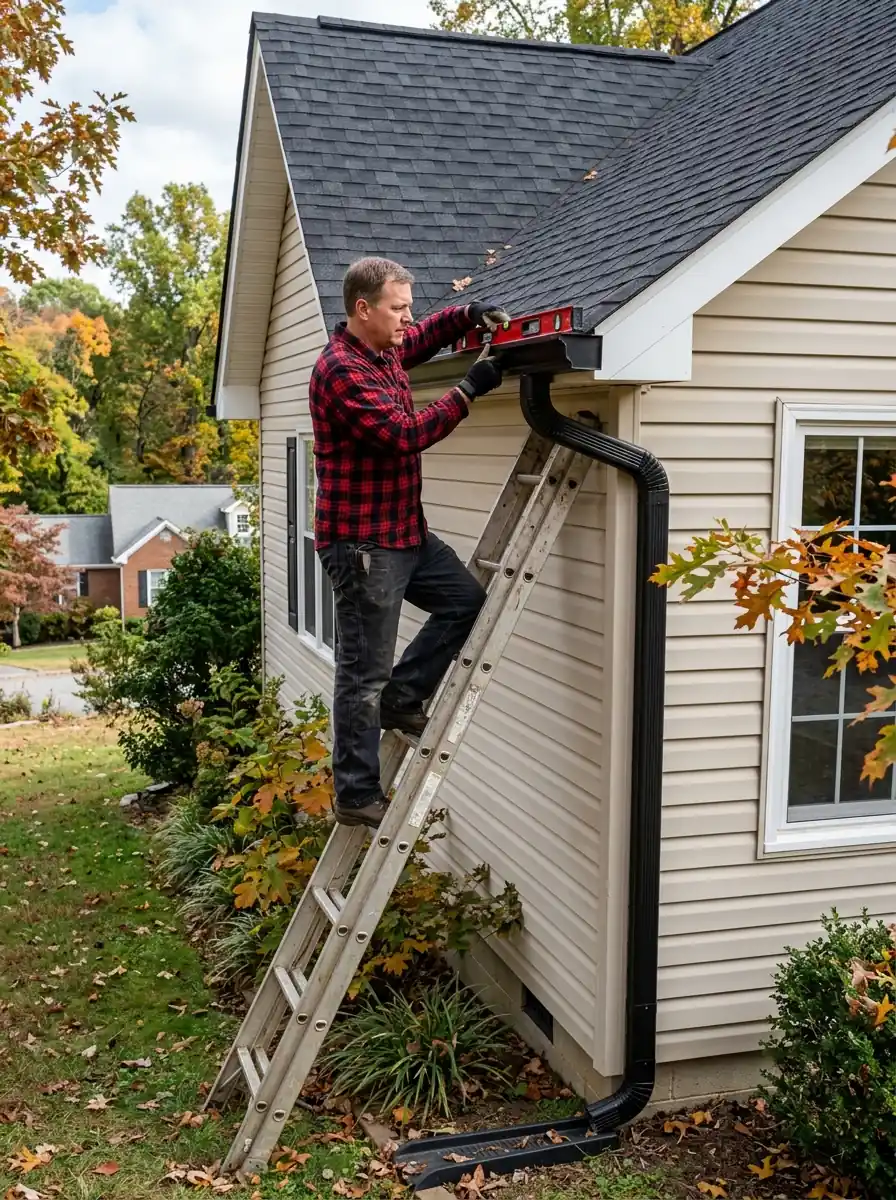
From measurement to the flush test
You describe the ponding
Where water sits and whether it followed a cleaning.
The run is cleared
Nothing can be measured through a packed trough.
Fall is measured
Along the full length to each outlet rather than eyeballed.
Fascia is checked
Because resetting pitch on soft board does not hold.
Old fasteners come out
Spikes and bent hangers are removed, not driven back in.
The line is reset
Trough lifted to a measured fall and fastened on fresh bite.
Water proves it
The run is flushed and checked for any pond that remains.
How long repitching takes
A single dip on one elevation is usually two to three hours including clearing and the flush test.
A full elevation that has settled along its length is a half day, because every hanger comes out and goes back.
Fascia repair changes the timing entirely. Where the board has softened, that work has to come first and is quoted separately.
Why Knoxville runs lose their pitch
Debris weight is the main cause here. Under the hardwood canopy in North Hills, Lindbergh Forest and Sequoyah Hills a trough carries wet leaf load for weeks at a time, and hangers give up gradually rather than suddenly.
Spike hung runs are the second cause and they cluster in the older neighborhoods. Homes in Vestal, Burlington and Park City were hung with spikes into softwood fascia that has been expanding and contracting for decades.
Newer subdivisions produce a third version. Long unbroken runs in Hardin Valley and Halls were hung at builder spacing, and the first genuinely heavy storm season pulls them into a dip between fasteners.
Where we take gutter slope correction calls
Gutter Slope Correction is available across these Knoxville area ZIP codes and the towns around them.
- Bearden (37919)
- West Hills (37909)
- Fountain City (37918)
- Sequoyah Hills (37919)
- Cedar Bluff (37923)
- Hardin Valley (37932)
- Karns (37931)
- Halls Crossroads (37938)
- Powell (37849)
- South Haven (37920)
- Downtown Knoxville (37902)
- Holston Hills (37914)
- Rocky Hill (37919)
- Inskip (37912)
- Farragut (37934)
- Maryville (37804)
- Oak Ridge (37830)
- Alcoa (37701)
How we make the new line hold
Fall is measured, not judged
A run that looks level from the ground can still be holding water.
Fasteners renewed, not retightened
A hanger that failed once will not hold at the same point.
Closer spacing than before
The original interval is usually part of why it settled.
Proved with standing water
The trough is checked for any remaining pond after the flush, not just for flow.
Slope questions from Knox County homeowners
About a quarter inch for every ten feet toward the outlet. That is enough to drain fully while still looking level from the ground.
Usually yes. Where the trough is straight and unperforated the metal is fine and only the line it hangs on has moved.
Weight and time. Wet debris load bends fasteners gradually, and spike hung runs work loose through years of thermal movement.
Yes. It adds permanent weight, keeps the fascia damp, collects debris and freezes full in winter.
The fascia itself is probably not true. That is common on older Knoxville houses where the roof edge has settled unevenly.
Often, on long runs. Splitting a forty foot run into two outlets beats pitching the whole thing to one end.
No. A quarter inch per ten feet is not visible from the ground on a normal elevation.
Yes, and on a repitch it is usually the right move. Spikes that have failed once will not hold the new line.
Work that often goes with repitching
Gutter Hanger Replacement
When the fasteners rather than the line are the whole problem.
Gutter Repair Service
For runs with several faults rather than pitch alone.
Fascia & Soffit Repair
Soft board has to be sound before any new line will hold.
Downspout Installation
An extra outlet often beats pitching a long run to one end.
Gutter Cleaning Service
A run has to be cleared before its fall can be measured.
Find out why it still ponds
If the gutter holds water after a cleaning, tell us where, and we will measure the fall and reset it.