Gutter Leak Sealing in Knoxville, TN
Most gutter leaks are joints rather than metal. Sealant hardens and cracks over time, and new sealant over old fails at exactly the same speed.
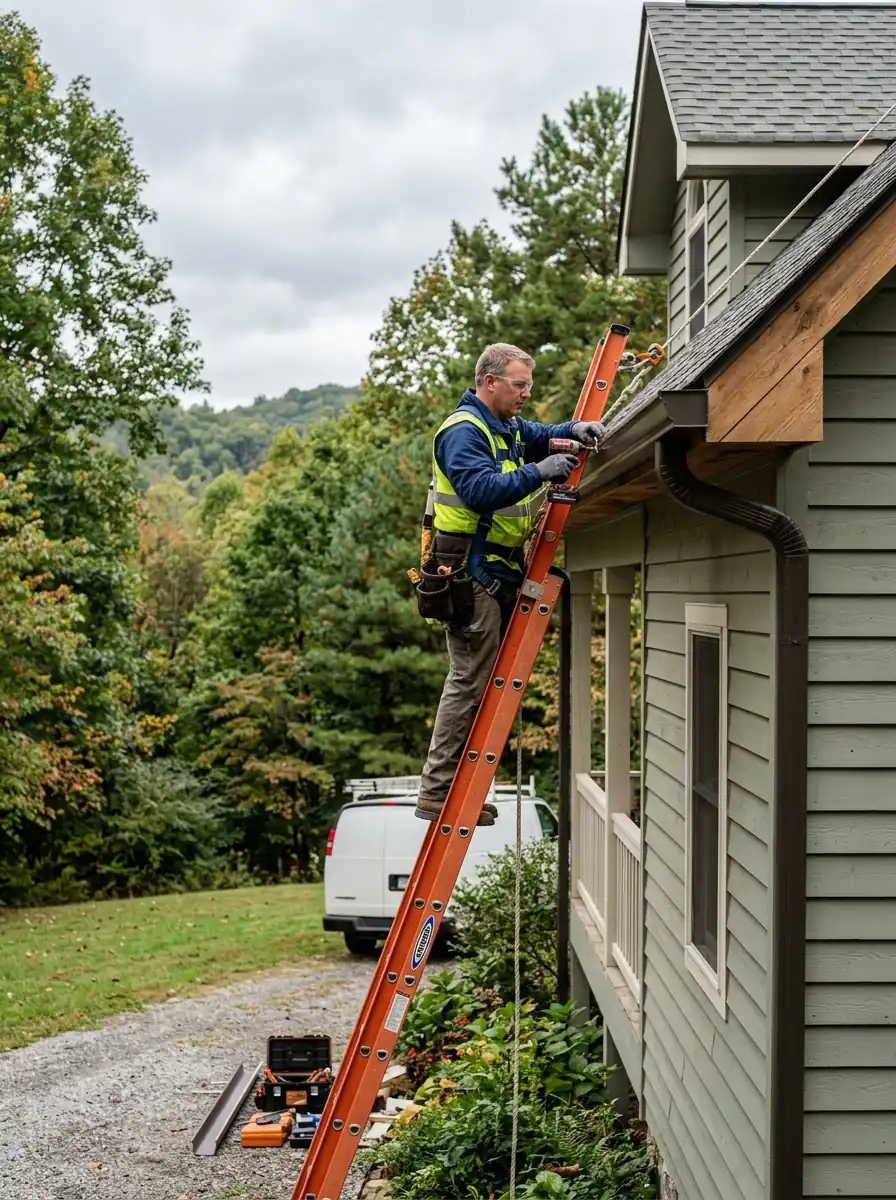
Where a gutter actually leaks
Seamless runs have only three kinds of joint: the corner miters, the end caps and the outlet collars. Every one of them relies on sealant, and sealant hardens, shrinks and cracks over years of thermal movement. The metal is almost always fine. The repair is removing the failed sealant back to bare metal rather than adding more on top.
Why resealing over old sealant fails
New sealant bonds to what it touches. Where it touches cracked, hardened old sealant, it bonds to something that is already failing.
The joint then moves as it always did, the old layer keeps cracking, and the new layer follows it within a season. The leak returns in the same place.
Cutting back to clean metal takes longer and is the entire difference between a repair that holds for years and one that holds until spring.
Signs a joint has failed
A steady drip at a corner
The classic failed miter, and the most common leak we see.
Water tracking down from an end cap
End caps are sealed, not welded, and they fail first.
Staining directly below a joint
A persistent mark under one point means one joint.
A visible crack in old sealant
Hardened sealant shows its failure before the water does.
Dripping around the outlet
The collar where the leader meets the trough is a sealed joint too.
Ice forming below one point
Winter makes a slow drip obvious.
Moss or algae in one vertical line
Constant moisture on the wall below a joint.
From finding the leak to proving it
You describe the drip
Which corner, how long, and whether it happens in light rain.
Every joint is checked
The visible drip is often not the only failed one.
The section is cleared and dried
Sealant will not bond to a wet or dirty surface.
Old sealant comes off
Cut and scraped back to clean metal on both faces.
Separation is addressed
A miter that has physically opened is refastened first.
New sealant is applied
Flexible material, inside and out where the joint allows.
Water proves it
After cure, the run is flushed and every joint watched.
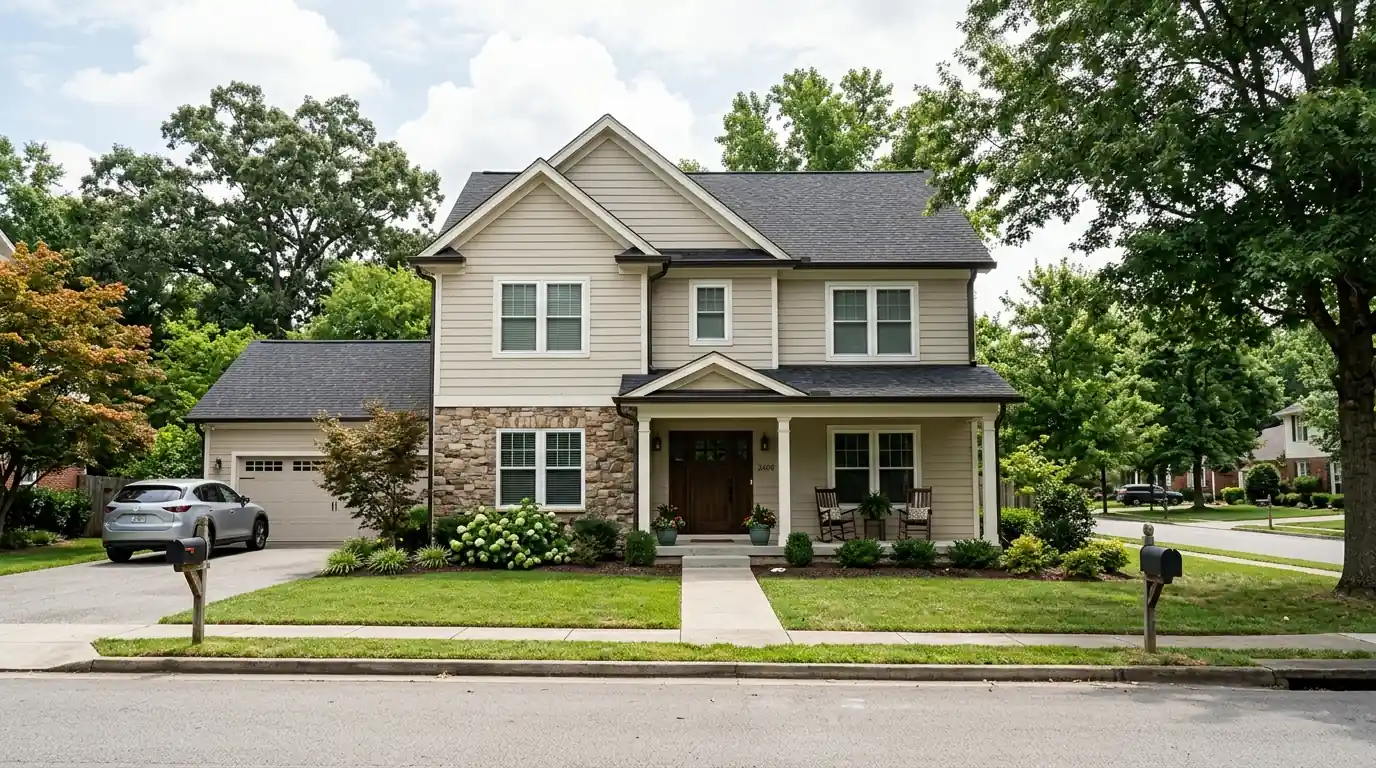
Several joints failing at once?
When every miter on an elevation is going, the run is telling you its age.
What proper resealing gives you
The drip actually stops
Rather than pausing until the next freeze.
Fascia stops getting wet
A dripping corner soaks the board directly below it.
Staining ends
Persistent drips mark siding, brick and paving underneath.
The gutter keeps its life
Joints are usually the only thing wrong with a sound run.
Cheap compared to replacement
A handful of joints against a whole elevation.
Other faults get spotted
Working the joints means inspecting the run.
No repeat visits
A properly prepared joint does not need annual attention.
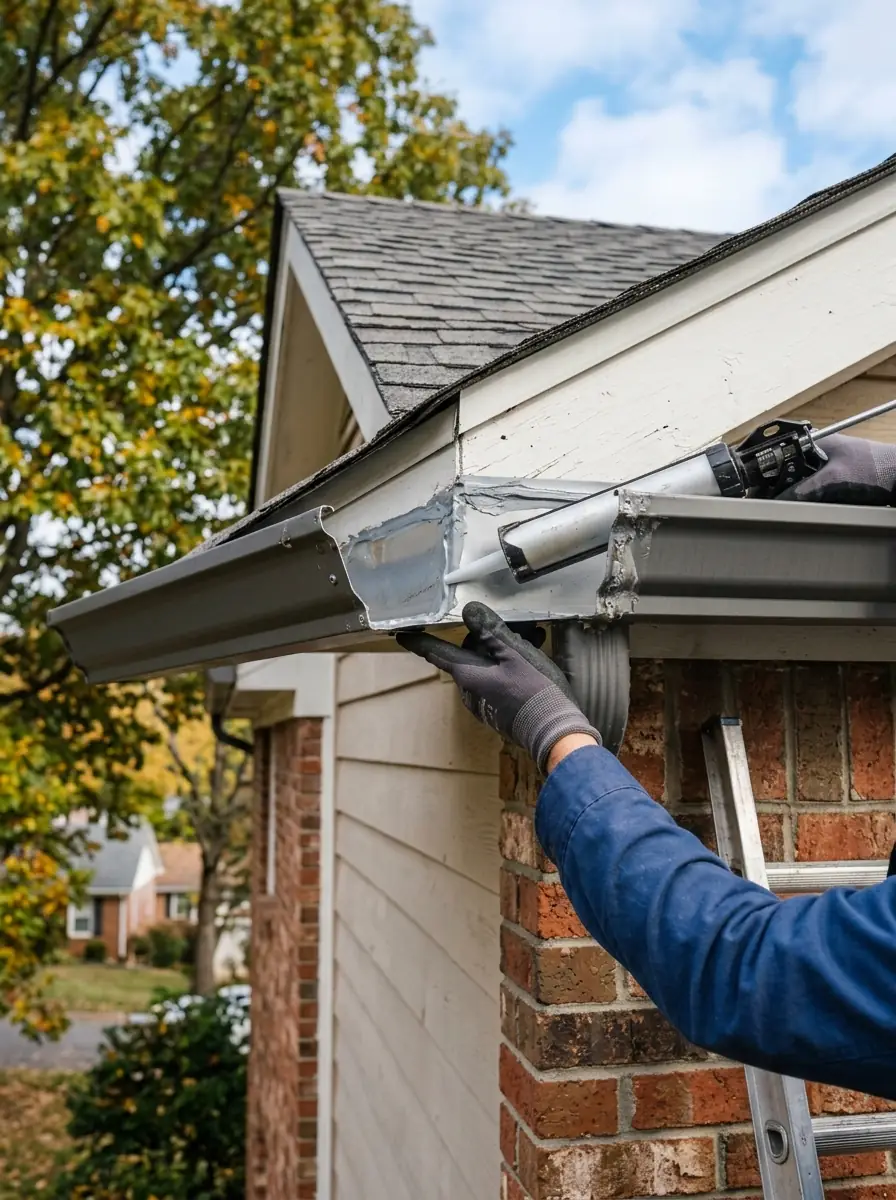
Sealant choice and surface preparation
Surface preparation is most of the job. Old sealant is cut and scraped back until clean metal shows on both faces of the joint, then the surfaces are cleaned so nothing interferes with the bond.
Sealant choice matters less than preparation but it still matters. A gutter joint moves with temperature all year, so the material has to stay flexible rather than cure hard.
Application is inside and out where the joint allows. Sealing only the visible outer face leaves the water side unprotected, which is the wrong way round.
What a leak sealing visit covers
- Every joint on the affected elevation inspected, not just the visible drip
- Section cleared and allowed to dry
- Old sealant cut and scraped back to bare metal on both faces
- Joint checked for physical separation and refastened where needed
- Flexible sealant applied inside and out where the joint allows
- Cure time respected before water is introduced
- Run flushed and every sealed joint watched under flow
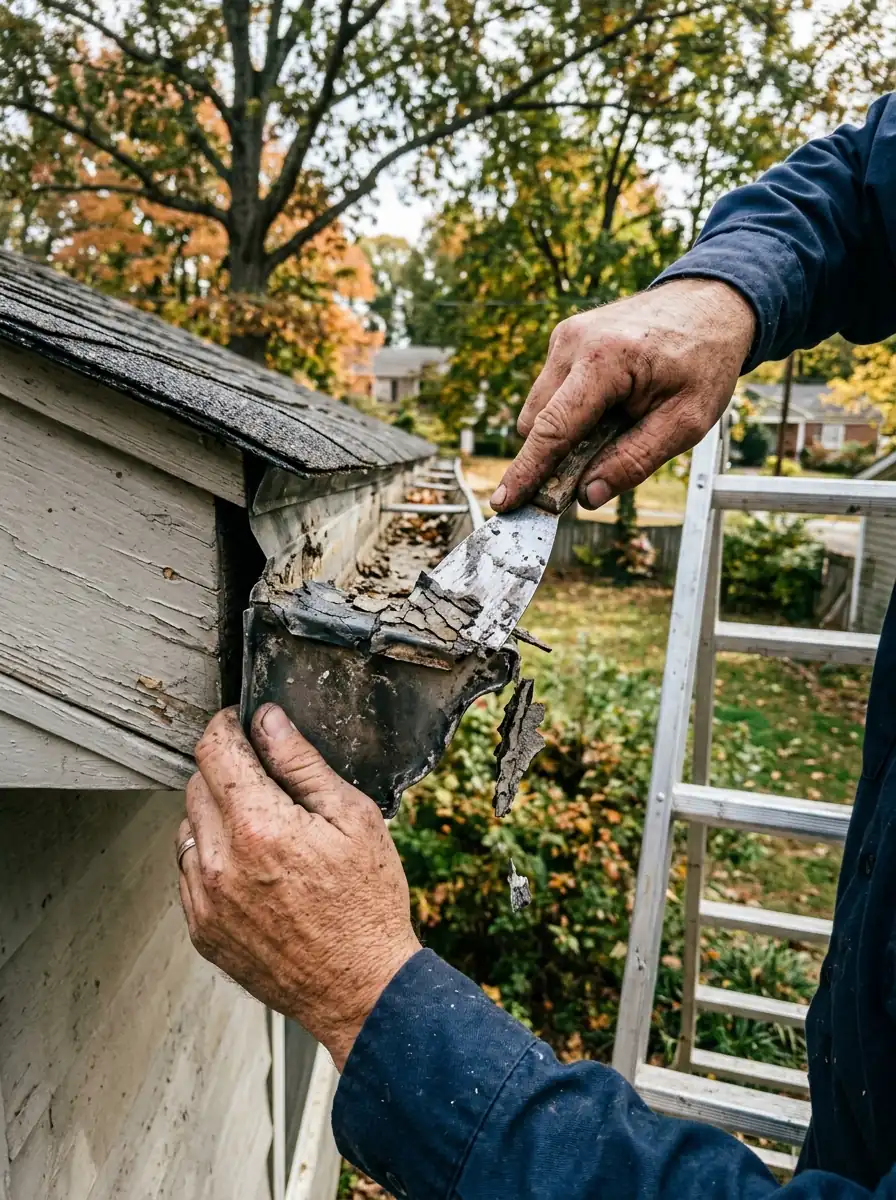
How long leak sealing takes
A single corner or end cap is usually under an hour of working time, plus cure before water goes near it.
Every joint on one elevation is a half day, most of it preparation rather than application.
Weather sets the schedule. Sealant needs dry surfaces and reasonable temperatures, so we do not apply it in the rain and then call it done.
Adding sealant against resealing properly
| What it involves | Doing it yourself | Bringing us in |
|---|---|---|
| Surface preparation | New sealant straight onto the old | Old sealant cut back to bare metal |
| What the new seal bonds to | A cracked layer that is already failing | Clean metal that will not move independently |
| How long it lasts | Often less than a year | Years, with the joint moving as one |
| Cost over time | Repeated every season | Once, properly |
What ages sealant in East Tennessee
Thermal cycling is what ages sealant here. Knoxville swings hard between summer heat and winter cold, and every cycle works a joint a fraction.
Sun exposure decides which elevations fail first. South and west facing runs across the county reach the end of their sealant life years before shaded north elevations.
The wet season adds the rest. A joint that is damp for weeks at a time under canopy in Sequoyah Hills or Lindbergh Forest degrades faster than one that dries between storms.
What leak sealing depends on
Number of joints
The main driver, counted across the elevations affected.
Accessibility
Upper story corners take longer to stage than a single story eave.
How far the old sealant has spread
Years of layered repairs take longer to remove.
Whether the joint has opened
A miter that has physically separated needs refastening as well.
Corrosion at the joint
Steel joints that have corroded need different treatment.
Clearing first
The section has to be clear and dry before anything is applied.
Weather window
Sealant needs dry surfaces and reasonable temperatures to cure.
Leak sealing commonly plans at $95 to $260 depending on joint count and access. Planning ranges rather than quotes.
Where we take gutter leak sealing calls
Gutter Leak Sealing is available across these Knoxville area ZIP codes and the towns around them.
- Bearden (37919)
- West Hills (37909)
- Fountain City (37918)
- Sequoyah Hills (37919)
- Cedar Bluff (37923)
- Hardin Valley (37932)
- Karns (37931)
- Halls Crossroads (37938)
- Powell (37849)
- South Haven (37920)
- Downtown Knoxville (37902)
- Holston Hills (37914)
- Rocky Hill (37919)
- Inskip (37912)
- Farragut (37934)
- Maryville (37804)
- Oak Ridge (37830)
- Alcoa (37701)
How we make a seal hold
Cut back to bare metal
The entire difference between a repair that holds and one that returns.
Every joint checked
The visible drip is rarely the only one at that stage.
Sealed inside and out
The water side is the side that matters most.
Cure respected before testing
Flushing a fresh joint too early undoes the work.
Leak questions from Knox County
Corners are sealed joints, and sealant hardens and cracks over years of thermal movement. The metal is usually fine.
It rarely lasts. New sealant bonds to the old cracked layer, which is already failing, so the leak returns in the same place.
Years, when the old material is removed and the surfaces are clean and dry. A season at best when it is applied over the top.
They are often first. End caps are sealed rather than formed, and they sit at the point of most movement.
Preparation yes, application depends. Sealant needs reasonable temperatures and dry surfaces to cure properly.
Then it needs refastening as well as resealing. Sealant is not a structural fix for a separated miter.
Not usually, but it soaks the fascia directly below it, and that is what turns a cheap job into an expensive one.
If several joints on one elevation are failing together, that is worth discussing. A single failed corner is not a reason to replace a sound run.
Work that often comes with leaks
Gutter Repair Service
For runs with several faults rather than joints alone.
Fascia & Soffit Repair
Board soaked by a long standing drip.
Gutter Slope Correction
Standing water accelerates every joint failure.
Gutter Replacement Service
When joints across an elevation are all going together.
Gutter Inspection Service
A documented check of every joint on the house.
Get the drip stopped properly
Tell us which corner is dripping and how long it has been going, and we will reseal it back to bare metal.