Roof Valley Drainage Repair in Knoxville, TN
Valleys deliver more water per foot than any other part of a roof. Where one lands on a gutter, ordinary sizing stops being enough.
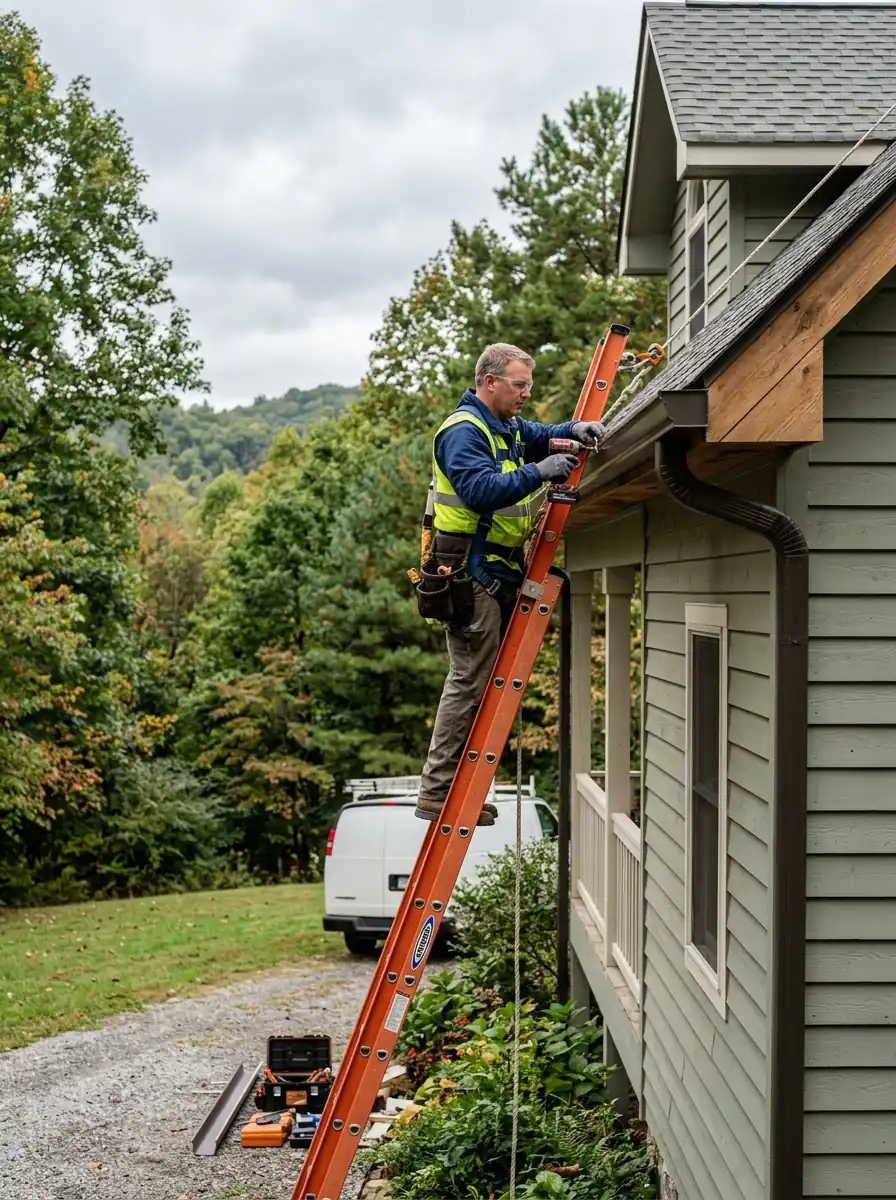
Why valleys overflow a perfectly good gutter
A valley collects two roof planes and funnels them into a channel a few inches wide. The water arrives fast and concentrated, and a gutter sized for average flow simply cannot absorb it at that one point. The result is a run that works everywhere except directly below the valley, which is why the overflow always appears in the same place.
What actually goes wrong at a valley
Velocity is the first problem. Water leaving a valley has momentum and can jump the trough entirely rather than dropping into it.
Volume is the second. Two planes feeding one point can deliver several times what the adjacent run receives, and the outlet nearby may be undersized for that.
Debris is the third. Valleys collect leaf and needle load from both planes and deposit it in one concentrated spot, which is where blockages form first.
Living with it against correcting it
| What it involves | Doing it yourself | Bringing us in |
|---|---|---|
| The overflow point | Spills in every serious storm, permanently | Guard and outlet placement stop it at source |
| Ground below | Trenched further each season | Discharge controlled and routed |
| The gutter section | Sags first under concentrated load | Load spread with tighter fastening |
| What it costs | A replacement elevation eventually | A guard and sometimes an extra outlet |
What valley drainage repair depends on
Number of valleys involved
The main driver. Many Knoxville roofs have three or four.
Whether a splash guard suffices
The cheapest fix, and often the whole answer.
Adding an outlet
A new leader near the valley costs more but solves capacity.
Trough upsizing
Where the section itself is too small, that elevation is replaced.
Erosion repair below
Ground work is separate from the roof edge work.
Height and access
Valleys are often at the least accessible part of a roof.
Debris clearing first
The valley and the trough below have to be cleared to assess.
Splash guards commonly plan at $65 to $140 per valley fitted, with an added outlet running $135 to $340. Planning ranges rather than quotes.
What fixing the valley transition changes
Overflow stops at the valley
The one spot that never worked starts working.
Water enters the trough, not past it
A guard redirects velocity downward.
Erosion below ends
Concentrated discharge stops cutting the ground.
Debris is manageable
Load spread rather than piled in one section.
Fasteners stop failing there
Weight is distributed rather than concentrated.
The wall stops staining
Water going behind the trough is what marks it.
The rest of the run keeps working
Fixing one point rather than replacing an elevation.
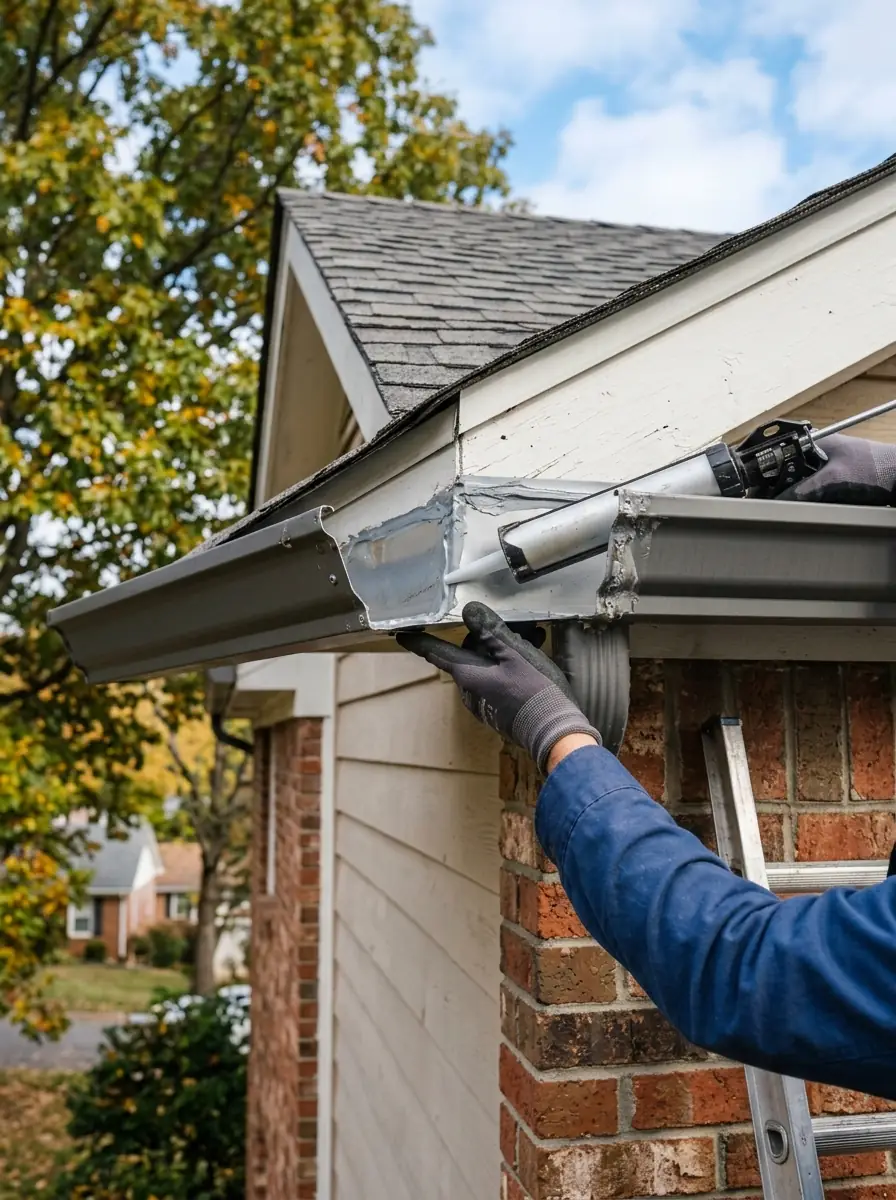
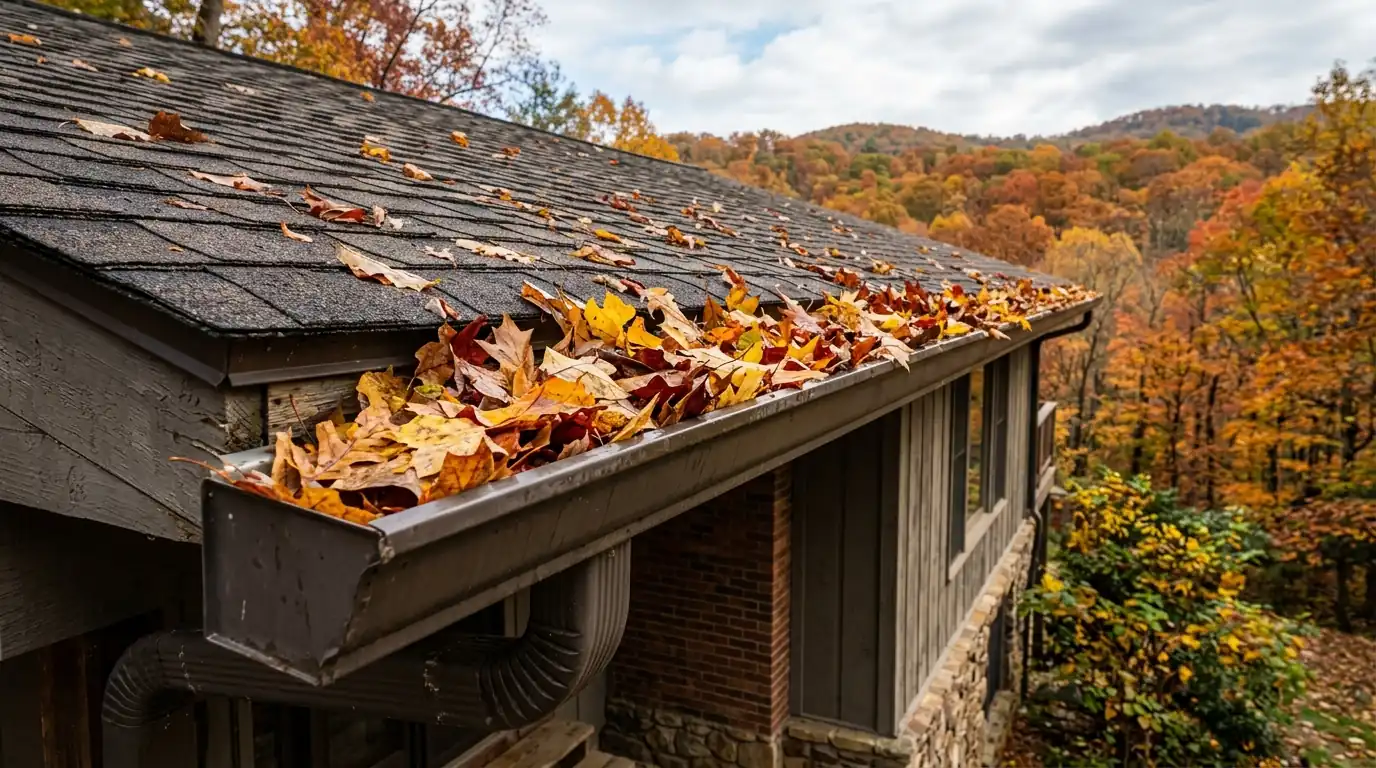
Ground cut up below the valley?
Concentrated discharge does real damage to clay soil. Routing it away is the other half of the fix.
Splash guards, outlet placement and velocity
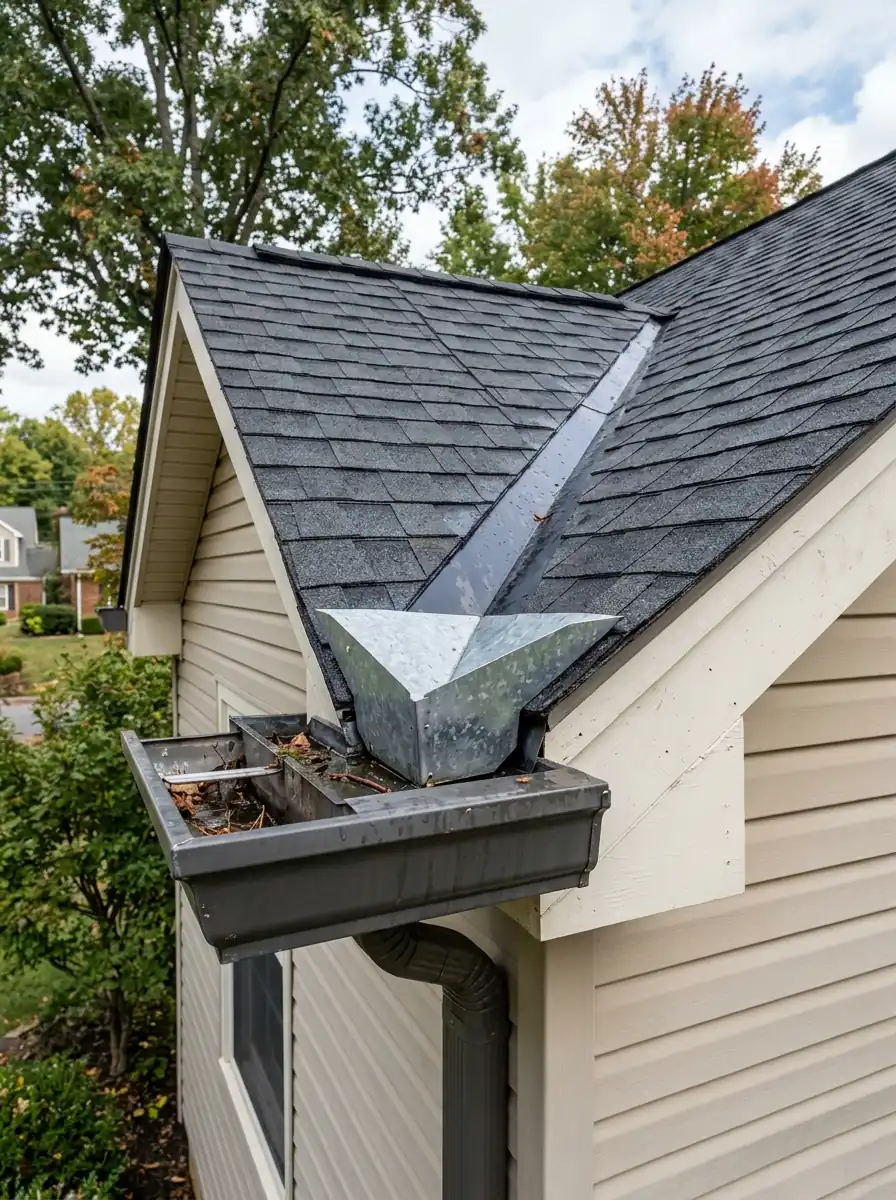
A splash guard is a raised metal plate fitted inside the trough at the valley. It catches water that would otherwise carry straight over the front lip and directs it down into the run.
Outlet placement is the other half. Putting a leader close to the valley, rather than at the far end of the elevation, gives the concentrated flow somewhere to go immediately instead of traveling the length of the trough first.
Where both are already right and it still overflows, the answer is capacity: a larger trough section, a bigger leader, or an additional outlet. That judgment comes from watching it rather than guessing.
Signs a valley is the problem
Overflow always at the same spot
Directly below a valley is the tell.
Water shooting past the gutter
Velocity is carrying it clear of the trough.
A trench worn into the ground below
Concentrated discharge cuts clay quickly.
Debris piled in one section
Both planes are depositing in the same place.
Staining down the wall at one point
Water has been running behind the trough there.
Splash marks well out from the house
Water is leaving the roof with real force.
A gutter section that sags first
Concentrated weight bends fasteners at that point.
What valley drainage work covers
- Valley locations identified against the gutter run below each
- Trough condition and fastener spacing checked at each valley point
- Splash guard fitted where velocity is carrying water past the trough
- Outlet position assessed and a leader added where the run is too long
- Debris cleared from the valley and the trough section below it
- Ground below the discharge inspected for erosion
- Water run down the valley and the transition watched
From inspection to proven flow
You describe the overflow point
Where it spills and whether it is always the same spot.
Valleys are located
Against the run below each, because the cause is above the symptom.
The section is cleared
Nothing can be assessed under piled debris.
Velocity is observed
Water down the valley shows whether it is jumping the trough.
A guard is fitted
Where velocity rather than capacity is the problem.
Capacity is addressed
An added outlet or larger section where the guard is not enough.
The transition is proved
Water down the valley with the trough watched below.
How long valley work takes
Fitting a splash guard at one valley is usually under an hour including the flush test.
Adding an outlet and leader near a valley is two to three hours.
Where the elevation needs a larger trough section, that becomes replacement work and is scheduled as such.
Knoxville roofs with valley problems
Complex rooflines are the pattern west of the city. Homes in Gettysvue, Choto and Hardin Valley carry multiple gables and several valleys feeding a small number of outlets.
The older neighborhoods produce a different version. Porch roofs and rear additions in Old North Knoxville and Island Home Park create valleys that were never part of the original drainage plan.
Under heavy canopy the debris side dominates. In North Hills and Lindbergh Forest the valley collects from both planes and delivers a concentrated mat straight into the trough below.
Where we take roof valley drainage repair calls
Roof Valley Drainage Repair is available across these Knoxville area ZIP codes and the towns around them.
- Bearden (37919)
- West Hills (37909)
- Fountain City (37918)
- Sequoyah Hills (37919)
- Cedar Bluff (37923)
- Hardin Valley (37932)
- Karns (37931)
- Halls Crossroads (37938)
- Powell (37849)
- South Haven (37920)
- Downtown Knoxville (37902)
- Holston Hills (37914)
- Rocky Hill (37919)
- Inskip (37912)
- Farragut (37934)
- Maryville (37804)
- Oak Ridge (37830)
- Alcoa (37701)
How we treat a valley properly
The cause is found above the symptom
The overflow point is below the valley, not at it.
Velocity and capacity treated separately
A guard fixes one; only an outlet fixes the other.
Fastening checked at the valley
Concentrated weight is why that section sags first.
Proved by running the valley
Water down the actual valley, not just through the trough.
Valley questions from Knox County
Almost always because a roof valley lands there. Two planes concentrate into one narrow path and deliver far more water than the adjacent run receives.
A raised metal plate fitted inside the trough at the valley. It catches water that would otherwise carry over the front lip and directs it down into the run.
Sometimes. If water is jumping the trough entirely, a guard helps more than size. If the trough genuinely fills, capacity is the answer.
Close to it, ideally. Making concentrated flow travel the length of a run before it can leave is what causes mid run overflow.
To any standard K style trough, yes. Half round has fewer options and needs discussing.
They collect from both planes, so yes. A cleaning visit clears the valley as well as the trough.
It is the most damaging kind, because it is concentrated. Ground erosion and wall staining appear far faster than from general overflow.
Usually. Splash guards and outlet placement are gutter work. Damage to the valley flashing itself belongs with a roofer.
Work that goes with valley drainage
Gutter Guard Installation
Keeping the debris load out of the valley section.
Downspout Installation
An outlet near the valley is often the real fix.
Yard Drainage Correction
Controlling the ground damage below the discharge.
Clogged Gutter Repair
Valleys are where blockages form first.
Gutter Hanger Replacement
Concentrated weight is why that section sags first.
Find out why it spills in that one spot
Tell us where the overflow appears and we will look at what is above it before touching the gutter.