French Drain Installation in Knoxville, TN
Where the ground itself stays wet, a French drain collects groundwater along its length and carries it to somewhere it can leave. It is a different job from routing a downspout.
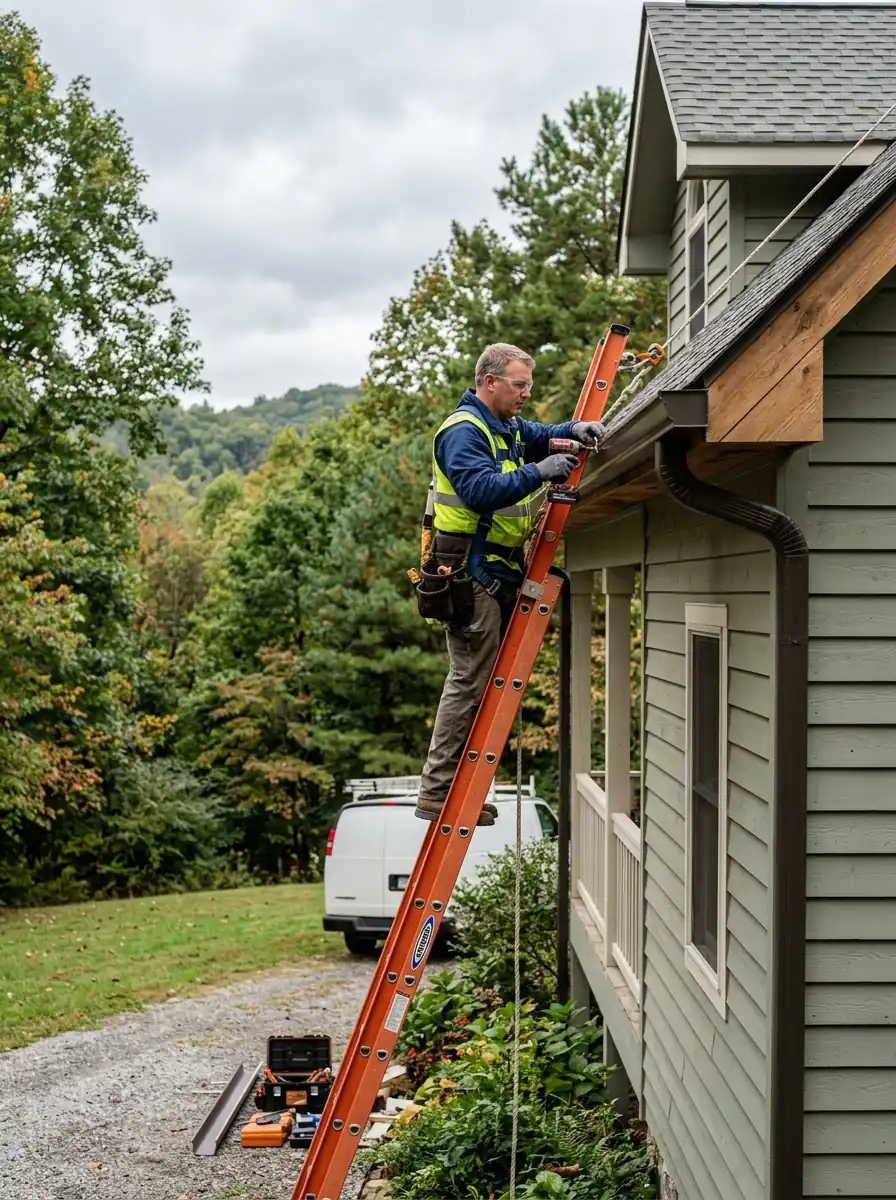
What a French drain does
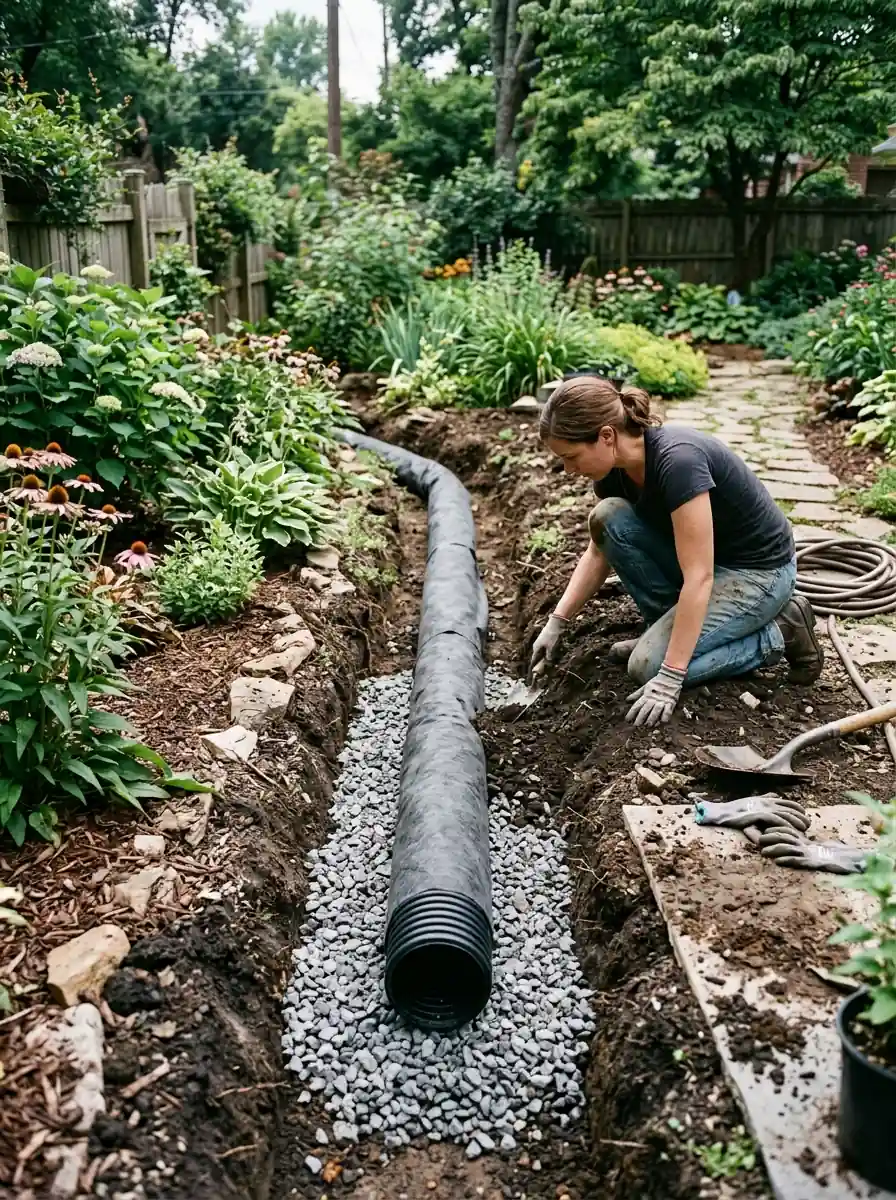
A French drain is perforated pipe laid in a gravel bed, usually wrapped in filter fabric. Water in the surrounding soil enters through the perforations along the whole length and runs out at a discharge point. It is designed to collect groundwater slowly, which is exactly why connecting roof leaders into one overwhelms it.
French drain or buried downspout line
A buried downspout line is solid pipe carrying roof water a distance. It moves a large volume quickly from a known point to a known point.
A French drain is perforated pipe collecting groundwater slowly along its length. It is about absorption rather than transport.
Both are often needed on the same Knoxville property, and keeping them as separate systems is what makes each one work. Combined, the roof volume floods the drain and the ground water has nowhere to go.
Regrading against a French drain
| What it involves | Doing it yourself | Bringing us in |
|---|---|---|
| What it addresses | Surface water running across the ground | Water held within the soil itself |
| Disruption | Reshaping the ground surface | A trench that is reinstated afterward |
| Where it works | Where there is somewhere for surface water to go | Where the ground itself stays saturated |
| Longevity | Settles and needs revisiting | Decades, when fabric and gravel are done properly |
What a French drain depends on
Trench length
The main driver, measured along the collecting run.
Depth required
Deeper trenches move more spoil and take longer.
Ground conditions
Rock and heavy clay slow excavation considerably.
Gravel and fabric volume
Real material cost that should never be economized on.
Discharge arrangement
A daylight outlet is simplest; anything else adds work.
Obstacles crossed
Driveways, paths and mature roots each add method and time.
Reinstatement
Turf, beds and hard surfaces put back properly.
French drains commonly plan at $28 to $58 per linear foot in this market depending on depth, ground conditions and reinstatement. Planning ranges rather than quotes.
What a French drain changes
Ground water is collected
Along the whole length rather than at one point.
Pressure comes off structures
Retaining walls and foundations stop holding water back.
The lawn becomes usable
A permanently wet area dries out and stays dry.
Crawlspaces get drier
Where the source was groundwater rather than the roof.
Slope erosion slows
Subsurface water surfacing on a bank is what cuts it.
It works without maintenance
A properly built drain runs for decades untouched.
Planting survives
Roots in permanently saturated soil do not.
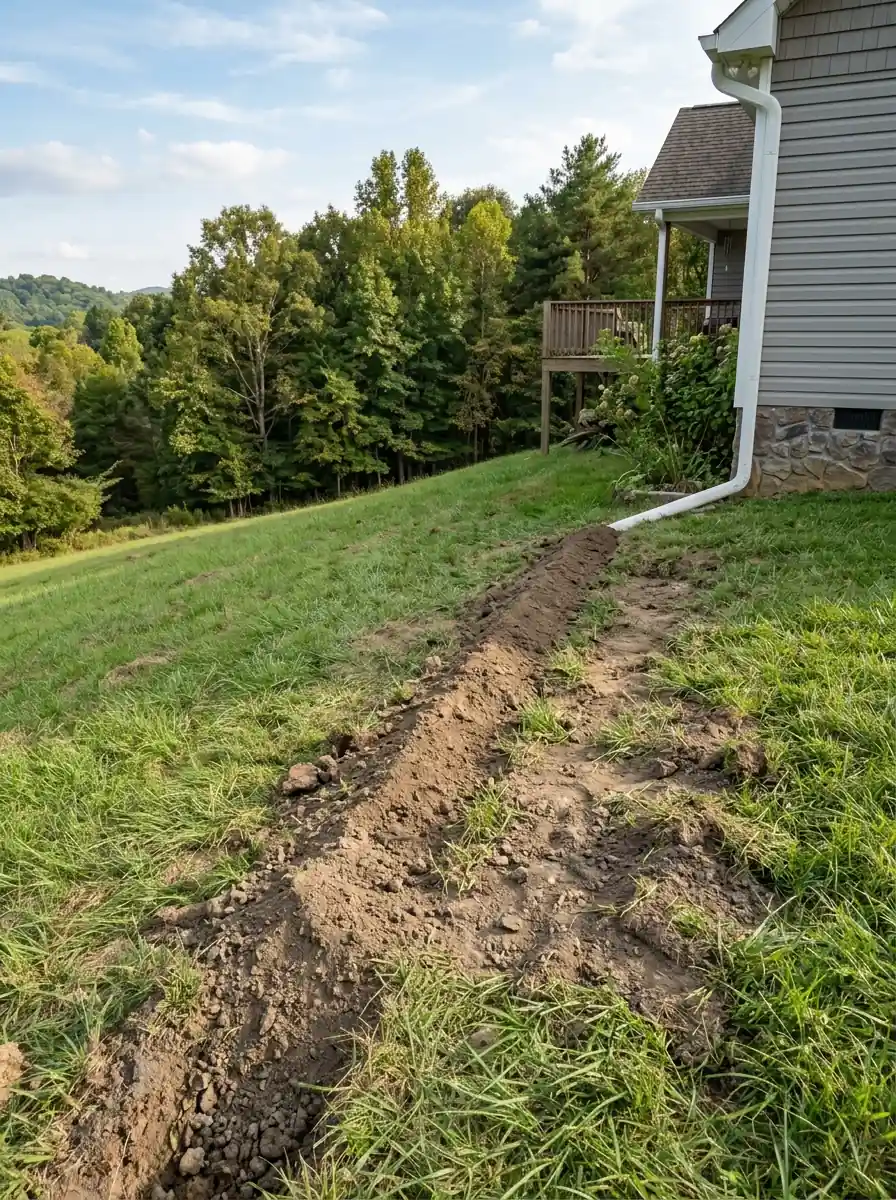
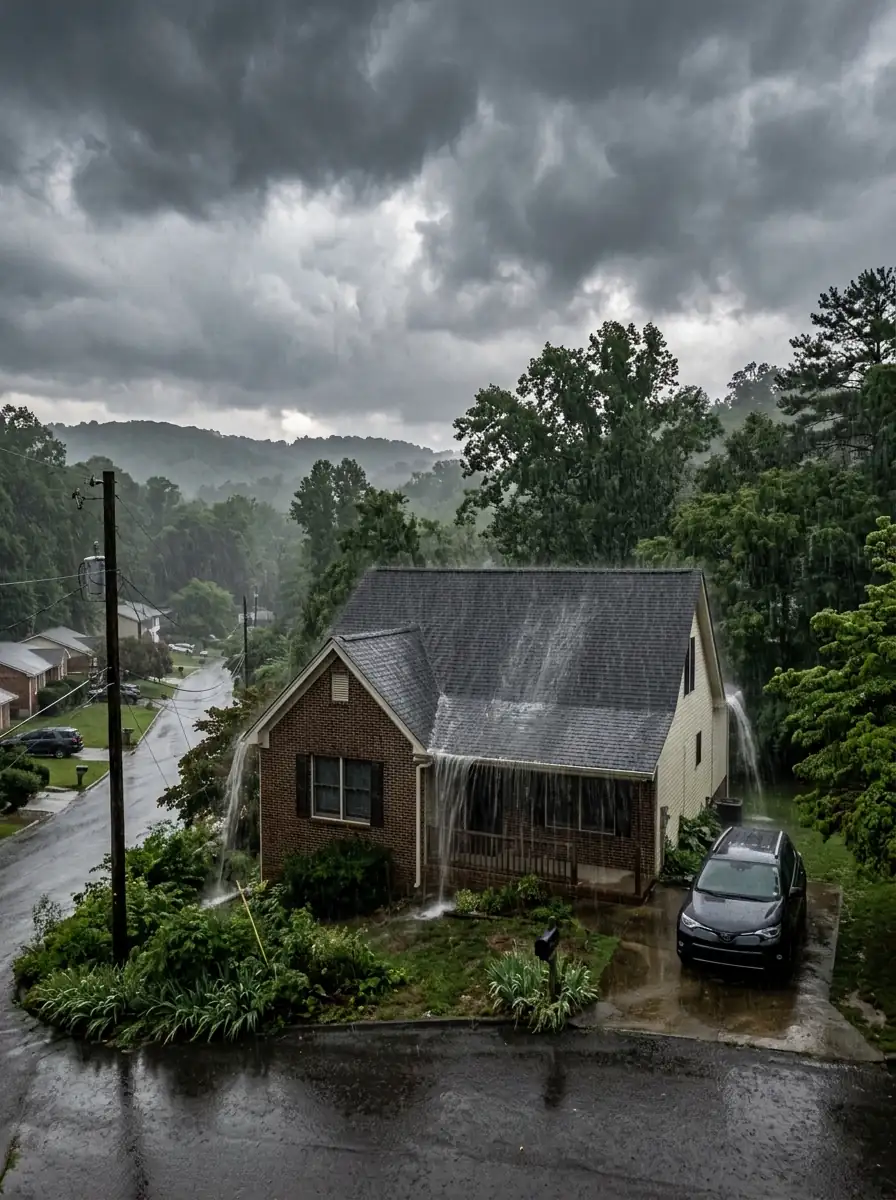
Roof water part of the problem too?
Roof volume needs its own solid line. Mixing the two overwhelms both systems.
Gravel, fabric and why they matter
The gravel is not filler. It creates a void that water can move into faster than it moves through soil, so the drain collects from a wider area than the pipe alone would.
Filter fabric wraps the gravel to keep fine soil out. Without it, silt migrates in, fills the voids and the drain slowly stops collecting. Fabric is the single most commonly skipped component and the most common reason drains fail after a few years.
The discharge point still decides everything. A drain collecting perfectly and emptying somewhere the water cannot leave has just moved the wet patch downhill.
Signs the ground needs a drain
A lawn area that never dries
Groundwater is sitting rather than moving.
Standing water days after rain
Clay is holding what it cannot absorb.
Water in a crawlspace with no roof source
Groundwater rather than roof water.
A slope with a permanent wet band
Water is moving through the soil and surfacing.
Moss taking over one part of the lawn
Sustained saturation in that area.
Retaining wall weeping or bulging
Hydrostatic pressure behind the structure.
Damp at the base of an exterior wall
Ground water sitting against the foundation.
What a French drain installation includes
- Grade survey to find where water moves and where it can discharge
- Utility locate arranged before any excavation
- Route marked and agreed with you before the trench opens
- Trench excavated to depth with fall maintained to the outlet
- Filter fabric laid, gravel bedded, perforated pipe set and wrapped
- Discharge point established at daylight or a suitable outlet
- Backfill, turf reinstated, and water introduced to prove flow
From survey to proven discharge
You describe the wet area
Where it sits, how long it stays and what it affects.
The grade is surveyed
Where water arrives from and where it could discharge.
Utilities are located
Marked before any excavation begins.
The route is agreed
Marked out so you can see the run and the outlet position.
The trench is cut to fall
Depth and pitch maintained toward the discharge.
Fabric, gravel and pipe are laid
In that order, with the fabric wrapped over the top.
Reinstated and proved
Backfilled, turf replaced, then water introduced to confirm flow.
How long a French drain takes
A short drain along one elevation is usually a day including reinstatement.
Longer collecting runs across a property take two days or more depending on ground conditions.
Rock is the variable that changes everything. Where it appears, method and timing both change and you will be told before the work continues.
Clay, slope and groundwater in Knox County
Knox County red clay is the reason these are needed. It absorbs slowly and holds what it takes, so water that arrives faster than it can drain simply sits.
Slope makes it worse rather than better in many places. On the hillside streets around Sterchi Hills and Kimberlin Heights, water moves through the soil downhill and surfaces partway down as a permanent wet band.
The bottomland areas are the other pattern. Near the river in Island Home Park and Old Sevier the water table itself sits high, and a drain has to be designed around that rather than against it.
Where we take french drain installation calls
French Drain Installation is available across these Knoxville area ZIP codes and the towns around them.
- Bearden (37919)
- West Hills (37909)
- Fountain City (37918)
- Sequoyah Hills (37919)
- Cedar Bluff (37923)
- Hardin Valley (37932)
- Karns (37931)
- Halls Crossroads (37938)
- Powell (37849)
- South Haven (37920)
- Downtown Knoxville (37902)
- Holston Hills (37914)
- Rocky Hill (37919)
- Inskip (37912)
- Farragut (37934)
- Maryville (37804)
- Oak Ridge (37830)
- Alcoa (37701)
How we build a drain that keeps working
Filter fabric never skipped
It is the most commonly omitted component and the most common reason drains fail.
Roof water kept out
Leader volume overwhelms a system built to collect slowly.
Discharge found before digging
A drain that collects perfectly and cannot empty has moved the problem.
Route agreed with you first
You see the marked run and the outlet before the trench opens.
French drain questions from Knox County
A French drain is perforated pipe in gravel collecting groundwater slowly along its length. A downspout line is solid pipe moving roof water quickly from point to point.
Best not to. Roof volume overwhelms a system designed to collect slowly, and both then underperform.
Deep enough to intercept the water causing the problem, which the survey determines. Shallow drains address surface water; deeper ones address saturation.
A properly built one with filter fabric runs for decades untouched. One built without fabric silts up and stops collecting within a few years.
If the source is groundwater, often yes. If the source is roof water landing beside the foundation, a buried downspout line is the answer instead.
To a daylight outlet on lower ground wherever the grade allows. The discharge point is found at the survey before anything is designed.
Yes, and that is often exactly where it belongs. The depth and distance are decided by what the survey finds.
Yes. Trenches are backfilled and turf reinstated as part of the job, and the area grows back through the season.
Drainage work often done together
Underground Downspout Drainage
Roof water gets its own solid line, kept separate.
Yard Drainage Correction
Grading and swales where the surface is the problem.
Downspout Extension Installation
The surface option for moving leader discharge.
Downspout Installation
Leader placement decides where the roof volume lands.
Gutter Inspection Service
Establishing what is roof water and what is groundwater.
Get the wet ground surveyed
Tell us where the water sits and how long it stays, and we will walk the grade and tell you what it actually needs.