Clogged Gutter Repair in Knoxville, TN
An overflowing gutter during rain is almost always a blocked outlet rather than a full trough. Clearing it stops the water going where it should not.
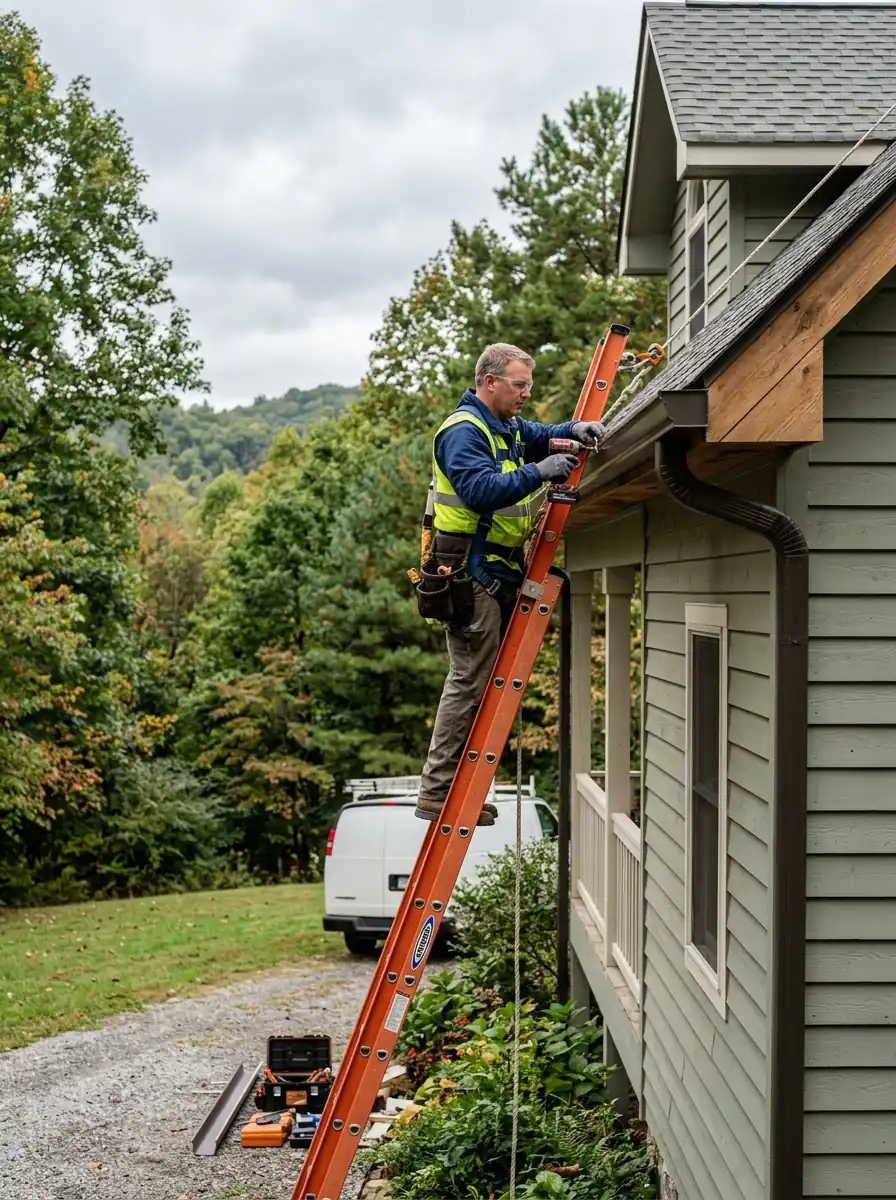
Why a gutter overflows while the trough looks clear
The opening into the downspout is smaller than the trough, so it blocks first. A wad of oak stems or a single shingle granule mat at the outlet will back a whole run up while the rest of the gutter looks fine from the ground. Clearing the outlet and rodding the leader usually ends it in one visit.
Where blockages actually form
The outlet is the first place. Debris that floats freely along a trough jams where the opening narrows, and once a mat forms it collects everything behind it.
The elbow at the top of the downspout is the second. Two direction changes in a short run catch stems that made it through the outlet.
The bottom elbow at grade is the third and the most often missed. Blockages there back water up the whole leader, so the overflow appears at the roof while the fault is at your feet.
What tells you it is a blockage
A waterfall at one point
Overflow concentrated in one place points at the nearest outlet.
A dry downspout during rain
No discharge at grade while water pours above is conclusive.
Water behind the gutter
A backed up run spills over the rear edge onto the fascia first.
Gurgling from the leader
Air forcing past a partial blockage makes a distinctive sound.
Overflow that stops when rain eases
A partial blockage passes light rain and fails in heavy.
A trench forming below the eave
Concentrated overflow cuts ground fast on clay soil.
Damp on an interior wall below
Water spilling behind the gutter finds the wall cavity.
From the call to proven discharge
Call and describe where
Which elevation, which corner, and whether the downspout is running.
We find the actual block
Outlet, top elbow or bottom elbow, checked in that order rather than guessed.
The outlet is opened
Packed material is pulled out rather than pushed further down the leader.
The leader is rodded
The downspout is cleared through its full length, both elbows included.
The run is flushed
Water is put through and the discharge at grade is watched.
The trough is checked
Whatever caused the block is usually still sitting in the run.
You hear the cause
Debris load, undersized outlet or lost fall, described with the reason.
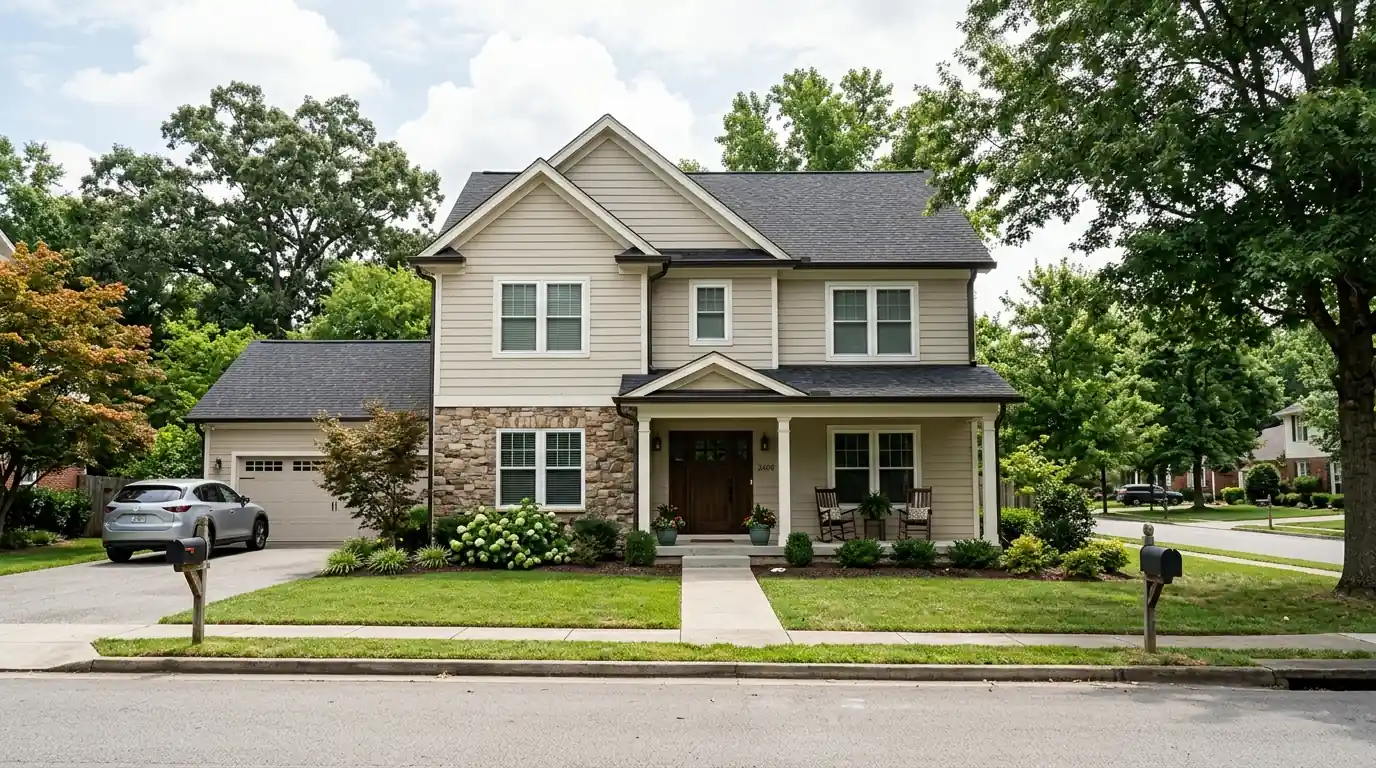
Water already inside?
If overflow has reached a wall or a ceiling, call rather than wait. The blockage is the easy part.
What clearing it properly prevents
The overflow stops that day
A cleared outlet ends the symptom immediately.
Fascia stops getting soaked
Water spilling behind the gutter is what softens the board.
The foundation gets a break
Concentrated overflow at one point is the worst case for clay soil.
Siding stops staining
Streaks below the overflow point set in quickly.
The cause is identified
Clearing without knowing why means the same call next season.
Damage found early
A blockage call is when soft fascia and open miters get spotted.
No guessing about the leader
Rodding proves the full downspout rather than the top of it.
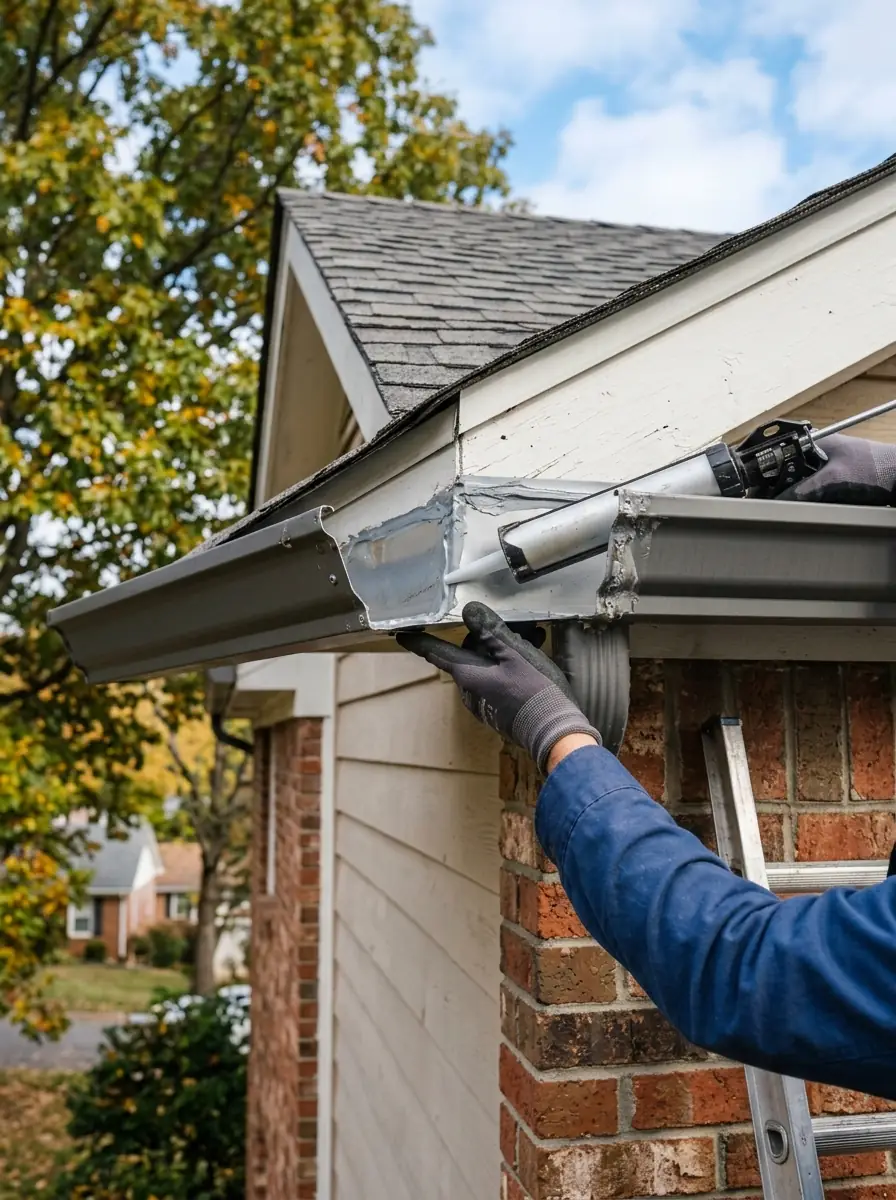
Why rodding the leader matters
Clearing the outlet from the top and walking away is why blockages come back within weeks. Material pushed down rather than pulled out simply relocates to the first elbow.
Rodding the leader through its full length settles it. The downspout is cleared from both ends where access allows, and the bottom elbow is opened rather than assumed clear.
Then water proves it. Running a hose through the run and watching the discharge at grade is the only honest confirmation, and it takes two minutes.
What a blockage call covers
- The affected run identified rather than the whole house cleared blindly
- Outlet opened and packed material pulled out
- Top elbow checked and cleared
- Downspout rodded through its full length
- Bottom elbow at grade opened and proved
- Full run flushed with the discharge watched
- Cause reported, whether debris load, outlet size or lost fall
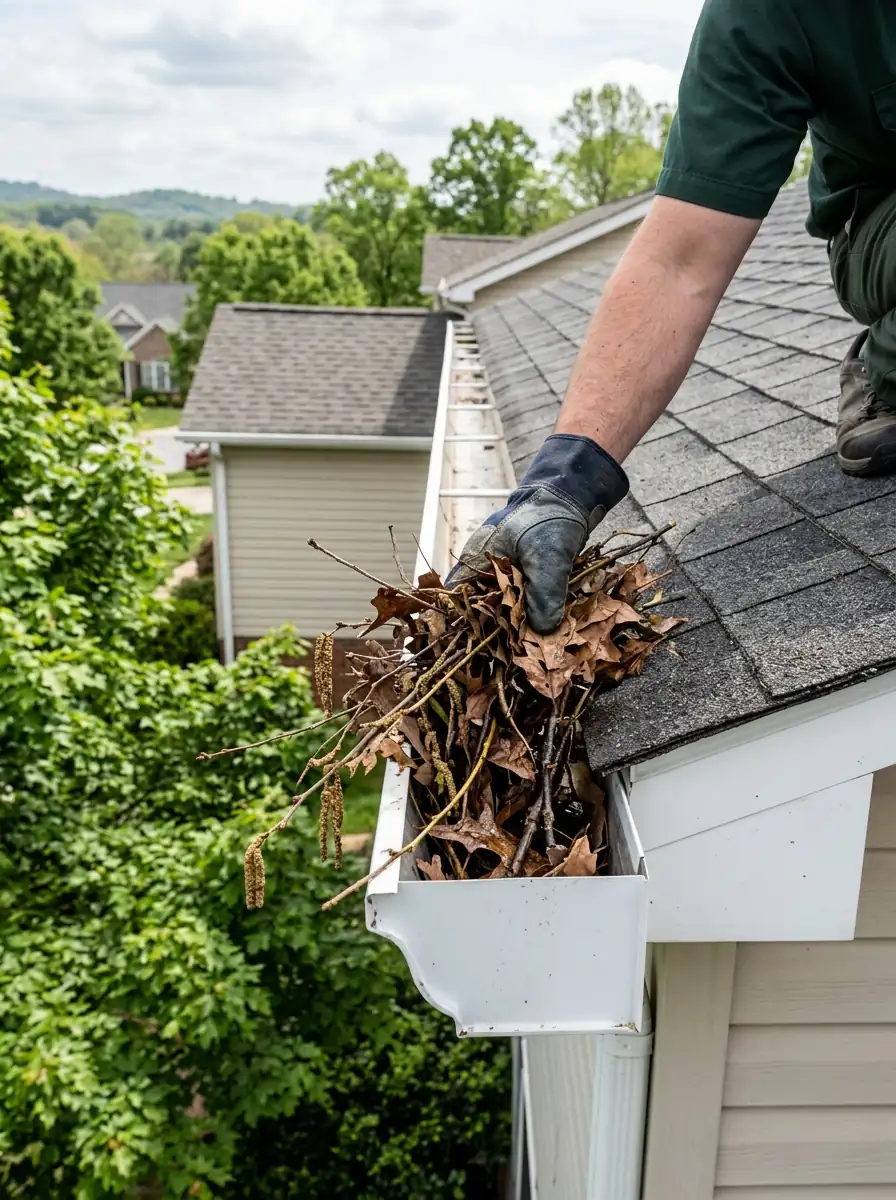
How long clearing a blockage takes
A single blocked outlet with a clear leader is usually under an hour including the flush test.
A packed leader with a blocked bottom elbow takes longer, particularly where the downspout runs into a buried line and the underground section has to be proved.
If the trough turns out to be packed along its full length, that becomes a cleaning rather than a blockage call, and you hear that before the extra work starts.
Poking at it from a ladder against a proper clear
| What it involves | Doing it yourself | Bringing us in |
|---|---|---|
| Finding the block | Reaching in at the visible end | Outlet, top elbow and bottom elbow checked in order |
| Clearing method | Pushing material down the leader | Material pulled out, then the leader rodded |
| Proving it | Waiting for the next rain | Hose run through and discharge watched at grade |
| Knowing the cause | Guessing at leaves | Debris load, outlet size and fall all assessed |
What blocks Knoxville outlets
Oak stems block more Knoxville outlets than whole leaves do. They are narrow enough to travel along the trough and stiff enough to knit into a mat at the opening.
Shingle granules are the quiet second cause. Older roofs in Vestal, Burlington and Park City shed grit steadily, and it settles at the outlet where the flow slows.
On the hillside streets around Sterchi Hills and Kimberlin Heights the bottom elbow is the usual culprit, because leaders discharge onto ground that has silted up against them.
What a blockage call depends on
How many runs are affected
One blocked outlet is a short visit. Several is closer to a cleaning.
Where the blockage sits
An outlet is quick. A leader packed at the bottom elbow takes longer.
Height and access
Upper story outlets take more staging than a single story eave.
Debris load in the trough
A run that is packed end to end needs clearing, not just unblocking.
Buried downspout lines
A leader running into a buried line needs the underground section proved too.
Guards fitted
Guards that must come off to reach the outlet add time.
Urgency
A call during a storm is a different job from a scheduled visit, and the difference is time.
Single blockage calls in this market commonly plan at $135 to $290, more where several runs are affected or a buried line has to be proved. Planning figures, not quotes.
Where we take clogged gutter repair calls
Clogged Gutter Repair is available across these Knoxville area ZIP codes and the towns around them.
- Bearden (37919)
- West Hills (37909)
- Fountain City (37918)
- Sequoyah Hills (37919)
- Cedar Bluff (37923)
- Hardin Valley (37932)
- Karns (37931)
- Halls Crossroads (37938)
- Powell (37849)
- South Haven (37920)
- Downtown Knoxville (37902)
- Holston Hills (37914)
- Rocky Hill (37919)
- Inskip (37912)
- Farragut (37934)
- Maryville (37804)
- Oak Ridge (37830)
- Alcoa (37701)
How we stop it coming straight back
Material pulled, not pushed
Anything driven down the leader becomes next month's blockage.
The full leader is rodded
Clearing the top of a downspout proves nothing about the bottom.
Discharge watched at grade
The clear is confirmed with water while you are there.
The cause is named
Debris, outlet size or lost fall, so you can decide what to do about it.
Blockage questions from Knox County
The outlet blocks before the trough fills. A wad of stems at the opening will back a whole run up while the gutter looks fine from the ground.
Sometimes, at a single story eave. The risk is pushing material into the leader, which turns a five minute problem into a rodding job.
Watch it during rain. If water is pouring over the gutter and nothing is coming out at grade, the leader is the problem.
The visible leader always. Buried lines are proved with water and cleared where access allows, and we tell you if the underground run needs its own work.
Not on its own. If the cause is heavy debris load or an undersized outlet, the same call comes back next season without a change.
Yes. A run full of standing water is heavy enough to bend hangers and pull the line out of level.
The phone is answered around the clock. Whether someone goes up a ladder depends on lightning and wind, not on willingness.
No. A blockage call targets the run that is overflowing. A cleaning clears every run on the house.
Work that often follows a blockage
Gutter Cleaning Service
When the whole house needs clearing, not one outlet.
Emergency Gutter Repair
For overflow that has already reached a wall or ceiling.
Underground Downspout Drainage
When the leader runs into a buried line that needs proving.
Downspout Repair Service
For leaders that have split, crushed or pulled loose.
Gutter Slope Correction
When the run holds water after it has been cleared.
Get the outlet cleared today
Tell us which corner is overflowing and whether the downspout is running, and we will sort it.