Seamless Gutter Installation in Knoxville, TN
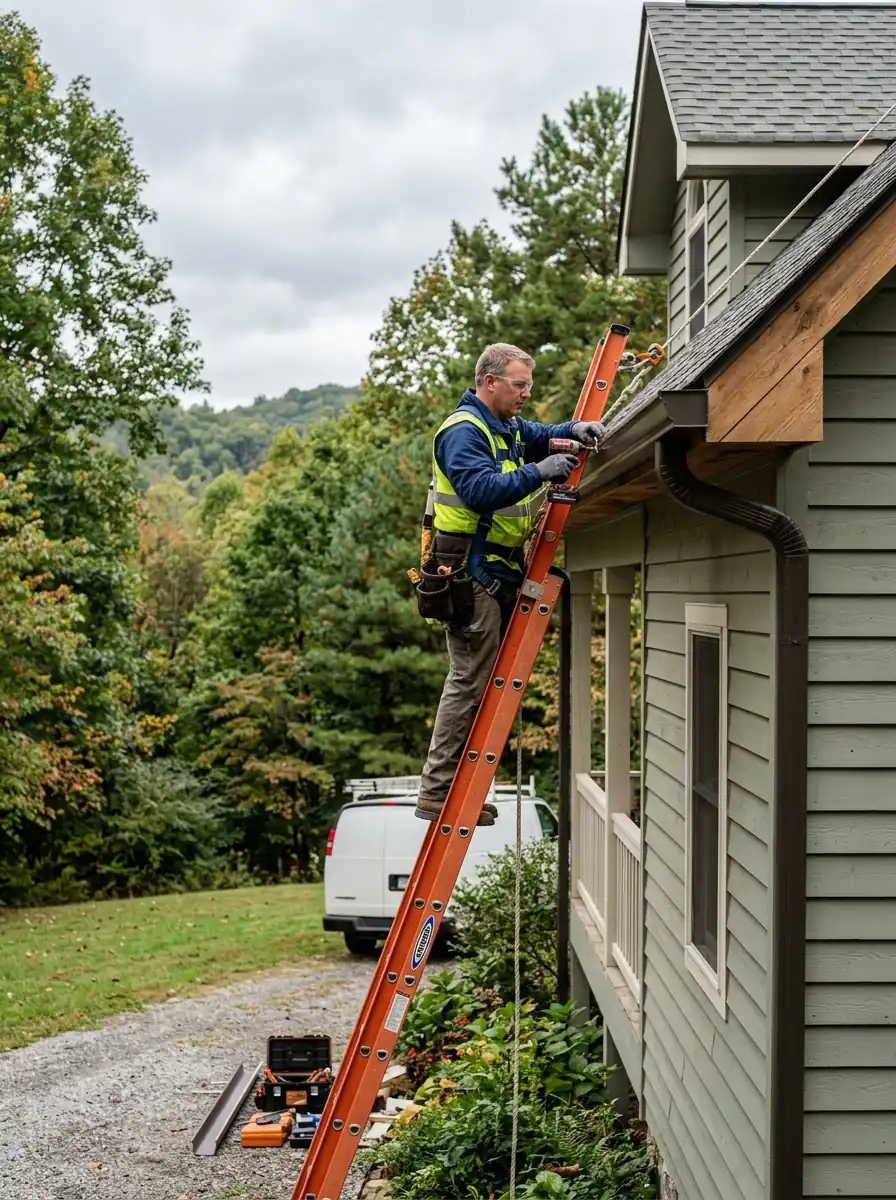
Seamless runs remove the joints that start most leaks. We measure the elevation, form the run to length, and hang it so water reaches the outlet instead of sitting in the middle.
What seamless gutter installation actually changes
A sectional gutter is joined every ten feet, and every joint is a future leak. A seamless run is formed from one continuous coil on site, so the only openings are the outlets, the end caps and the corner miters. On a Knoxville house that matters most on long front elevations, where a sectional run can hold six or seven joints across a single roof plane.
Sizing a gutter for a Knoxville roof, not for a catalog
Most homes here take five inch K style with two by three inch downspouts. That combination handles a typical ranch, bungalow or story and a half without trouble. It stops being enough once the roof area grows or the pitch steepens.
Larger two story homes in Hardin Valley, Gettysvue and Farragut usually move up to six inch trough with three by four inch downspouts. The wider trough carries more water, but the downspout size is the part that decides whether the run drains or backs up during a summer burst.
Roof area, pitch and valley count set the sizing. A steep roof delivers water faster than a shallow one, and every valley concentrates a wide area into a narrow path. We measure those before quoting rather than matching whatever was there.
Renting a brake against having the run formed for you
| What it involves | Doing it yourself | Bringing us in |
|---|---|---|
| Forming the run | A rented brake gives you sections, and you still join them | Coil is fed through a machine on your driveway in one length |
| Getting the pitch right | Chalk line and guesswork from the ground | Fall is set to the outlet and checked before fastening |
| Working at height | Ladder work along the whole elevation, often alone | Two people, staged along the run, with the ladder footed |
| Corner miters | Field cut and caulked, which is where leaks start | Cut to the roof angle and sealed inside and out |
What moves the price of a seamless installation
Total linear feet
The single largest driver. A full wrap on a two story home runs far more footage than a front elevation replacement.
Trough size
Six inch trough and three by four inch downspouts cost more per foot than five inch, and they are the right call on large roofs.
Material choice
Aluminum sits at the low end, steel higher, copper well above both. Coil color rarely changes the figure.
Corner and outlet count
Every miter and every outlet is hand work. A complicated roofline with eight corners costs more than a simple rectangle.
Fascia condition
Soft or split fascia has to be repaired before anything hangs from it, and that is priced separately.
Height and access
Three story elevations, steep grade behind the house, and tight side yards all add staging time.
Extras chosen at the same visit
Guards, buried downspout lines and extensions are usually cheaper fitted during the same visit than added later.
Typical planning figures for aluminum seamless work in this market run about $7.40 to $13.60 per linear foot installed, with six inch and steel toward the upper end and copper well beyond it. Treat that as a range for budgeting, not a quote. Your figure comes from the measured elevation.
What you gain by going seamless
Fewer places to leak
Joints every ten feet become joints only at corners and outlets, which removes most of the failure points on a run.
A cleaner line
One continuous piece follows the fascia without the small steps and mismatches that sectional joints create.
Better flow
Water is not slowed by a lap seam every few feet, so the run clears faster during heavy rain.
Hangers on your spacing
Hidden hangers are placed for the roof and the span, not at whatever interval a section happened to allow.
Color chosen once
Coil comes in a wide range of baked finishes, so the run matches the trim without painting.
Less sealant depending on it
A run that leans on caulk to stay watertight is on a clock. Fewer joints means less to reseal later.
Simpler future service
Cleaning and repair on a continuous run is quicker, which keeps later maintenance visits shorter.
Ready to price a full replacement?
Tell us the elevations you want covered and whether the fascia is sound. We will measure and give you a written figure.
How a run is formed and hung on the day
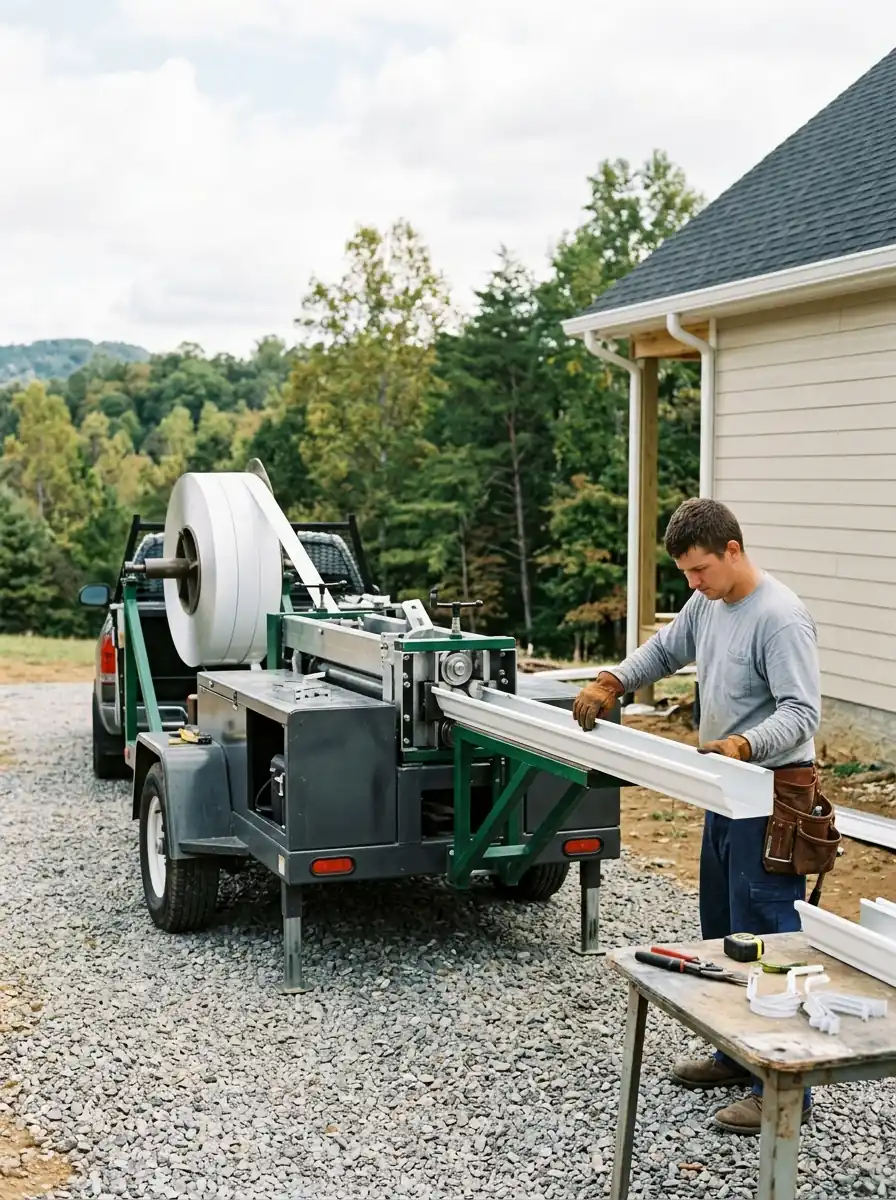
The coil arrives on a roll and runs through a forming machine mounted on the trailer. The machine shapes flat stock into a K style or half round profile at the length we measured, so the piece that comes off is already the right size for that elevation.
Before anything hangs, we look at the fascia. Old spike holes, splits and soft spots decide where hangers can bite. On a house that has been through two or three gutter generations, the sound wood is not always where you would expect.
Hidden hangers are then set at spacing chosen for the span and the roof pitch, usually closer together than a builder run would place them. The fall is set toward the outlet, checked, and only then fastened. Miters are cut to the actual roof angle, which is rarely a clean ninety degrees on an older Knoxville house.
Signs the existing run is not worth keeping
Joints weeping in normal rain
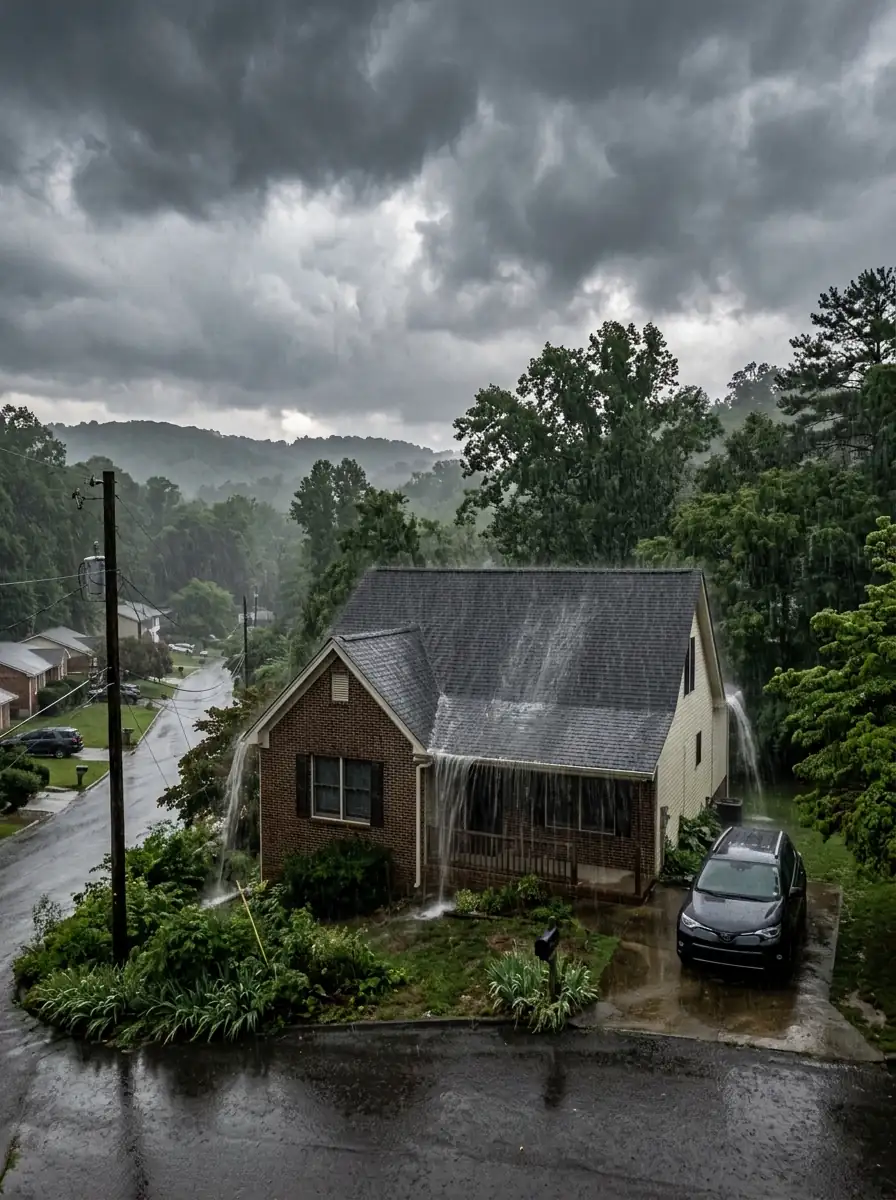
A sectional run that drips at the seams during ordinary rain has reached the end of its sealant life.
Visible dips between hangers
A run that sags in the middle holds water, and standing water accelerates everything else.
Spikes backing out
Nail heads that stand proud of the fascia mean the wood has given up its grip and the run is hanging on borrowed time.
Rust streaks on steel
Once perforation starts along the seam, patching moves the leak rather than ending it.
Sections that no longer meet
Thermal movement pulls poorly joined runs apart, leaving a gap that no amount of sealant closes.
Undersized for the roof
Five inch trough on a large steep roof will overflow in every hard storm regardless of how clean it is.
Repairs stacking up
Three service calls in two seasons usually costs more than replacing the elevation once.
What a seamless installation includes
- Measurement of every elevation with pitch and outlet placement recorded
- Removal and disposal of the existing run where one is being replaced
- Fascia inspection with any soft sections reported before work continues
- Seamless trough formed on site to the measured length
- Hidden hangers set to the span, with fall pitched to the outlet
- Corner miters cut to the real roof angle and sealed inside and out
- Downspouts hung, strapped and finished with an elbow at grade
From first measurement to the flush test
You describe the roof
Elevations, stories and any known fascia trouble. Photos shorten this considerably.
We measure on site
Every run, corner and outlet, plus the pitch of each roof plane feeding it.
Sizing and material are set
Five or six inch, aluminum or steel or copper, and the downspout size that matches the roof area.
You get a written figure
Broken out by elevation, with optional items listed separately rather than folded in.
Old run comes down
Removed and taken away, and the fascia is looked at properly with the gutter off.
New run is formed and hung
Trough rolled to length, hangers set, miters cut and sealed, downspouts strapped.
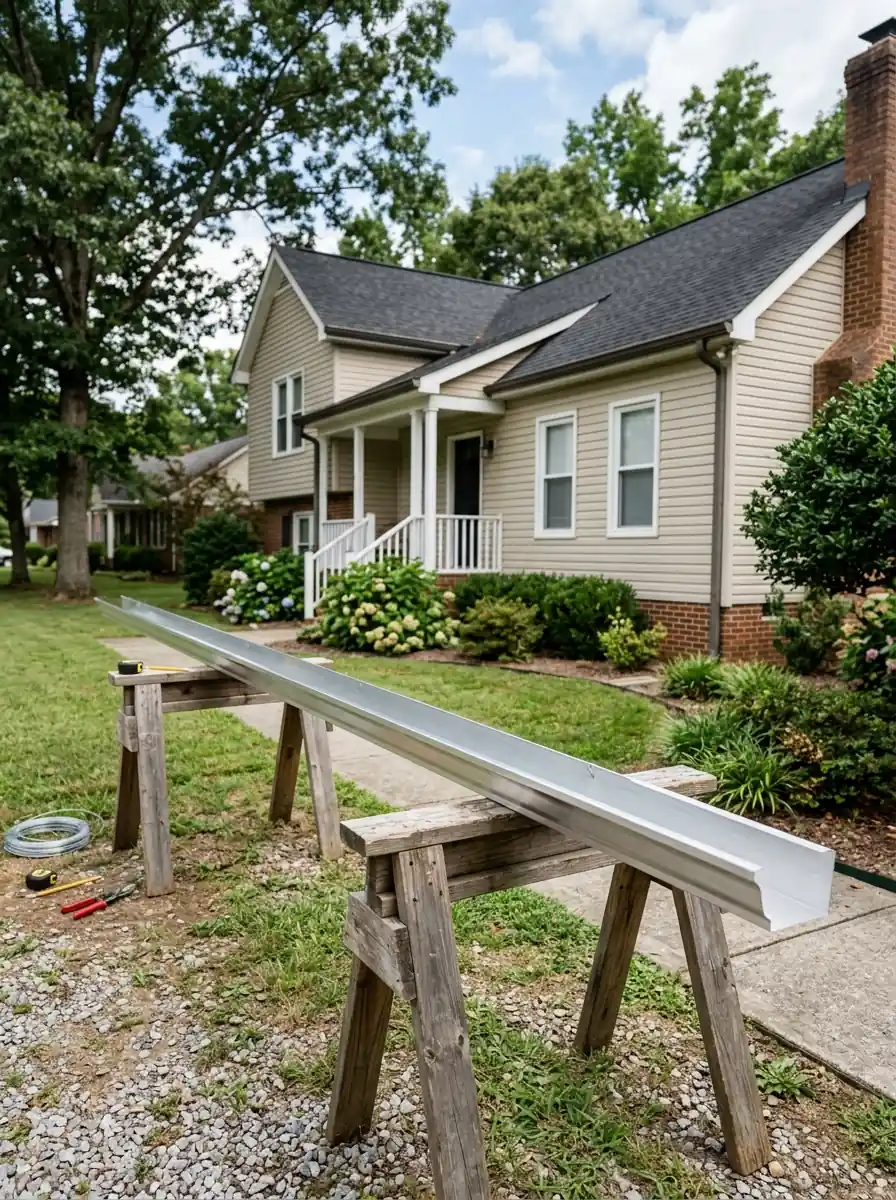
The run is flushed
Water is put through it while you watch, so the discharge is confirmed before the truck leaves.
How long a seamless installation takes
A single elevation on a single story house is usually a half day. A full wrap on a typical Knoxville ranch takes most of one day, including removal of the old run and cleanup.
Two story homes with complicated rooflines run into a second day, mostly because of staging rather than the gutter work itself. Fascia repair adds time that cannot be predicted from the ground, which is why it is quoted separately.
Weather sets the real schedule. We do not hang trough in a thunderstorm, and East Tennessee summers deliver those on short notice, so a firm date is confirmed a day ahead rather than a fortnight out.
Why Knoxville elevations get measured twice
Houses here rarely have square rooflines. Additions, enclosed porches and converted carports mean a single elevation can carry three different fascia heights, and a run measured from a drawing will not fit.
The historic districts north of downtown add another wrinkle. Fourth and Gill and Old North Knoxville homes often carry decorative cornice work behind the gutter, and a modern hanger set carelessly will split trim that is a century old.
West of the city the problem reverses. Hardin Valley and Farragut homes are square and modern, but the roof areas are large and the builder run was often sized to a price. Those elevations usually need bigger trough rather than a like for like swap.
Where we take seamless gutter installation calls
Seamless Gutter Installation is available across these Knoxville area ZIP codes and the towns around them.
- Bearden (37919)
- West Hills (37909)
- Fountain City (37918)
- Sequoyah Hills (37919)
- Cedar Bluff (37923)
- Hardin Valley (37932)
- Karns (37931)
- Halls Crossroads (37938)
- Powell (37849)
- South Haven (37920)
- Downtown Knoxville (37902)
- Holston Hills (37914)
- Rocky Hill (37919)
- Inskip (37912)
- Farragut (37934)
- Maryville (37804)
- Oak Ridge (37830)
- Alcoa (37701)
What we watch that shortens callbacks
Fall is set, not assumed
Pitch is checked against the outlet before anything is fastened, which is the difference between a run that drains and one that ponds.
Hangers placed for the span
Spacing follows the roof and the run length rather than a fixed interval, so the line stays straight under load.
Miters cut to the real angle
Corners on older houses are seldom square, and a forced ninety degree miter opens up within a season.
Flushed before we leave
The run is tested with water while you are standing there, so nothing is discovered after the invoice.
Seamless gutter questions from Knox County homeowners
Almost always. The limits are fascia condition and access, not the house style. Where fascia is rotted the board is repaired first, because a gutter is only as sound as the wood holding it.
Aluminum coil comes in a wide range of baked finishes, from standard whites and browns through darker bronzes and blacks. The finish is factory applied, so there is nothing to paint afterward.
Five inch suits most single story Knoxville homes. Six inch belongs on large roof areas, steep pitches and rooflines with several valleys feeding one run. The measurement decides it, not the age of the house.
Yes. Half round suits older homes in Sequoyah Hills and the historic districts where a K style profile looks wrong against original trim. It is normally paired with round downspouts.
If they are sound and correctly sized, they can stay. If the roof area calls for larger downspouts, keeping the old ones undoes most of the benefit of a bigger trough.
It helps at the start and at the end. We walk the elevations with you before starting, and you should see the flush test at the finish.
They come down, get loaded and leave with us. Aluminum goes to a scrap yard rather than a skip.
Yes. Cold does not stop the work here, though heavy ice on the roof will delay a day. Winter is often the easiest time to book a full replacement.
Work that usually goes with a new installation
Gutter Replacement Service
When the old run comes off and a full new system goes on.
Gutter Guard Installation
Fit guards during the same visit and save a second setup.
Downspout Installation
Trough size only works if the downspouts can carry it.
Fascia & Soffit Repair
Soft fascia gets repaired before anything hangs from it.
Half Round Gutter Installation
The profile that suits older Knoxville homes and original trim.
Get the elevation measured
Tell us which sides of the house you want covered and we will measure, size and price the run properly.