Aluminum Gutter Installation in Knoxville, TN
Aluminum handles East Tennessee rain and humidity without rusting, takes a factory finish that never needs painting, and forms seamlessly on your driveway.
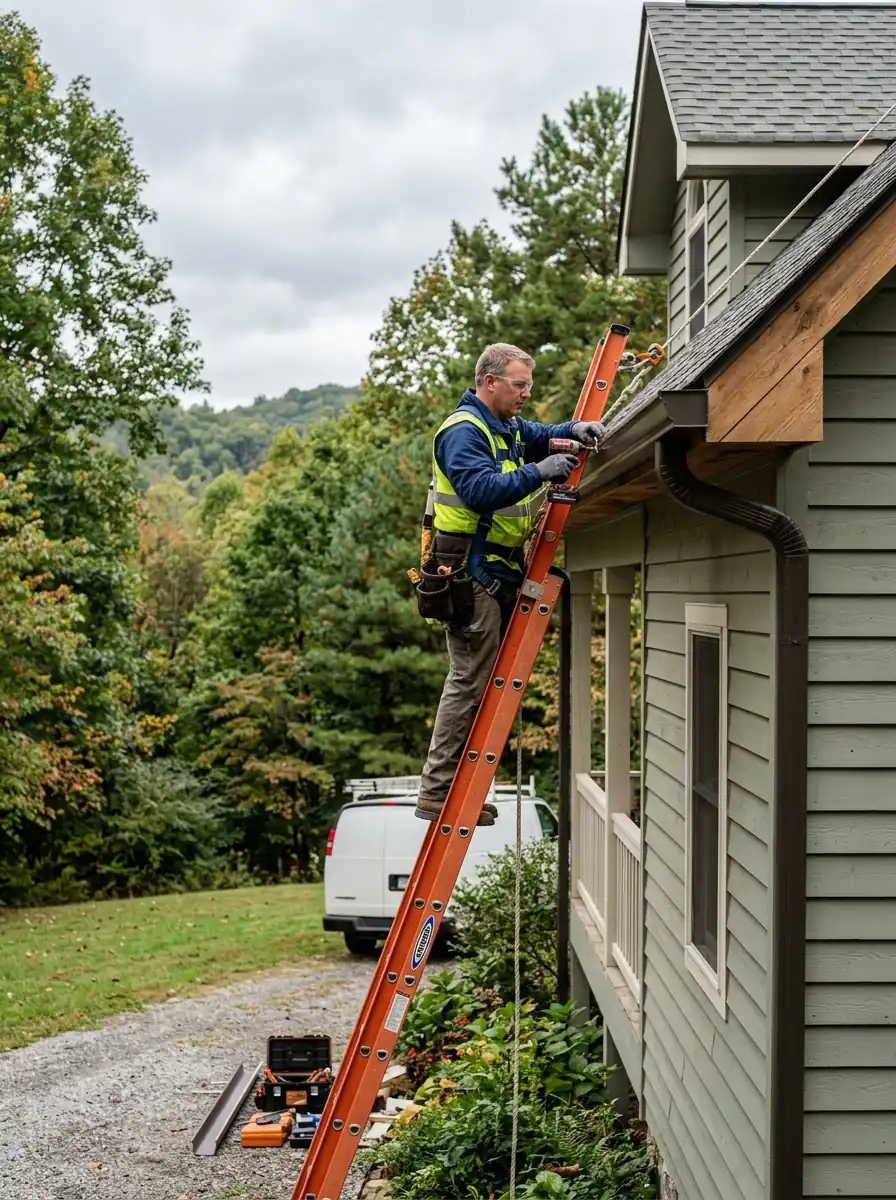
Why aluminum suits Knoxville homes
Aluminum does not rust, which matters in a valley that runs humid most of the year. It is light enough to hang without heavy bracketry, soft enough to form seamlessly on site, and it carries a baked finish that outlasts any paint you could apply. For the large majority of Knox County homes it is the sensible default rather than a compromise.
Gauge, finish and what actually differs
Gauge is the real specification. Thinner .027 stock is standard and adequate on most homes; heavier .032 resists denting from ladders, ice and falling debris.
The finish is factory applied and baked, not painted. That is why aluminum runs hold their color for decades while a painted steel run needs attention.
Everything else follows the roof rather than the material. Trough size, hanger spacing and downspout capacity are the same decisions whichever metal you choose.
Aluminum against the alternatives
| What it involves | Doing it yourself | Bringing us in |
|---|---|---|
| Rust resistance | Steel needs its coating intact to survive here | Aluminum does not rust at all |
| Dent resistance | Steel takes a ladder knock better | Aluminum dents more easily, which .032 gauge mitigates |
| Finish life | Painted finishes need renewing | Baked factory color holds for decades |
| Cost | Steel higher, copper far higher | Aluminum is the most economical of the three |
What an aluminum installation depends on
Linear feet
The main driver across every elevation being covered.
Gauge chosen
.032 costs more per foot than .027 and resists denting noticeably better.
Trough size
Six inch with three by four inch leaders costs more than five inch.
Corner and outlet count
Every miter and outlet is hand work at height.
Color
Standard colors are stock. Unusual finishes sometimes carry a coil surcharge.
Fascia condition
Soft board is repaired before anything hangs and is priced separately.
Access and height
Steep grade and upper elevations add staging time.
Seamless aluminum commonly plans at $7.40 to $13.60 per linear foot installed in this market, with six inch and .032 gauge toward the top. Planning ranges rather than quotes.
What aluminum gives you here
It cannot rust
The single biggest advantage in a humid river valley.
Light enough to hang cleanly
Less load on fascia than steel of the same size.
Forms seamlessly
Soft enough to roll through a machine on your driveway.
Color that lasts
Baked finish rather than paint, so there is nothing to redo.
Wide color range
Enough finishes to match almost any trim without compromise.
Economical to repair
Sections and parts are stock items rather than special orders.
Recyclable at the end
Old runs go to a scrap yard rather than a landfill.
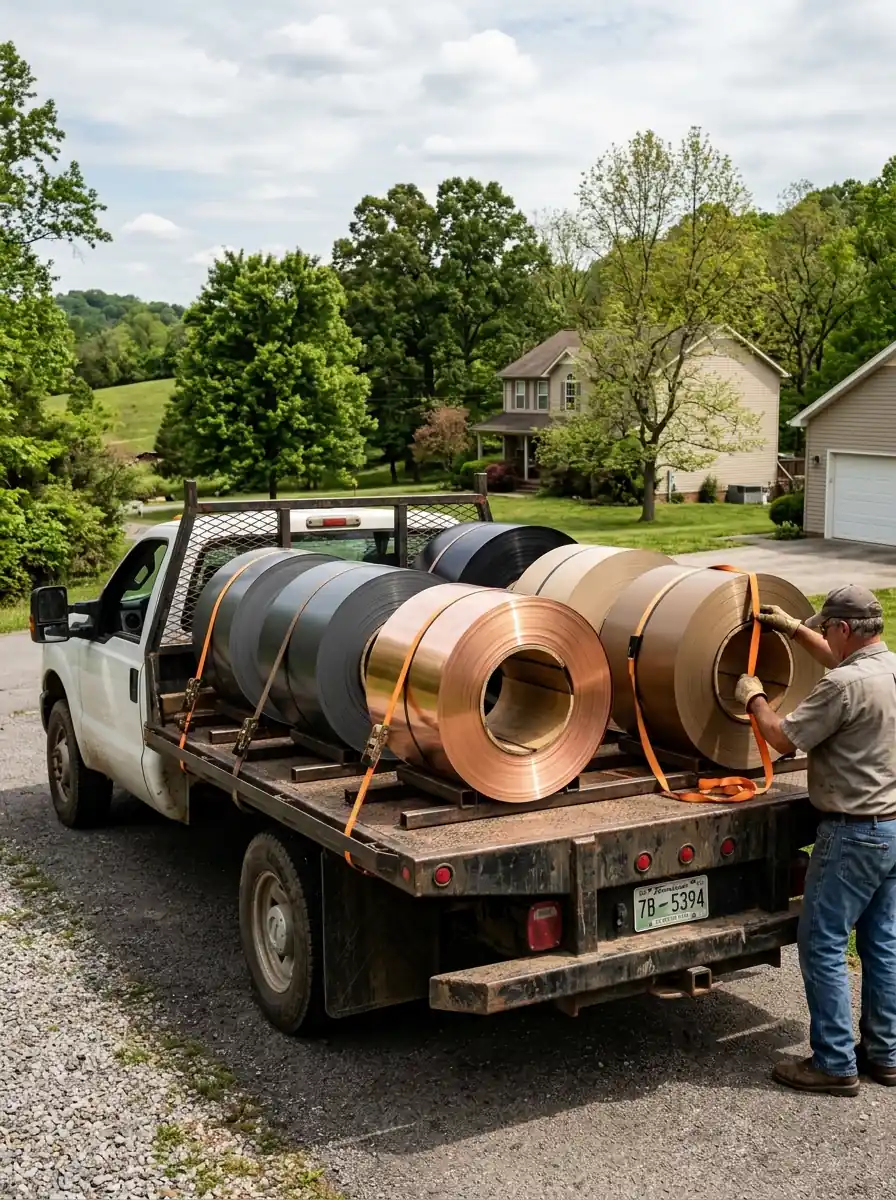
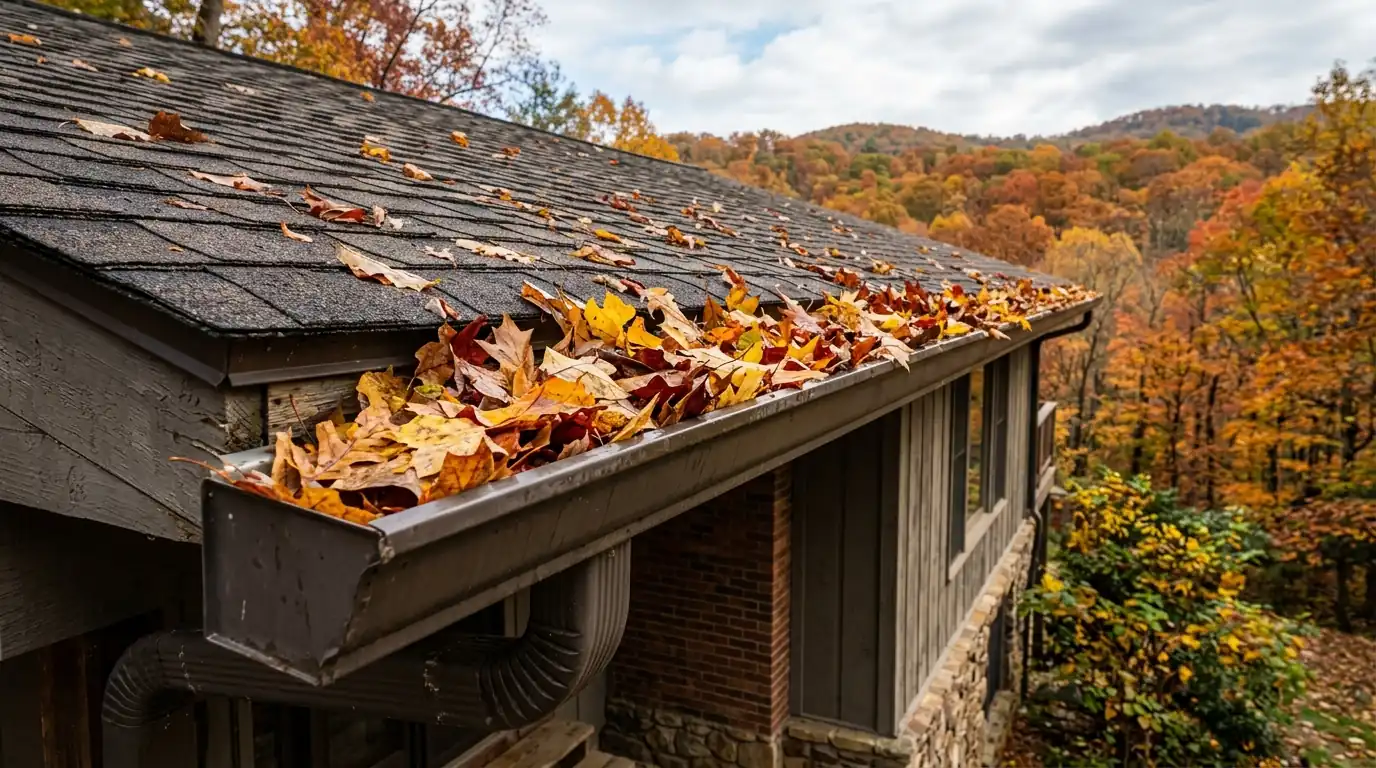
Want the material comparison side by side?
Steel, copper and half round each suit particular houses. We will tell you which yours is.
Choosing between .027 and .032 gauge
Standard .027 aluminum is genuinely adequate for most Knoxville homes. It carries the water, holds its shape between hangers and survives normal weather without complaint.
The case for .032 is impact rather than water. Under heavy canopy where limbs fall, on houses where ladders go up regularly, and on north facing runs that hold ice, the heavier stock keeps its profile where thinner stock dents.
The cost difference is modest and it is a decision worth making deliberately rather than defaulting. On a wooded lot in Lindbergh Forest or Sequoyah Hills the heavier gauge usually earns its money.
When aluminum is not the right answer
Original box gutters on a historic house
A modern aluminum profile is the wrong detail for that roof edge.
A half round house getting a K style run
Profile matters as much as material on period homes.
Constant heavy limb fall
Where impact is routine, heavier gauge or steel is worth considering.
An existing copper system
Mixing aluminum into copper causes galvanic problems at the joints.
Commercial parapet drainage
Internal box drainage is different work from a residential eave.
Very long unbroken runs
Thermal movement over long spans needs planning whatever the metal.
Fascia that has already failed
No material solves a board problem.
What an aluminum installation includes
- Every elevation measured with pitch and outlet placement recorded
- Gauge and trough size agreed before ordering coil
- Existing run removed and hauled away where applicable
- Fascia inspected with the old run off
- Seamless aluminum trough formed to length on site
- Hidden hangers set to the span with fall pitched to each outlet
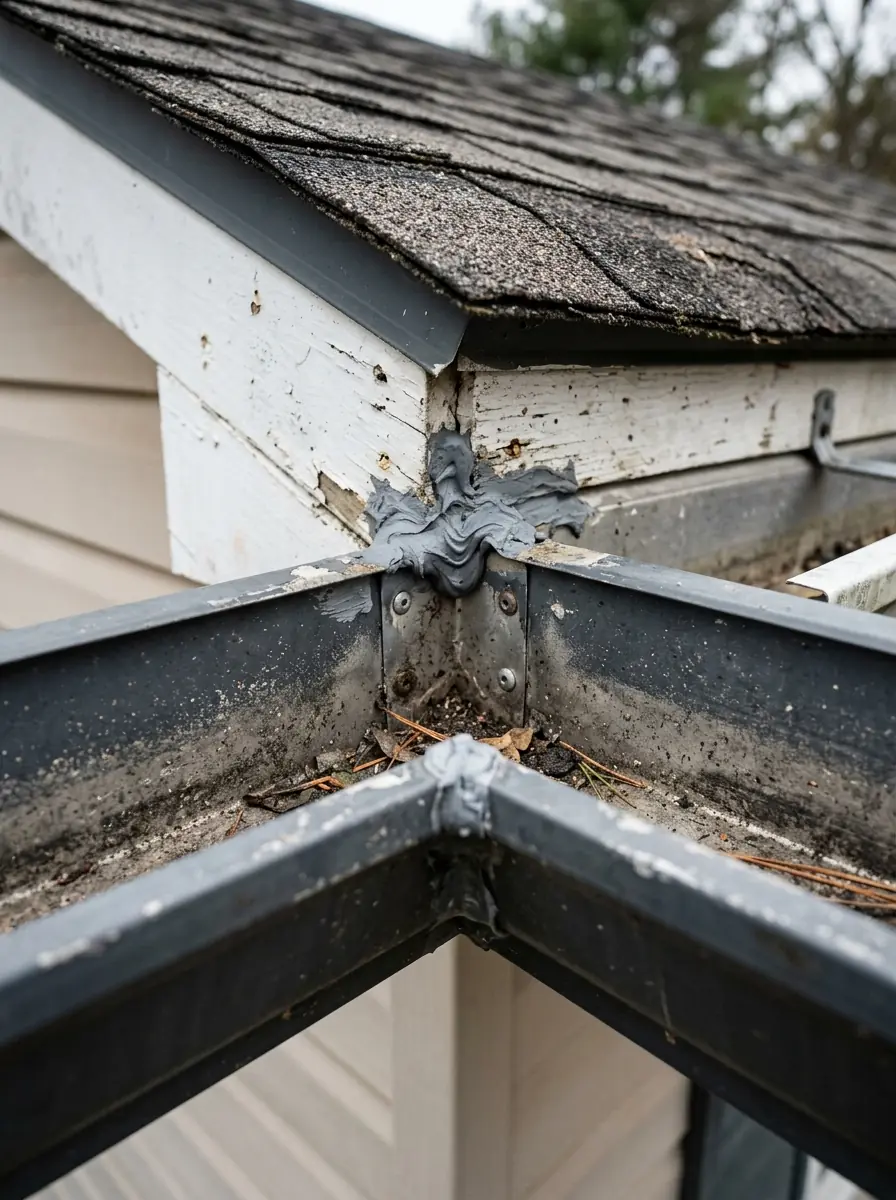
- Miters cut to the real roof angle, sealed, and the run flushed
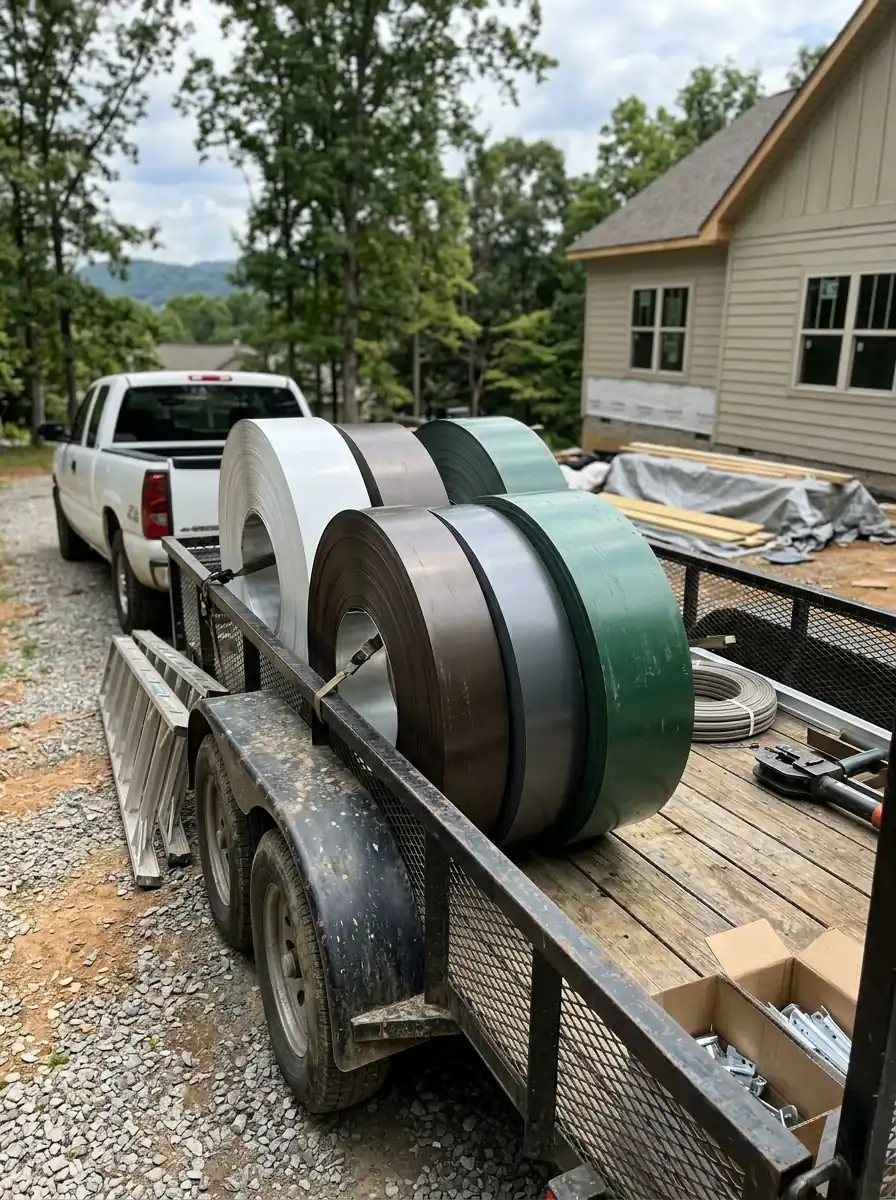
From coil to proven discharge
You describe the house
Elevations, stories and any known fascia trouble.
We measure on site
Every run, corner and outlet plus the pitch feeding each.
Gauge and size are chosen
With the reason, based on the roof and the tree cover.
Color is selected
From stock coil, matched to your trim.
Old run comes down
Removed and taken away, fascia checked with it off.
Trough is formed and hung
Rolled to length, hangers set, miters cut and sealed.
The run is flushed
Water through it while you watch, discharge confirmed.
How long an aluminum installation takes
A single elevation on a one story house is usually a half day.
A full wrap on a typical Knoxville ranch is one day including removal and cleanup.
Two story homes with complicated rooflines run into a second day, mostly for staging rather than the gutter work itself.
Aluminum in the East Tennessee climate
Humidity is the deciding factor here. Knoxville sits in a river valley that stays damp, and any material that depends on a coating to avoid rust is on a clock.
The canopy is the counter argument for heavier gauge. Under mature oak in North Hills or Sequoyah Hills, limb fall is routine rather than exceptional.
Color matching matters more than people expect on the older streets. Historic district homes in Fourth and Gill and Old North Knoxville carry trim colors that stock coil ranges cover well, so painting is almost never necessary.
Where we take aluminum gutter installation calls
Aluminum Gutter Installation is available across these Knoxville area ZIP codes and the towns around them.
- Bearden (37919)
- West Hills (37909)
- Fountain City (37918)
- Sequoyah Hills (37919)
- Cedar Bluff (37923)
- Hardin Valley (37932)
- Karns (37931)
- Halls Crossroads (37938)
- Powell (37849)
- South Haven (37920)
- Downtown Knoxville (37902)
- Holston Hills (37914)
- Rocky Hill (37919)
- Inskip (37912)
- Farragut (37934)
- Maryville (37804)
- Oak Ridge (37830)
- Alcoa (37701)
What we watch on an aluminum run
Gauge chosen deliberately
The .027 or .032 decision follows the tree cover and the elevation, not habit.
Formed on site to length
One continuous piece per run rather than joined sections.
Fall set and checked
Pitch measured to the outlet before anything is fastened.
Miters cut to the real angle
Older Knoxville corners are rarely square.
Aluminum questions from Knox County
Commonly twenty years or more when cleared on schedule. Failure usually starts at the fasteners or the fascia rather than the metal.
Standard .027 suits most homes. Under heavy tree cover or where ladders go up often, .032 resists denting noticeably better for a modest extra cost.
No. The finish is baked on at the factory and holds its color for decades. Painting one usually shortens its life rather than extending it.
It should not be. Dissimilar metals in contact corrode at the joint, so the two systems stay separate.
It can. That is exactly the case where heavier gauge earns its money, and it is why we ask about the trees.
No. Seamless describes how the run is formed; aluminum is the material. Most seamless runs here happen to be aluminum.
A wide stock range covering standard whites, browns, bronzes, blacks and grays. Unusual finishes sometimes carry a coil surcharge.
Yes. Strength on a gutter run comes from hanger spacing and trough size far more than from the metal itself.
Work that goes with a new aluminum run
Seamless Gutter Installation
How the run is formed and hung, whichever metal you choose.
Steel Gutter Installation
Where impact resistance matters more than rust resistance.
Copper Gutter Installation
The premium option for period homes and visible elevations.
Gutter Guard Installation
Fitted during the same visit rather than as a second setup.
Downspout Installation
Trough size only works if the leaders can carry it.
Price an aluminum run
Tell us the elevations and what stands over the roof, and we will measure, choose the gauge and give you a figure.