Gutter Repair Service in Knoxville, TN
Not every failing gutter needs replacing. Where the trough is sound, a repair to the hangers, pitch or seams costs a fraction and lasts. We tell you which one you are looking at.
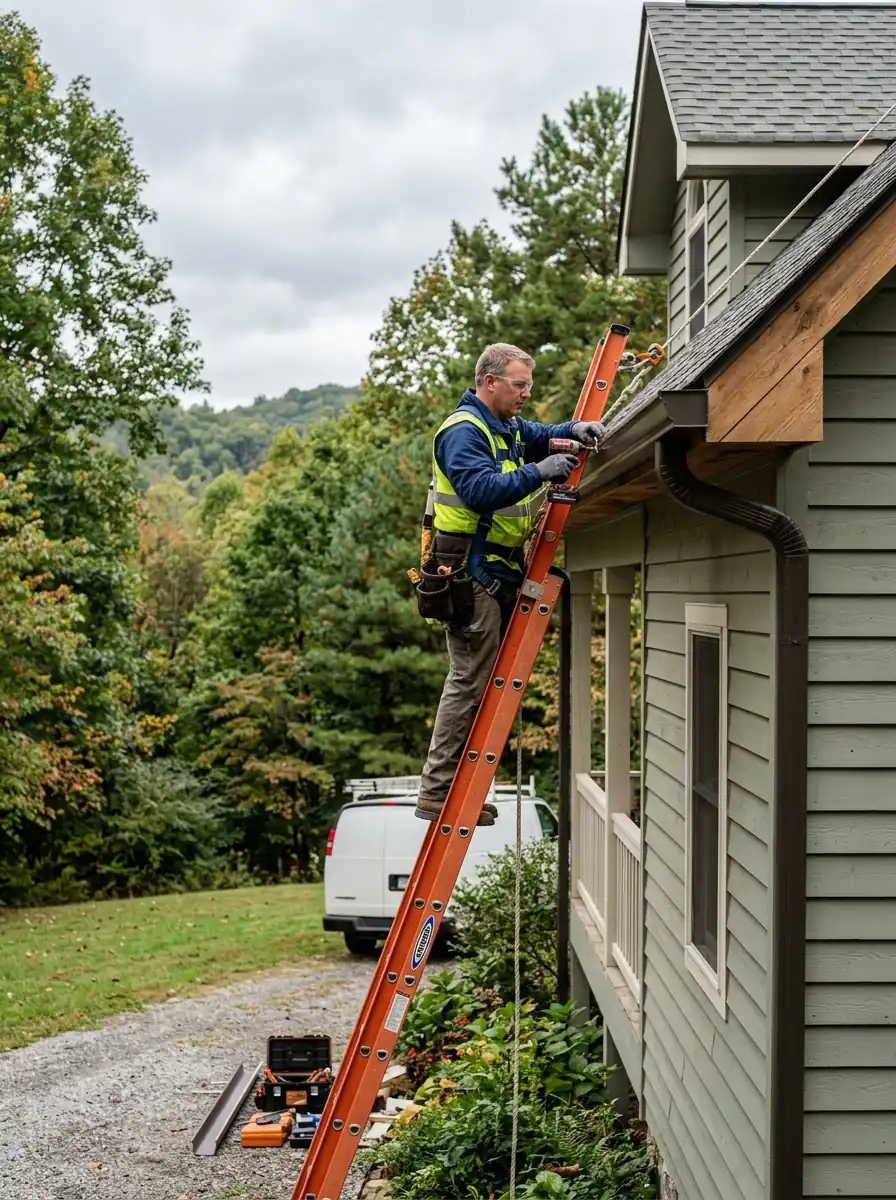
When a gutter can be repaired and when it cannot
A gutter is worth repairing when the trough itself is straight and unperforated. Sags, backed out spikes, open miters and split seams are all fixable in place. Replacement becomes the honest answer once the metal is rusted through, the profile is bent along its length, or the run is simply too small for the roof above it.
What is actually broken when a gutter fails
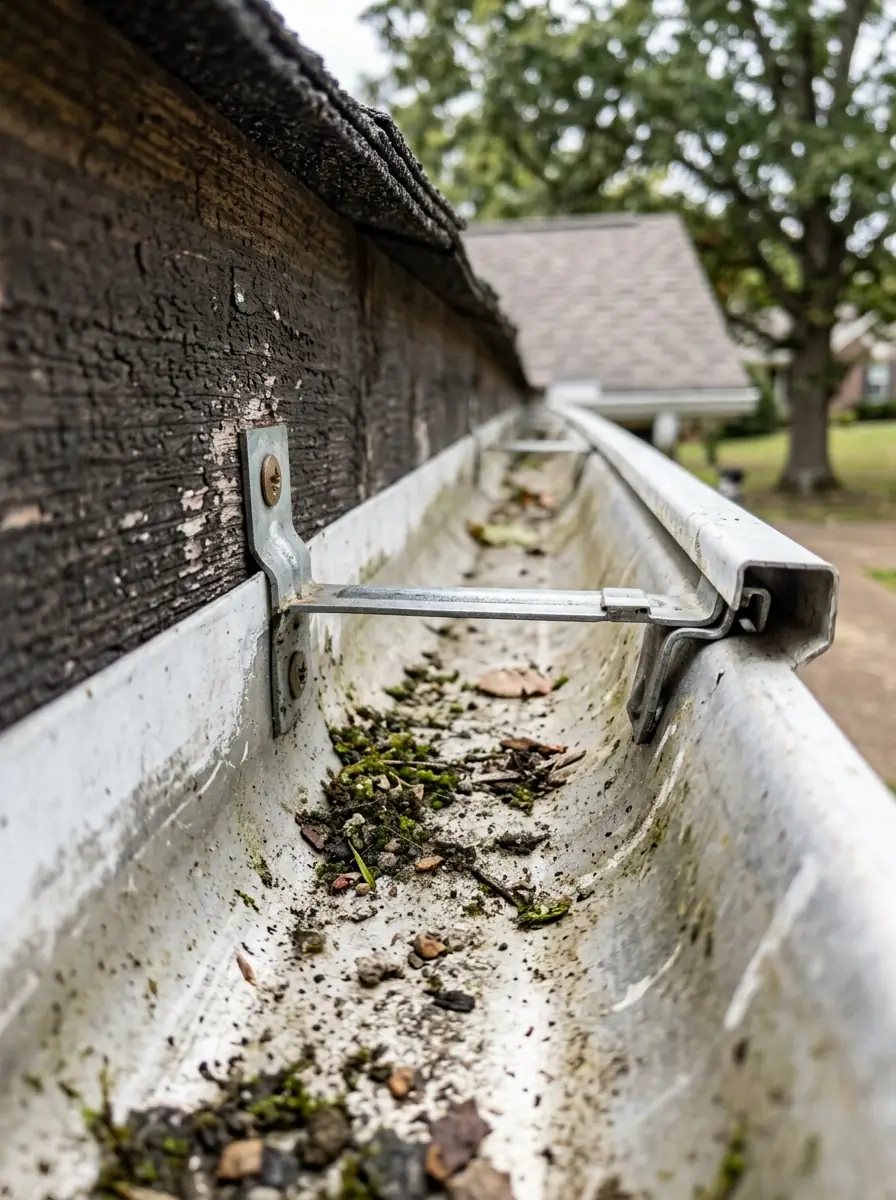
Most calls that sound like a gutter problem are a fastener problem. The trough is fine, but the hangers have loosened and the run has lost its fall, so water sits instead of moving toward the outlet.
The second group is joint failure. Miters at the corners and end caps rely on sealant, and sealant has a service life. Once it hardens and cracks, the corner drips steadily even in light rain.
The third group is the fascia behind it. Water held in a sagging run soaks the board the gutter hangs from, and once that wood softens no fastener will hold. At that point the repair includes the board, not just the gutter.
What tells you a repair is due
Water pours at one corner
A single overflow point usually means a blocked outlet or an open miter, not a whole failing run.
The line dips in the middle
A visible sag means hangers have let go and the run is holding water between them.
Steady dripping after rain stops
A run that keeps dripping an hour later is holding water it should have released.
A gap has opened at the fascia
Daylight between the gutter back and the board is how water gets behind the run and into the wood.
Paint blistering below the gutter
Blistered or peeling paint on the fascia is the board telling you it has been wet for a long time.
An end cap that drips
End caps are sealed, not welded, and they are usually the first joint to fail on an older run.
A downspout that has come loose
Straps pull out of siding over time, and a swinging downspout tears at its own connection.
What happens from the call to the flush test
Call and describe it
Where the water appears, whether the line looks straight, and how long it has been happening.
We look at the whole run
Not only the section that overflows, because the cause is often uphill of the symptom.
You hear the honest option
Repair or replace, with the reason, before any work starts.
Failed fasteners come out
Old spikes and bent hangers are removed rather than driven back in.
Fall is reset
The trough is lifted to a proper line toward the outlet and fastened there.
Joints are resealed
Miters and end caps are cleaned to bare metal before new sealant goes on.
Water goes through it
The repaired run is flushed and you see the discharge before we pack up.
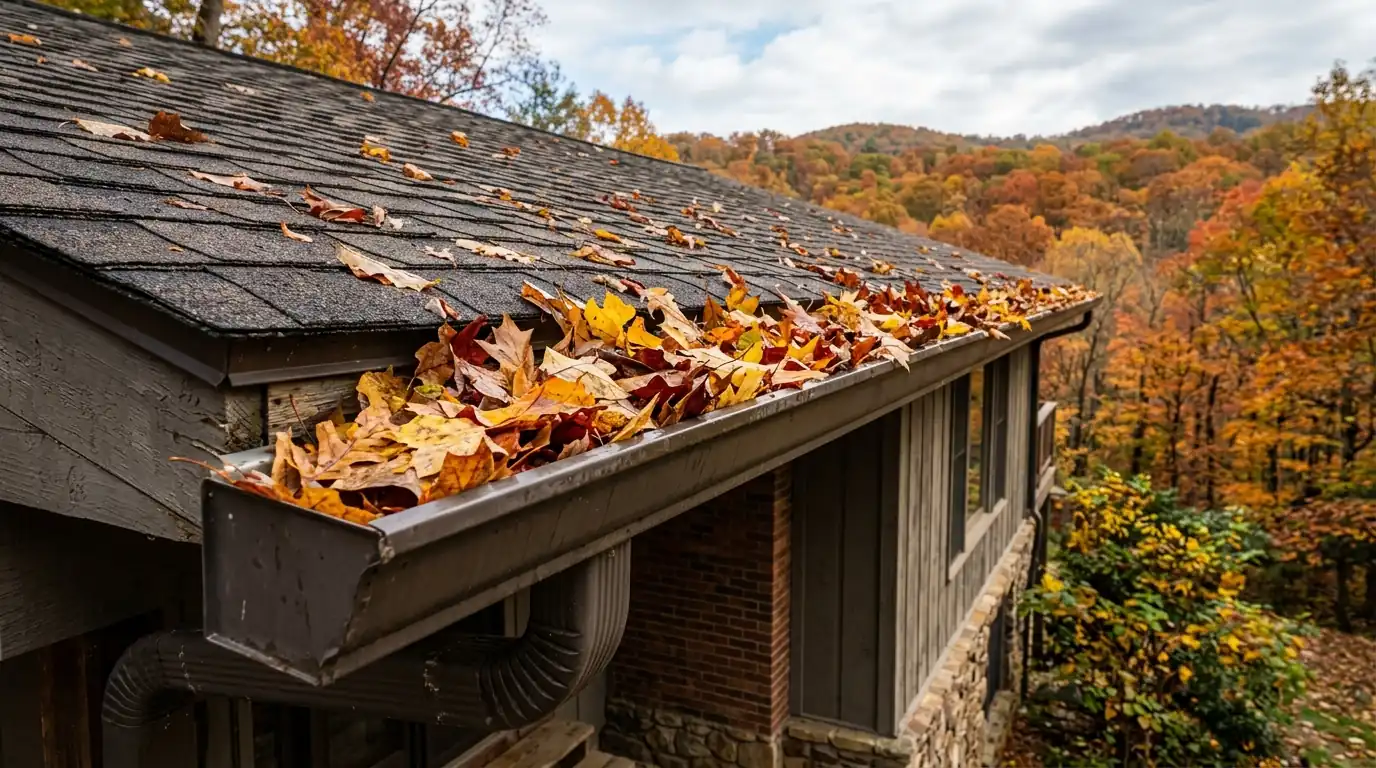
Something came loose in the storm?
Hanging sections and torn downspouts do not wait for business hours. Call and describe what moved.
Why repairing beats replacing when the trough is sound
A fraction of the cost
Rehanging and resealing an elevation costs far less than forming and installing a new run.
Same day in most cases
Repairs are usually a single visit, so the problem stops the day we arrive.
The good metal stays
A sound trough has years left. Replacing it because one corner failed is waste.
Fascia caught early
A repair visit is when soft board gets spotted, while it is still a board and not a structural job.
Less disruption
No removal, no disposal, no ladders along every elevation for a full day.
Buys planning time
A sound repair lets you replace on your schedule rather than during the storm that forced the issue.
Honest answer either way
If the run is past repair we say so, with the reason, rather than selling a patch that will fail.
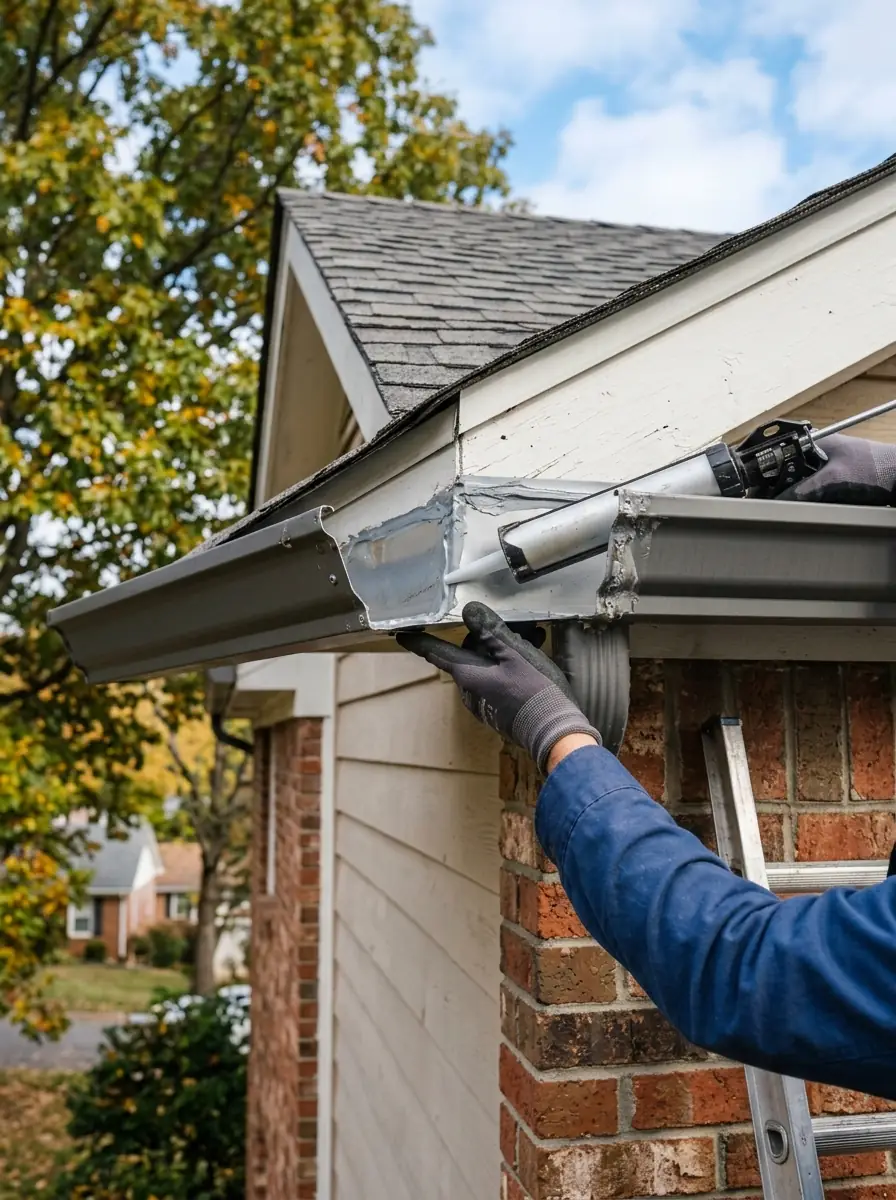
How a sagging run is brought back to pitch
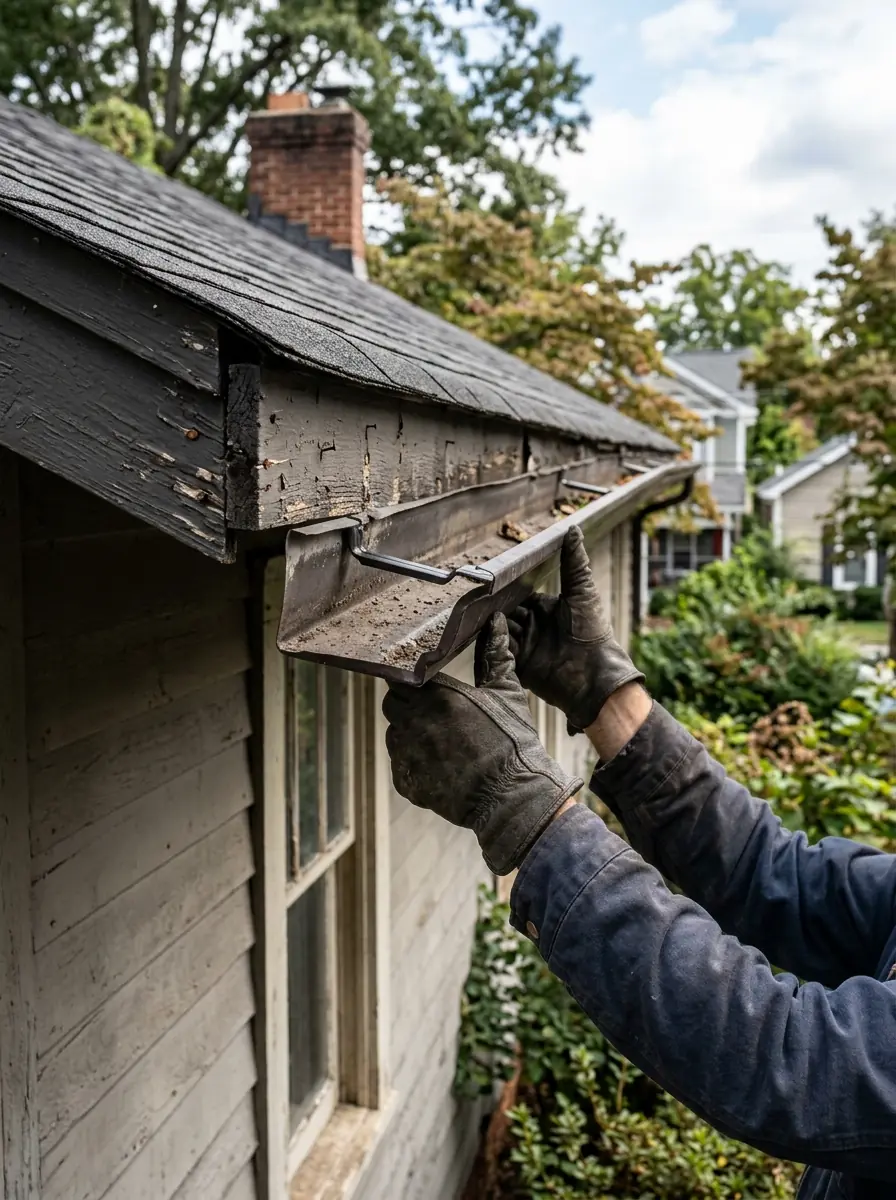
Bringing a sagging run back starts with removing whatever is holding it badly. Old spikes and ferrules get pulled, because a spike that has already worked loose once will not hold a second time in the same hole.
The fascia is then checked along the full length. Where the wood is sound, hidden hangers go in on fresh bite, spaced closer than the original run. Where it is soft, that section of board is replaced before anything hangs from it.
The trough is lifted back to a proper fall toward the outlet and fastened at that line. Miters and end caps are cleaned back to bare metal before resealing, because new sealant over old cracked sealant fails at the same speed the old one did.
What a repair visit covers
- Walk of the affected elevation with the cause identified rather than guessed
- Removal of failed spikes, ferrules or bent hangers
- Fascia checked along the run, with soft sections reported
- Run lifted back to correct fall and refastened with hidden hangers
- Miters and end caps cleaned to bare metal and resealed
- Outlets and downspouts cleared and reattached where they had pulled
- Water run through the repaired section while you watch
How long a typical repair takes
A single corner or end cap repair is usually under two hours including the flush test. Most homeowners are surprised how much of that is setup rather than the fix.
A full elevation that has lost its fall takes half a day, since every hanger has to come out and go back on fresh wood. Adding fascia repair pushes it toward a full day because the board has to be cut, fitted and finished.
Storm calls are different. If a section is hanging, we secure it the same day and come back for the permanent repair once the weather allows, rather than doing careful work in bad conditions.
Patching it yourself against a proper repair
| What it involves | Doing it yourself | Bringing us in |
|---|---|---|
| Finding the cause | Sealing the visible drip and hoping | The run is checked end to end before anything is sealed |
| Refastening | New spike into the same tired hole | Hidden hangers set on fresh bite at closer spacing |
| Resetting the fall | Hard to judge from a ladder | Fall measured to the outlet and fastened at that line |
| Resealing joints | Fresh caulk over cracked caulk | Old sealant cut back to bare metal first |
What fails first on Knoxville houses
The most common repair in the older parts of Knoxville is the spike hanger failure. Homes in Park City, Lonsdale and Vestal were hung with spikes into softwood fascia, and every summer of expansion works them a little further out.
In the leafy streets of North Hills and Lindbergh Forest the trouble is weight. A trough packed with wet oak leaf load is heavy enough to bend hangers, so the sag arrives before any joint has failed.
Newer subdivisions bring a different fault. Hardin Valley and Halls homes often have correct metal hung at builder spacing, which is fine until the first genuinely heavy storm loads a long unbroken run.
What a gutter repair price depends on
How much of the run is affected
One corner is a short visit. A full elevation that has lost its fall is a different job.
Whether fascia needs work
Sound board keeps the repair simple. Soft board adds carpentry and material.
Height and access
Second and third story elevations take longer to stage than a single story ranch.
Hanger count
Rehanging a long run means more hangers and more time than tightening a short section.
Downspout work included
Reattaching or replacing a downspout during the same visit adds material but saves a second call.
Debris load in the run
A repair on a packed gutter includes clearing it first, because nothing can be assessed under wet leaves.
Urgency
A scheduled repair and a call during a storm are not the same job, and the difference is time rather than parts.
Small repairs in this market commonly land between $165 and $480, with full elevation rehangs and fascia work running higher. Those are planning figures rather than quotes, and the real number follows what the walk finds.
Where we take gutter repair service calls
Gutter Repair Service is available across these Knoxville area ZIP codes and the towns around them.
- Bearden (37919)
- West Hills (37909)
- Fountain City (37918)
- Sequoyah Hills (37919)
- Cedar Bluff (37923)
- Hardin Valley (37932)
- Karns (37931)
- Halls Crossroads (37938)
- Powell (37849)
- South Haven (37920)
- Downtown Knoxville (37902)
- Holston Hills (37914)
- Rocky Hill (37919)
- Inskip (37912)
- Farragut (37934)
- Maryville (37804)
- Oak Ridge (37830)
- Alcoa (37701)
How we keep a repair from coming back
The cause gets found first
Sealing a symptom without checking uphill is why repairs come back. The whole run is walked.
Fresh bite for every fastener
Nothing is driven back into a hole that has already failed once.
Old sealant is removed
New sealant is only as good as the surface under it, so the joint is cleaned to bare metal.
You watch the flush
The repair is proved with water in front of you, not described afterward.
Repair questions we hear across Knox County
Usually yes. The question is the fascia behind it. If the board is sound the run is refastened on fresh bite. If the board is soft it is replaced first, because nothing holds in wet wood.
Aluminum lasts a long time. If the trough is straight, unperforated and correctly sized for the roof, age alone is not a reason to replace it.
That is almost always a blocked outlet or a low point in the run. A gutter that has lost fall will hold water at the dip and spill there in every rain.
It can, provided the old sealant is removed rather than covered. A miter cleaned to bare metal and resealed properly holds for years.
Yes. Steel and copper repairs are different work from aluminum, particularly at joints, and both are common on older houses in the historic districts.
The affected section is cleared, because nothing can be assessed under packed debris. A full house cleaning is a separate service.
You hear that before any work starts, along with the reason and what replacement would involve. There is no charge for being told the honest answer.
The phone is answered around the clock, and scheduling depends on what the weather has done that week. Storm calls take priority over routine visits.
Repairs that often come up in the same visit
Storm Damage Gutter Repair
When wind or a falling limb has taken a section down.
Gutter Slope Correction
For runs that hold standing water rather than draining.
Gutter Hanger Replacement
When the fasteners rather than the trough are the problem.
Fascia & Soffit Repair
Soft board behind the run gets replaced before rehanging.
Gutter Leak Sealing
Seams, miters and end caps sealed back to bare metal.
Describe what the gutter is doing
Tell us where the water appears and how long it has been happening, and we will tell you whether it is a repair or a replacement.