Gutter Guard Installation in Knoxville, TN
A guard is only as good as its fit against the debris that actually falls on your roof. We look at the trees before recommending a system.
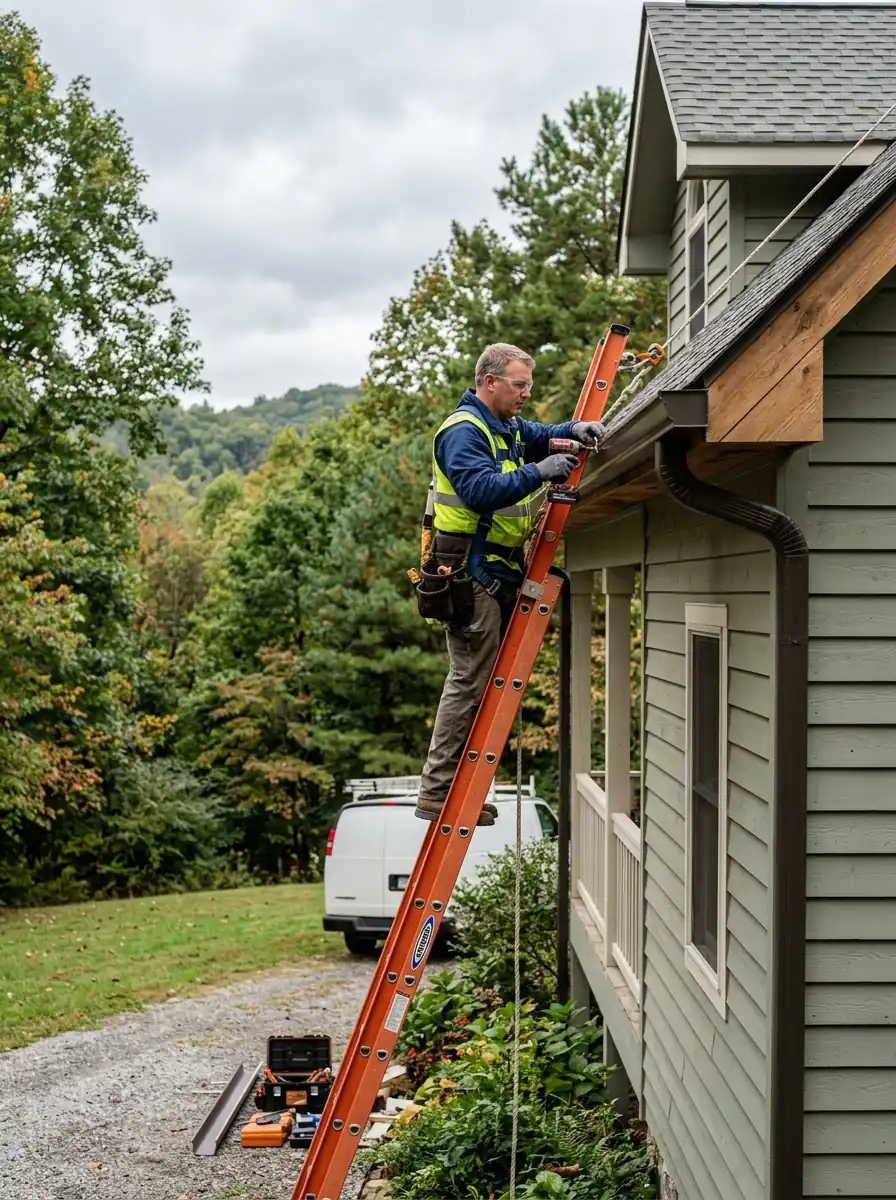
What a gutter guard does and does not do
A good guard keeps the leaf load out and cuts cleaning frequency sharply. It does not end maintenance. Pine needles and oak tassels can bridge across a mesh and shed water over the front edge while the trough underneath stays dry. Guards work best on a run that is already pitched correctly with outlets sized for the roof.
Choosing a guard for the trees you actually have
Broad hardwood leaves are the easy case. Almost any guard sheds oak and maple leaf, because the debris is larger than the openings.
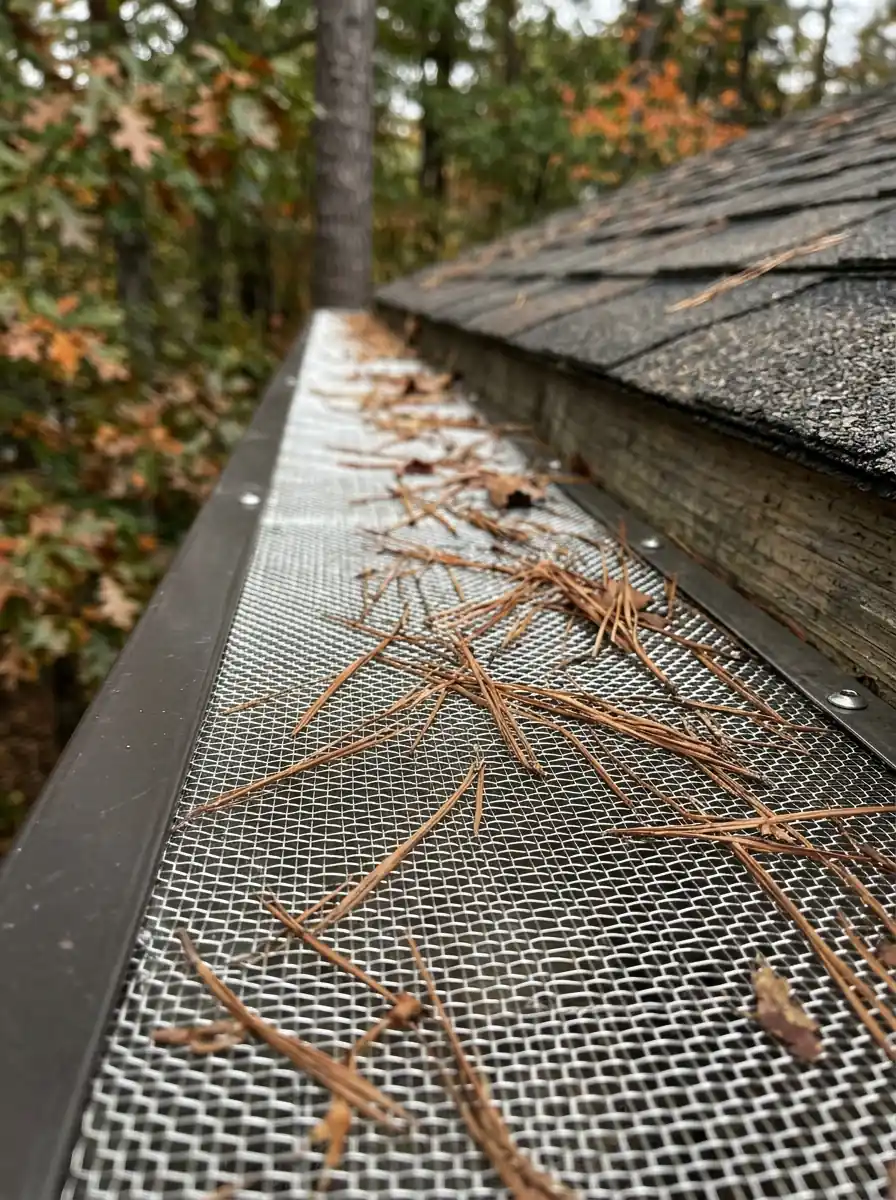
Fine debris is the hard case. Pine needles, hemlock and oak tassels are narrow enough to sit in a coarse mesh and stiff enough to bridge across a fine one, which is where cheap guards fail.
Reverse curve systems handle needles differently again, using surface tension rather than a screen. They cost more and they are sensitive to how they sit against the roof edge, so fit matters more than brand.
Store bought screens against a fitted system
| What it involves | Doing it yourself | Bringing us in |
|---|---|---|
| Fit to the trough | Cut to length with snips and pressed in | Fitted to the profile and fastened so it cannot lift |
| Debris matching | One product for every roof | System chosen after looking at the trees over the run |
| Roof edge relationship | Often forced under the first shingle course | Set so the roof edge is not disturbed |
| What happens after | You find out next storm | The run is flushed and watched before we leave |
What a guard installation depends on
Linear feet covered
The main driver. Guarding only the wooded elevations is a common and sensible choice.
System type
Simple screens sit at the low end, fine micro mesh higher, reverse curve highest.
Condition of the existing run
Guards go on a sound gutter. Rehanging or repitching first is priced separately.
Cleaning before fitting
The trough is cleared first, and a heavily loaded run adds a cleaning to the visit.
Roof pitch and height
Steep and tall elevations take longer to stage safely.
Number of corners and outlets
Guards are cut and fitted around every miter and outlet by hand.
Debris type
Needle grade material costs more per foot than standard mesh and is the right call under pine.
Fitted guards in this market commonly plan at $8.40 to $22.00 per linear foot depending on the system, with micro mesh in the middle and reverse curve at the top. Those are planning ranges, not quotes.
What a well matched guard changes
Far fewer cleanings
Most homes move from three visits a year to one inspection.
Less weight in the run
Keeping the load out protects hangers and keeps the line straight.
Drier fascia
Debris that never collects cannot hold water against the board.
Fewer blocked outlets
Most overflow starts at the outlet, and that is exactly what a guard protects.
Safer for you
A guarded run removes most of the reason to be on a ladder at all.
Better winter behavior
A clear trough drains instead of holding water through a freeze.
Longer service life
Runs that stay clear reach the end of their life rather than failing early.
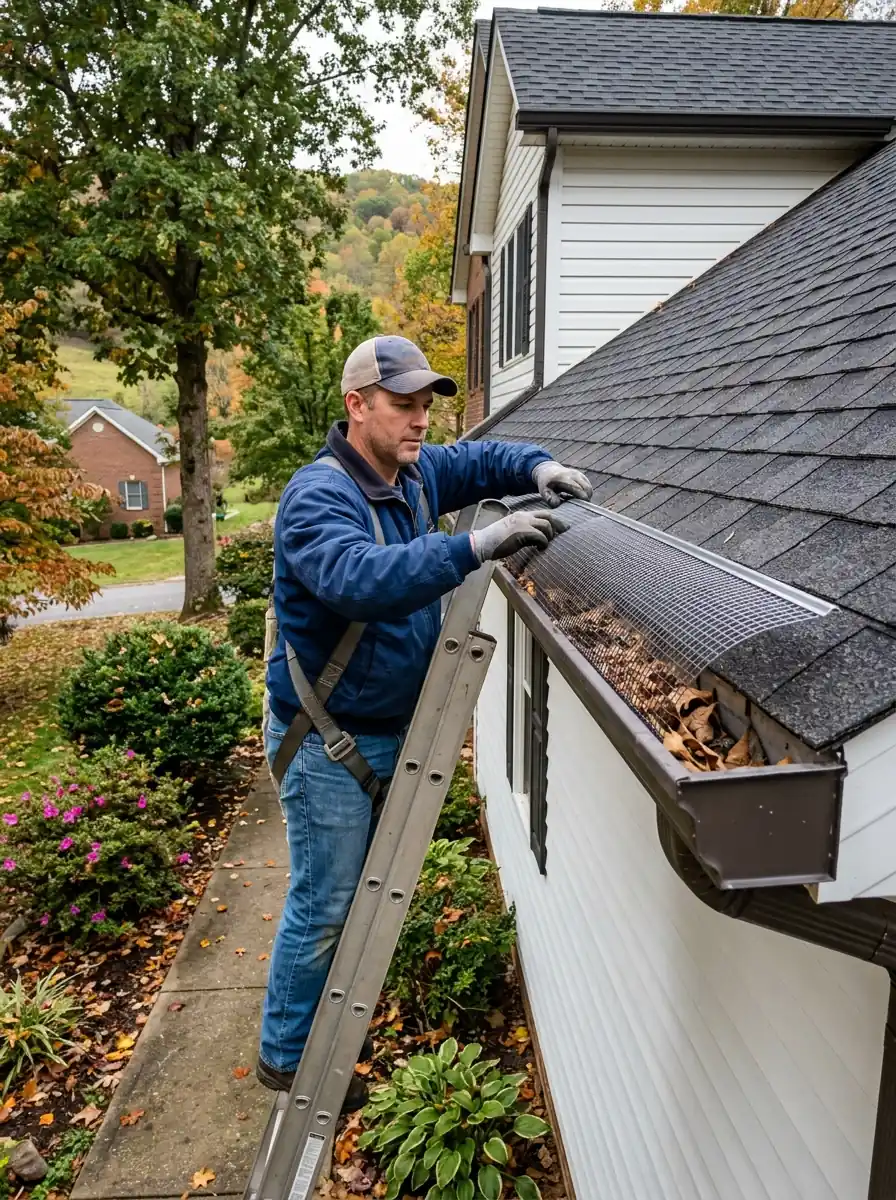
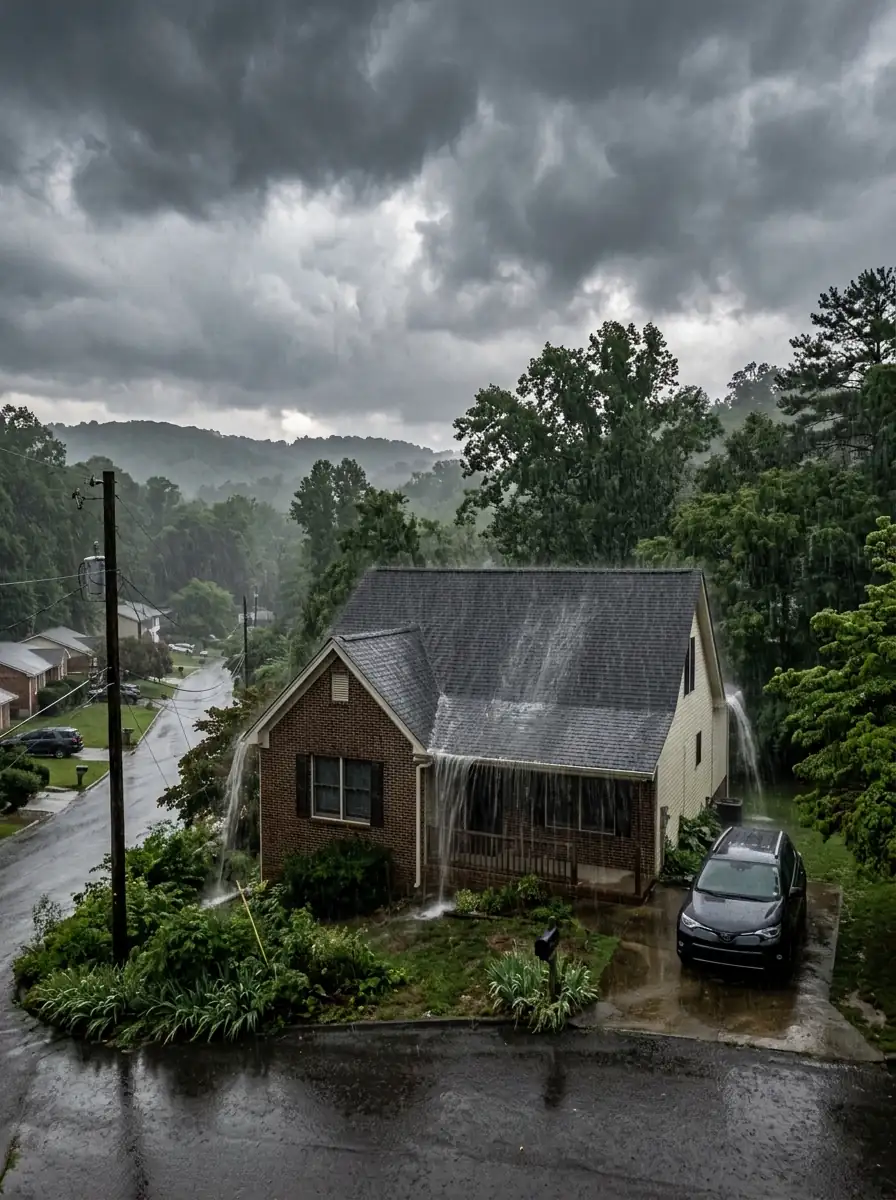
Not sure the run is worth guarding?
Guards belong on a sound gutter. If the fall or the hangers have gone, that comes first.
How fine debris defeats the wrong guard
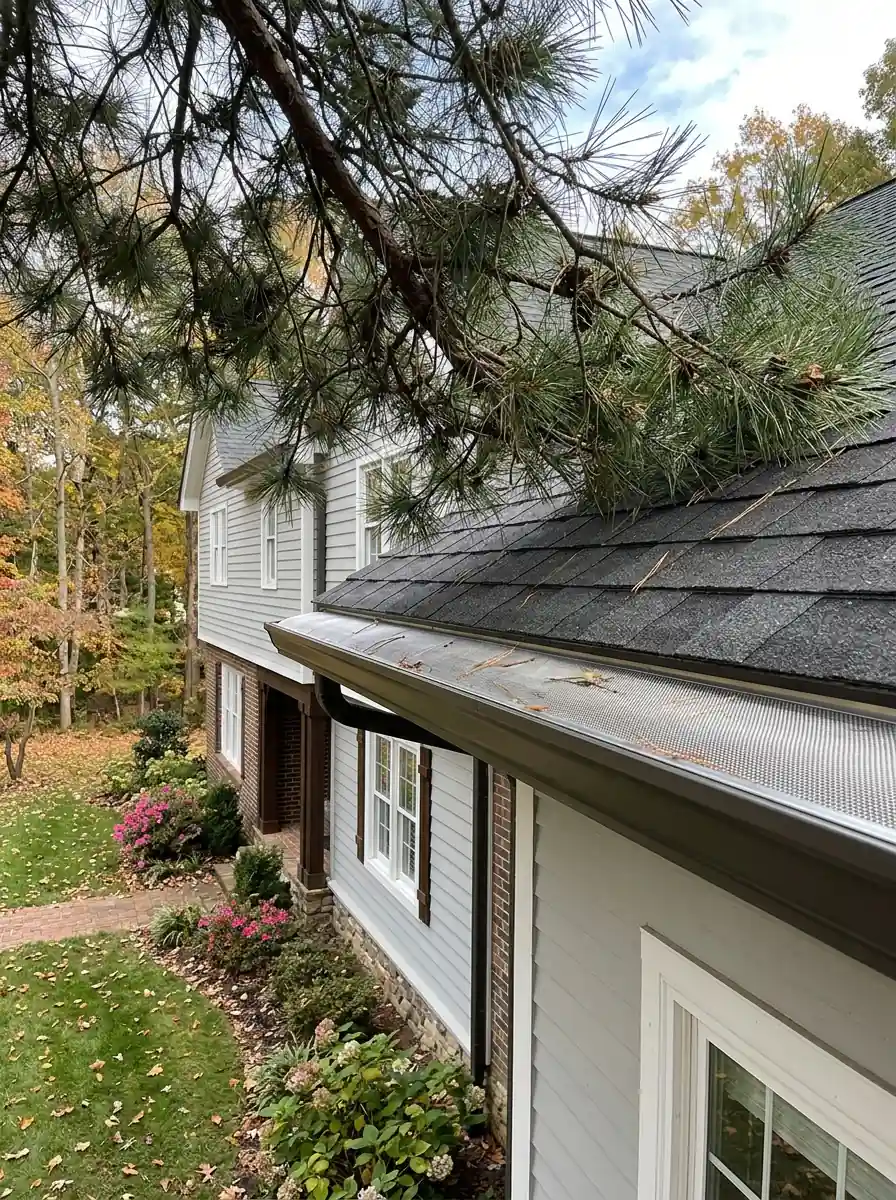
Fine debris does not fall through a guard, and it does not blow off either. It rests on the surface and mats, and once the mat is dense enough water runs across it and over the front edge.
That is the failure people describe as the guard causing an overflow. The trough underneath is usually bone dry, which is the tell. A coarser screen would have let the needles in, and a smoother surface would have shed them.
The fix depends on which way it failed. Under pine we favour a fine mesh with a surface that sheds rather than grips, and we set the pitch of the guard so needles slide rather than sit. Under oak the priority is the tassel season, not the leaves.
Signs your current guard is not working
Water runs over a dry gutter
The classic bridged mat. Debris is shedding water across the guard surface.
Needles standing upright in the mesh
Fine debris has found openings it can sit in.
Guards lifting at the edge
A guard that has come loose collects more than one that was never fitted.
Cleaning still needed twice a year
A guard that saves no visits is the wrong system for those trees.
Ice sitting on the guard surface
Debris under the guard is holding water through a freeze.
Shingles lifted at the roof edge
A guard forced under the first course has disturbed the roof.
Overflow only at the corners
Guards cut badly around a miter leave a gap that collects.
What a guard installation includes
- Survey of the trees over each elevation before any system is recommended
- Existing trough cleared and flushed first
- Fall and hanger condition checked, with anything unsound reported
- Guard cut and fitted to the trough profile along every run
- Corners and outlets fitted by hand rather than bridged
- Fastening chosen so the roof edge is not disturbed
- Full run flushed and watched before the ladder comes down
From the tree survey to the flush test
You describe the trees
Which elevations sit under what. Photos of the roofline help a great deal.
We look at the debris
What is in the trough now tells us more than the species list does.
A system is recommended
With the reason, and with the elevations that genuinely need it separated from the ones that do not.
The run is cleared
Guards go over a clean trough or they trap what is already there.
The gutter is checked
Fall, hangers and miters, because a guard cannot fix a run that does not drain.
Guards are fitted
Cut to the profile, fastened without disturbing the roof edge, hand fitted at corners.
Everything is flushed
Water over the guard and through the outlet, watched at grade.
How long guards take to fit
Guarding one or two elevations on a single story home is a half day including the cleaning that comes first.
A full wrap on a two story house is usually a full day. Corners and outlets take the time, not the straight runs.
If the gutter needs repitching or rehanging before guards go on, that is a separate visit. Fitting guards to a run that does not drain wastes the money.
Knoxville tree cover and what it drops
Knoxville sits under a genuinely heavy hardwood canopy, and the neighborhoods with the best tree cover are the ones with the worst gutter load. North Hills, Sequoyah Hills and Lindbergh Forest are all in that category.
Oak is the dominant problem and the tassel is the dominant part of it. Those catkins are narrow, stiff and land in enormous numbers over a few weeks in spring.
South and west of the city the mix shifts toward pine and hemlock on the wooded lots off Northshore and Martin Mill Pike. Needle cover changes the guard choice entirely, which is why one recommendation does not fit the county.
Where we take gutter guard installation calls
Gutter Guard Installation is available across these Knoxville area ZIP codes and the towns around them.
- Bearden (37919)
- West Hills (37909)
- Fountain City (37918)
- Sequoyah Hills (37919)
- Cedar Bluff (37923)
- Hardin Valley (37932)
- Karns (37931)
- Halls Crossroads (37938)
- Powell (37849)
- South Haven (37920)
- Downtown Knoxville (37902)
- Holston Hills (37914)
- Rocky Hill (37919)
- Inskip (37912)
- Farragut (37934)
- Maryville (37804)
- Oak Ridge (37830)
- Alcoa (37701)
What we check before recommending anything
Trees looked at first
The system follows the debris, not a product line.
The gutter is proved before guarding
A guard over a run that ponds simply hides the problem.
Roof edge left alone
Fastening is chosen so nothing goes under the first shingle course.
Corners fitted by hand
Miters and outlets are where badly cut guards let debris back in.
Guard questions from Knox County homeowners
A well matched guard cuts cleaning frequency sharply. A poorly matched one can make overflow worse, which is why the trees matter more than the brand.
Fine micro mesh handles needles far better than screens or foam, but no guard is maintenance free under heavy pine. Expect an annual inspection.
Usually yes, provided the run is sound and correctly pitched. Guards are fitted to the trough profile rather than replacing it.
Systems that fasten under the shingles can create an issue with some roofers. We fit so the roof edge is not disturbed.
You will need inspections. Most guarded homes here go from three cleanings a year to one check, which is the real saving.
Indirectly. A trough that stays clear drains instead of holding water through a freeze, which is what causes most of the damage.
Often not. Guarding the elevations under tree cover and leaving the open ones bare is usually the better spend.
We come back and look at why. Most failures are fit or debris mismatch rather than the material giving up.
Work usually done alongside guards
Gutter Cleaning Service
The trough is cleared before any guard goes on.
Gutter Inspection Service
An annual check is what replaces the cleaning schedule.
Seamless Gutter Installation
Fitting guards during a new installation saves a second setup.
Roof Debris & Leaf Removal
Roof and valley debris feeds the gutter if it is left there.
Gutter Maintenance Plans
Scheduled inspections keep a guarded run honest.
Find the right guard for your trees
Tell us what stands over the roof and we will tell you which system suits it and which elevations are worth doing.