Gutter Services in Halls Crossroads (37938)
Gutter installation, repair and drainage across Halls Crossroads, 37938, through the subdivisions either side of Maynardville Pike.
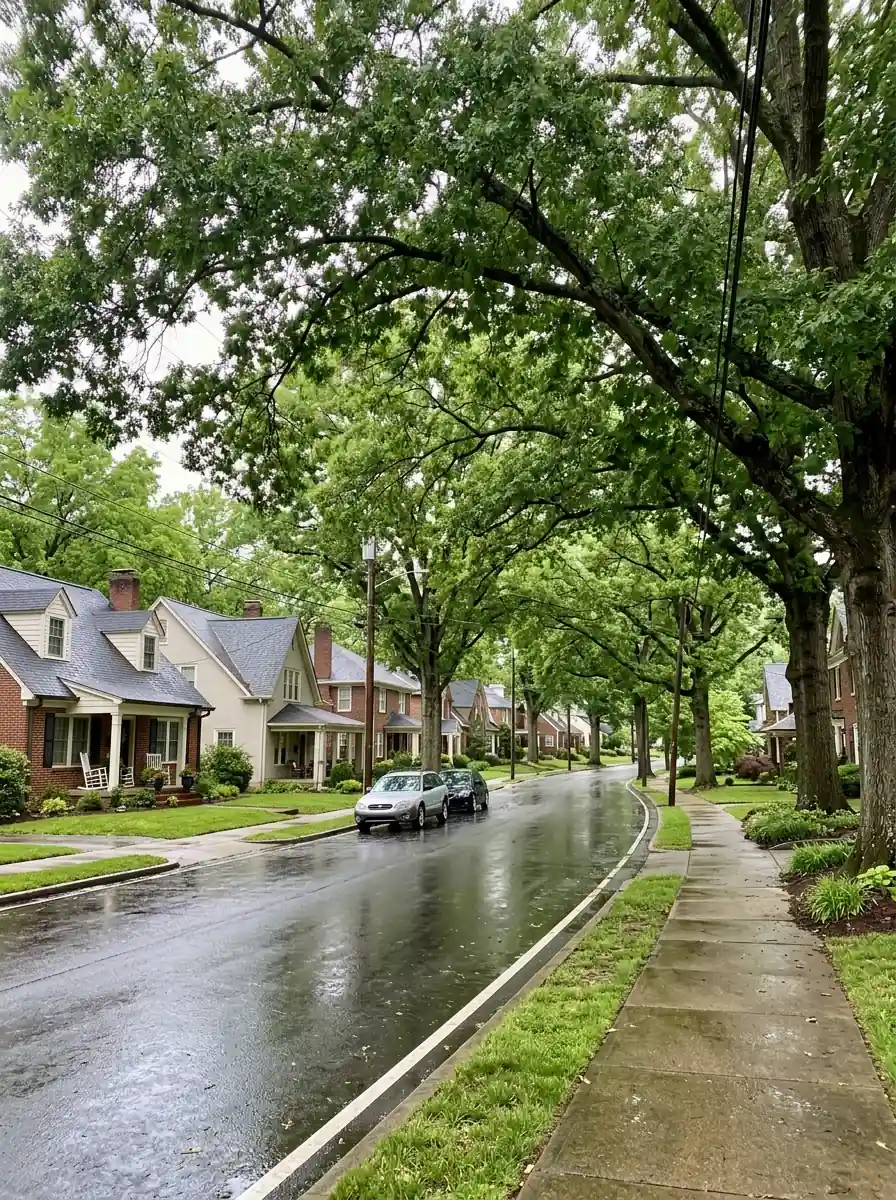
Fastening that was marginal when it was new
Most of Halls Crossroads, 37938, went up as subdivision building between the 1970s and the early 2000s, and the recurring fault here is not age or material but spacing. Hangers were set at the widest interval the specification allowed, which held fine in ordinary weather and has been quietly bending under wet debris load ever since.
Three decades of subdivision building
The housing is brick ranch and two story subdivision stock, built in phases across roughly thirty years with consistent methods within each phase.
Fastening is the common thread. Hidden hangers at wide intervals were standard, which is adequate in a dry climate and marginal under East Tennessee debris load.
The trough itself is usually fine. Aluminum on these houses has outlasted the fasteners holding it, which is why so much of the work here is refastening rather than replacement.
What we deal with in 37938
Hangers at the widest allowed spacing
Adequate when new, marginal under wet debris load.
Sag between fasteners
The line dips at the midpoint rather than at an end.
Ponding at the low points
Standing water accelerates every other failure.
Long unbroken subdivision elevations
Straight runs with no natural break in the line.
Limited on street parking
Subdivision layouts restrict where a work vehicle can sit.
Consistent faults across a phase
Houses built together fail together.
Gutter work we do most in Halls Crossroads
Gutter Hanger Replacement
Refastening at proper spacing rather than the builder interval.
Gutter Slope Correction
Resetting fall once the line has been lifted.
Gutter Cleaning Service
Clearing the load that bent the fasteners in the first place.
Downspout Installation
Additional leaders on the longer subdivision elevations.
Gutter Repair Service
Repairs where the sag has taken joints with it.
Gutter Guard Installation
Reducing the load so the new spacing is not tested as hard.
Gutter Replacement Service
Replacement where the trough has deformed rather than just dropped.
Why spacing decides how long a run lasts
Hanger spacing is the whole story on this housing stock. A gutter carries not just rainfall but the wet debris sitting in it, and that load is what determines how far apart fasteners can sensibly be.
The builder interval used across these subdivisions assumes a lighter load than a Knoxville autumn delivers. It does not fail immediately, which is why it passed at the time, but each season of wet leaf weight bends the fasteners a fraction further.
Refastening at closer spacing keeps the existing trough, which on most of these houses is still perfectly sound. It costs a fraction of replacement and it solves the sag and the resulting ponding in the same visit.
Because whole phases were built the same way, the pattern is predictable at street level. Where one house needs refastening the neighbors are usually within a season or two of the same thing, and knowing that makes it easier to plan the work rather than wait for an overflow.
Discharge is the other item worth addressing at the same visit. These subdivisions sit on graded lots with clay backfill, and the standard arrangement is a splash block a few feet from the wall. Once a run has been refastened and is finally delivering its full volume to the leader, that discharge point matters more than it did while the gutter was quietly overflowing halfway along.
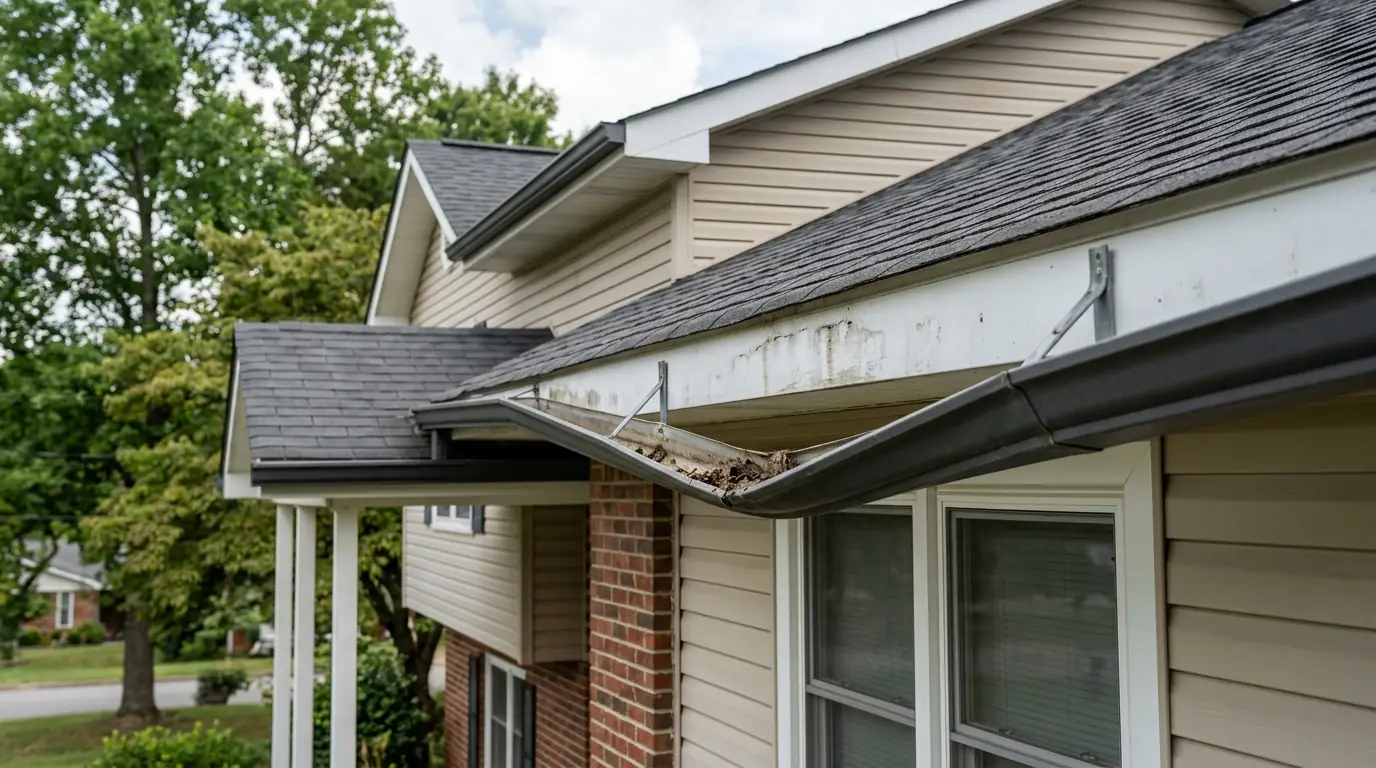
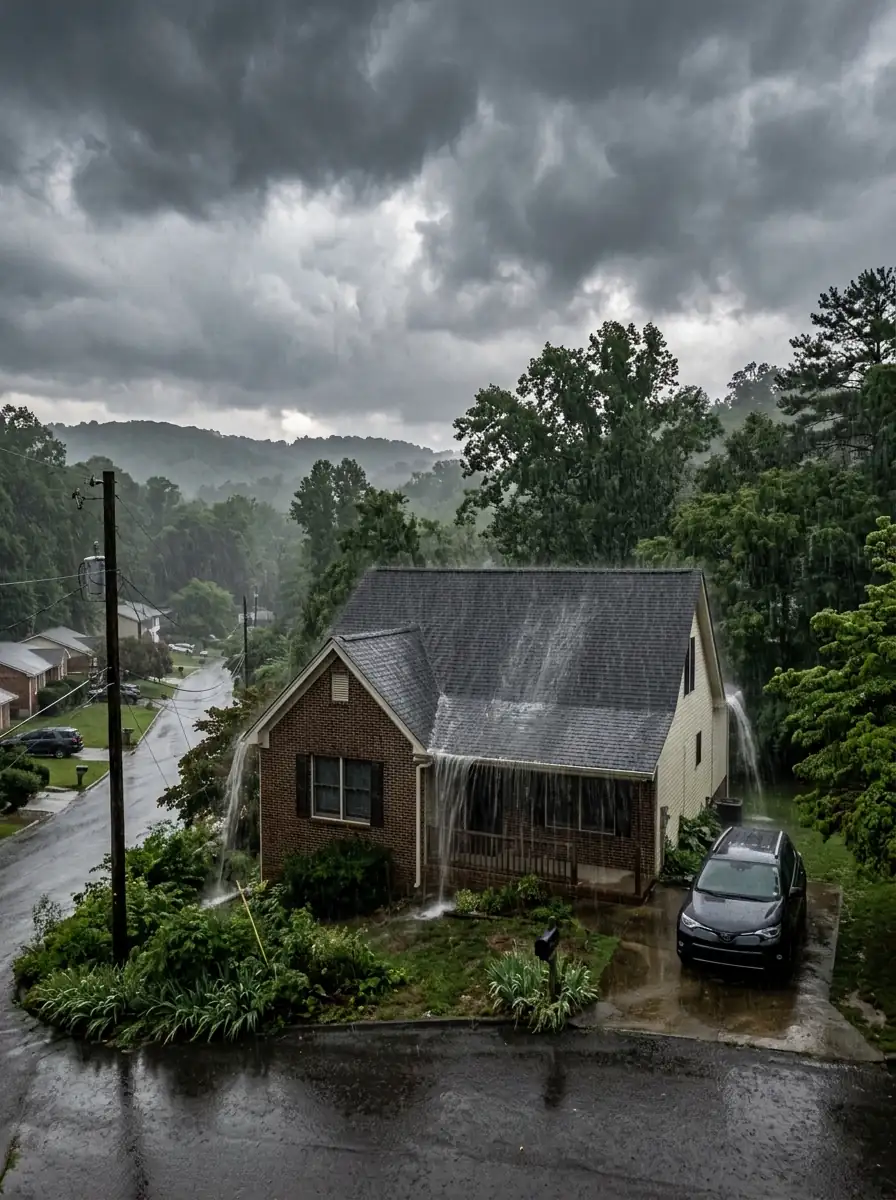
Line dipping in the middle?
That is spacing rather than a failing gutter, and the trough is usually worth keeping.
Why Halls homeowners call us back
Spacing set for the real load
The builder interval assumed a lighter debris load than this county delivers.
The trough is kept where sound
Refastening costs a fraction of replacing metal that is fine.
Fall reset at the same time
Lifting the line is the moment to correct the ponding too.
Halls Crossroads gutter questions
Because the hangers either side of that point are too far apart for the load. It is the standard fault on subdivision stock of this era.
Usually not. If the trough is straight and unperforated, refastening at closer spacing keeps it and costs a fraction of replacement.
Closer than the builder interval used here. Long spans, low pitches and heavy tree cover all argue for tighter spacing.
No. Whole phases were built with the same fastening, so the systems reach the same point on a similar timetable.
Book a Halls Crossroads visit
Tell us where the line dips and we will look at the fastener spacing before anyone mentions replacement.