Gutter Services in Corryton (37721)
Gutter installation, repair and drainage across Corryton, 37721, on the country properties along Tazewell Pike and the roads off it.
Wind rather than water
Out in Corryton, 37721, the thing that takes gutters down is usually wind rather than water. These are country properties on open ground with nothing upwind to break a gust, and a long unbroken run presents a considerable surface for wind to get under. The failure is almost always at the ends, where the leverage is greatest and the fasteners are furthest apart.
Country building on open ground
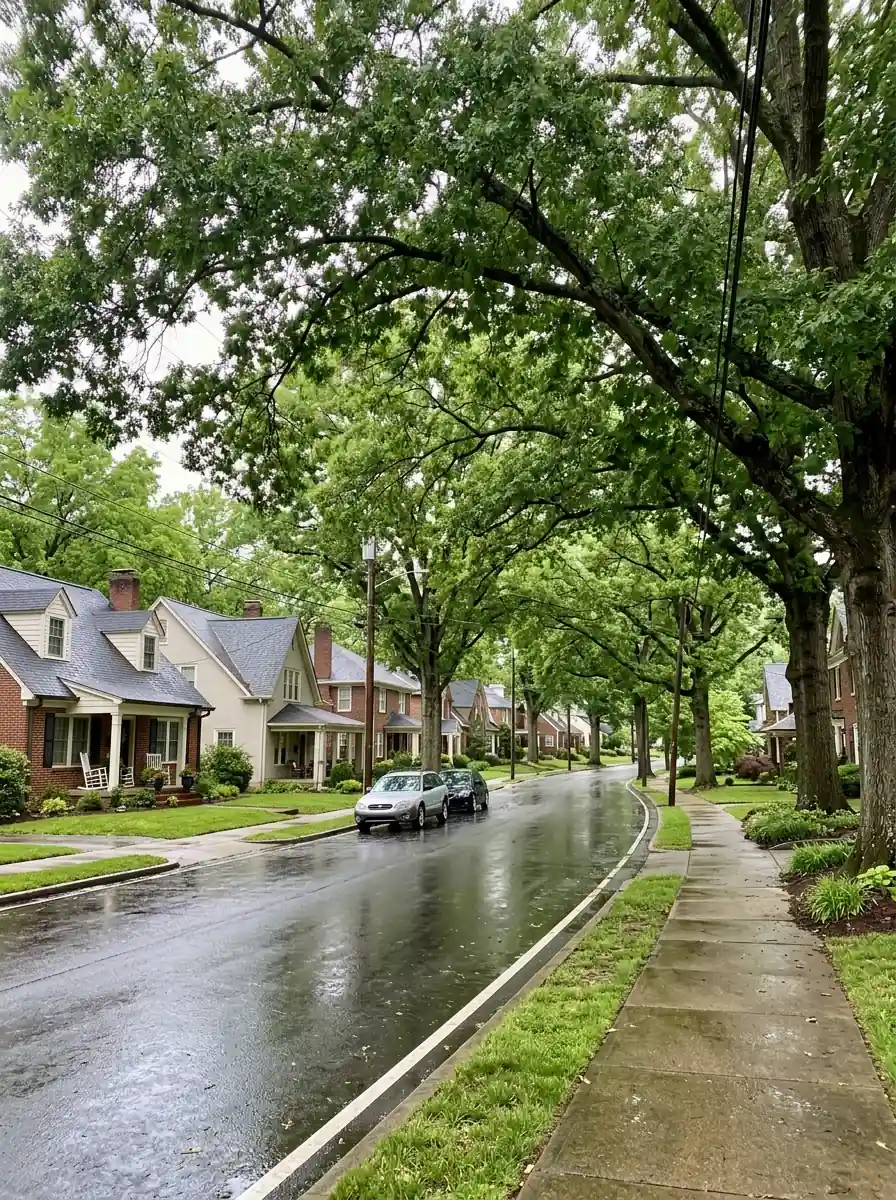
The housing is 1950s to 2000s country homes on wide parcels, set well back from the county roads on long private drives.
Exposure is the constant. Open field on one or more sides means gusts reach the roof edge at full strength rather than broken up by neighboring buildings.
The debris picture is different too. Field material rather than canopy litter, and considerably less of it, so wind is genuinely the dominant fault here rather than blockage.
What we deal with in 37721
Wind lifting the run at its ends
Leverage is greatest where the fasteners stop.
Long unbroken elevations
A continuous run gives wind a large surface to work on.
No shelter upwind
Gusts arrive at full strength across open field.
End caps working loose
Repeated flexing opens sealed joints faster than usual.
Long private drives
Getting equipment to the house is a real distance.
Field debris on rear elevations
Seed heads and grass rather than leaf mat.
Gutter work we do most in Corryton
Gutter Hanger Replacement
Tighter fastening at the ends where uplift concentrates.
Storm Damage Gutter Repair
Sections lifted or torn loose in a gust.
Gutter Leak Sealing
End caps that have flexed open rather than simply aged.
Gutter Repair Service
Repairs on runs that take wind load every season.
Seamless Gutter Installation
New runs specified for exposure rather than for a sheltered lot.
Gutter Replacement Service
Replacement where repeated lifting has deformed the trough.
Gutter Cleaning Service
Clearing field debris that behaves differently from leaf load.
Why an exposed run fails at its ends
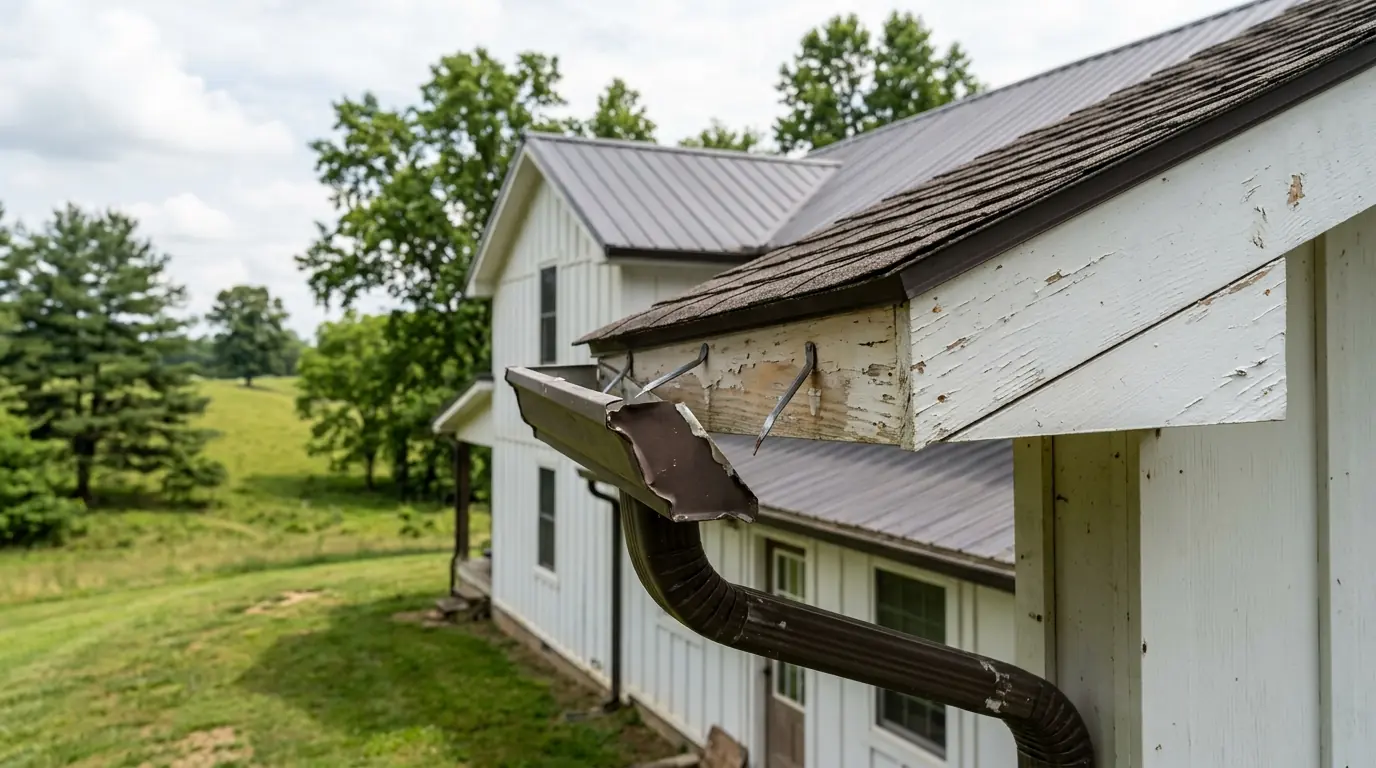
Wind does not push a gutter off a house. It gets under the front lip and lifts, and that lifting force is multiplied at the ends of a run where there is nothing beyond the last fastener to hold it down.
That is why an exposed run almost always fails at a corner or a termination rather than in the middle. The fastener nearest the end is doing considerably more work than the ones in the span, and it is usually spaced as though it were not.
The fix is straightforward once the cause is understood. Fasteners go closer together toward the ends of every run, and closer again on the elevations facing open ground, which is a specification decision rather than an extra.
End caps take the secondary damage. A run that flexes in every gust works its sealed joints continuously, so end caps and miters on exposed elevations reach the end of their sealant life years before the same joints on a sheltered side of the same house.
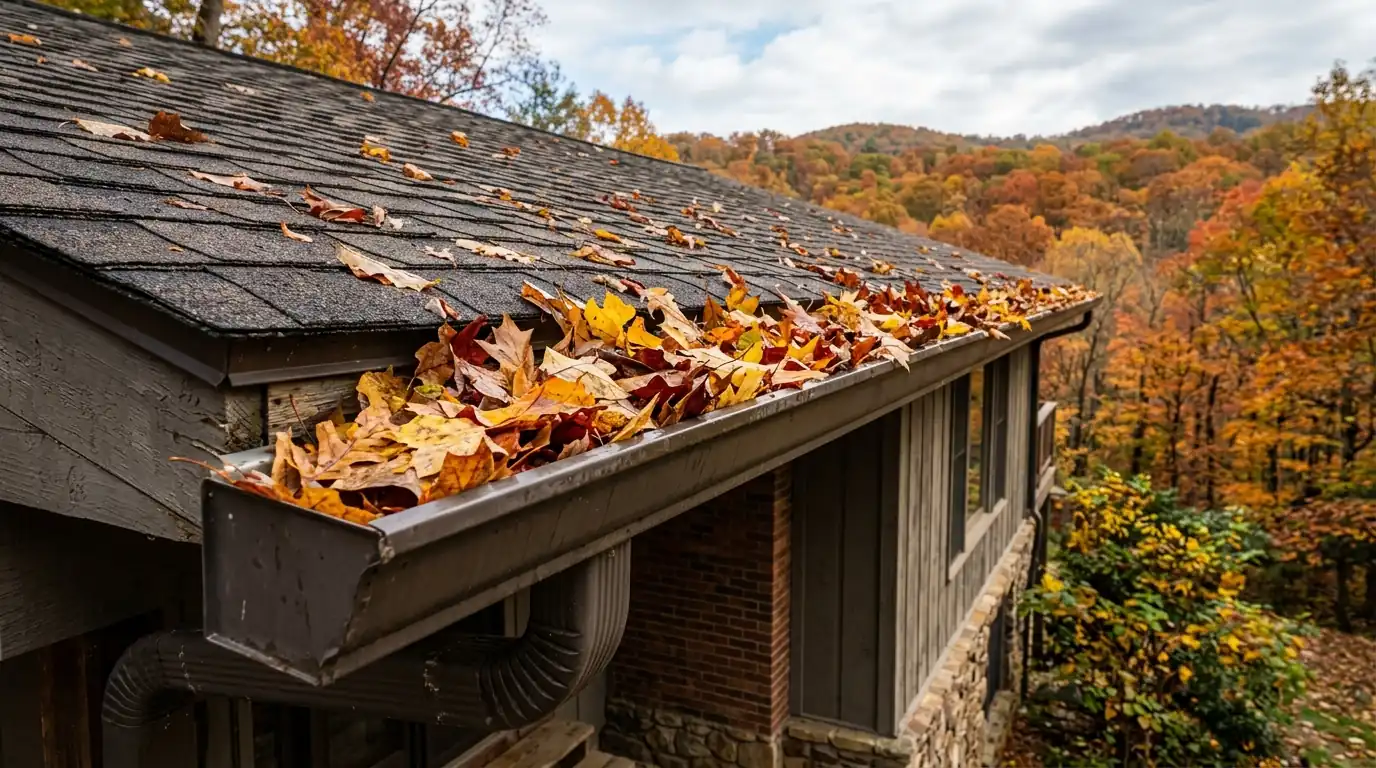
Field debris deserves a mention because it behaves nothing like canopy litter. Seed heads, grass and wind blown material travel a long way along a trough rather than settling where they land, so they tend to arrive at the outlet rather than sitting mid run. The volume is lower and the blockage point is more predictable.
Distance is the practical constraint. Long private drives mean everything takes longer to stage, and a call that would be an hour in the city is realistically half a day out here once travel and setup are counted.
Section came loose in a gust?
Wind damage on an exposed run usually extends past the visible break.
Why Corryton homeowners call us back
Ends fastened tighter than spans
Uplift multiplies where there is nothing beyond the last fastener.
Exposure treated as a specification
An open field elevation is not the same job as a sheltered one.
Joints on exposed sides checked first
Continuous flexing ages sealant years faster there.
Corryton gutter questions
Because wind uplift is greatest at the end of a run, where nothing beyond the last fastener holds it down. Tighter spacing at the ends is the fix.
Not special material, but a different specification. Closer fastening, particularly toward the ends and on the elevations facing open ground.
Almost certainly. A run that flexes in every gust works its sealed joints continuously, so they age far faster than on a sheltered elevation.
Less than in the city. Field material travels along the trough rather than settling, so it tends to arrive at the outlet rather than blocking mid run.
Arrange a Corryton visit
Tell us which elevations face open ground and where it has come loose before, and we will specify the fastening for the exposure.