Gutter Services in Old Sevier (37920)
Gutter installation, repair and drainage across Old Sevier, 37920, on the bungalow streets above the south bank around Sevier Avenue.
When the lot next door changes
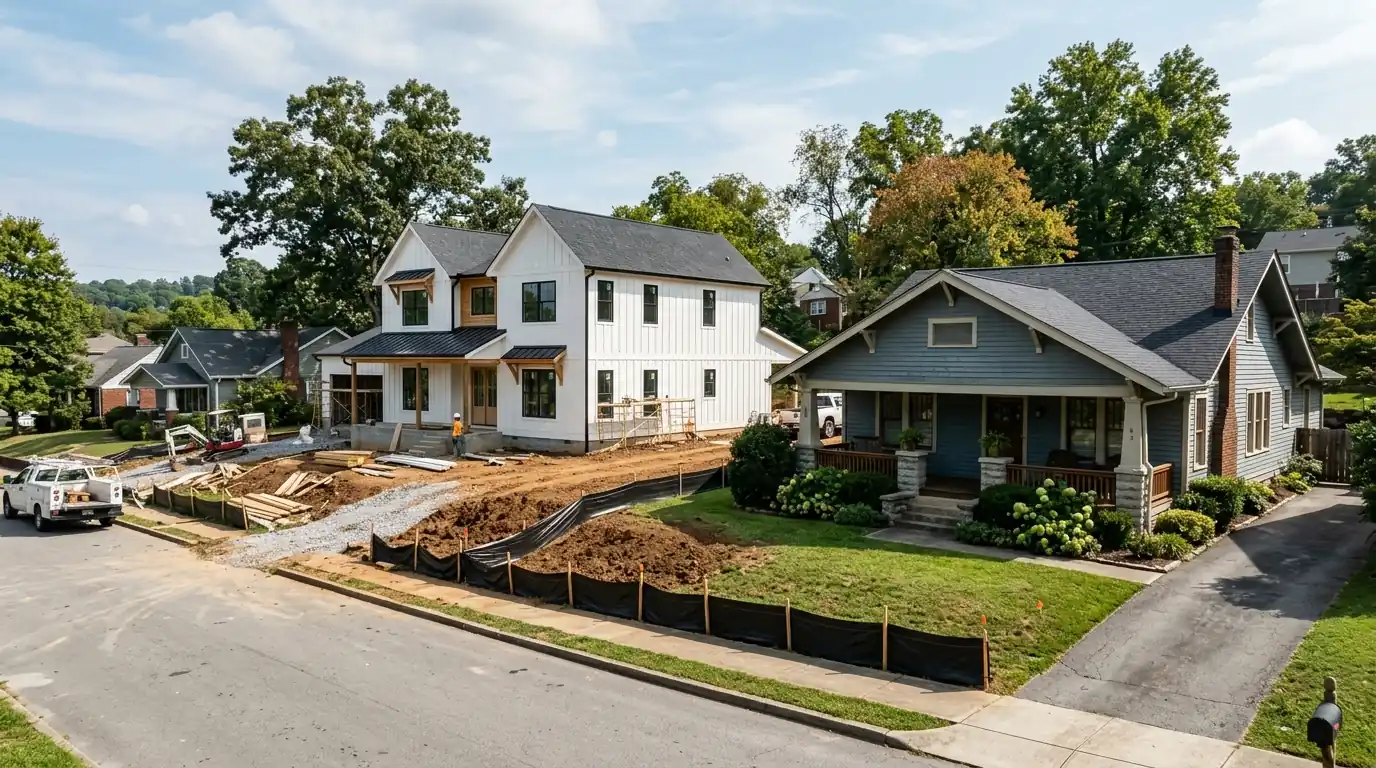
Old Sevier, 37920, has been redeveloping steadily, and one consequence catches owners of the older houses off guard. Drainage that worked perfectly for eighty years can stop working without anything on your property changing, because the lot next door was regraded, built on or paved. Water now arrives from a direction it never used to, and the existing arrangement was never designed for it.
Older houses in a changing neighborhood
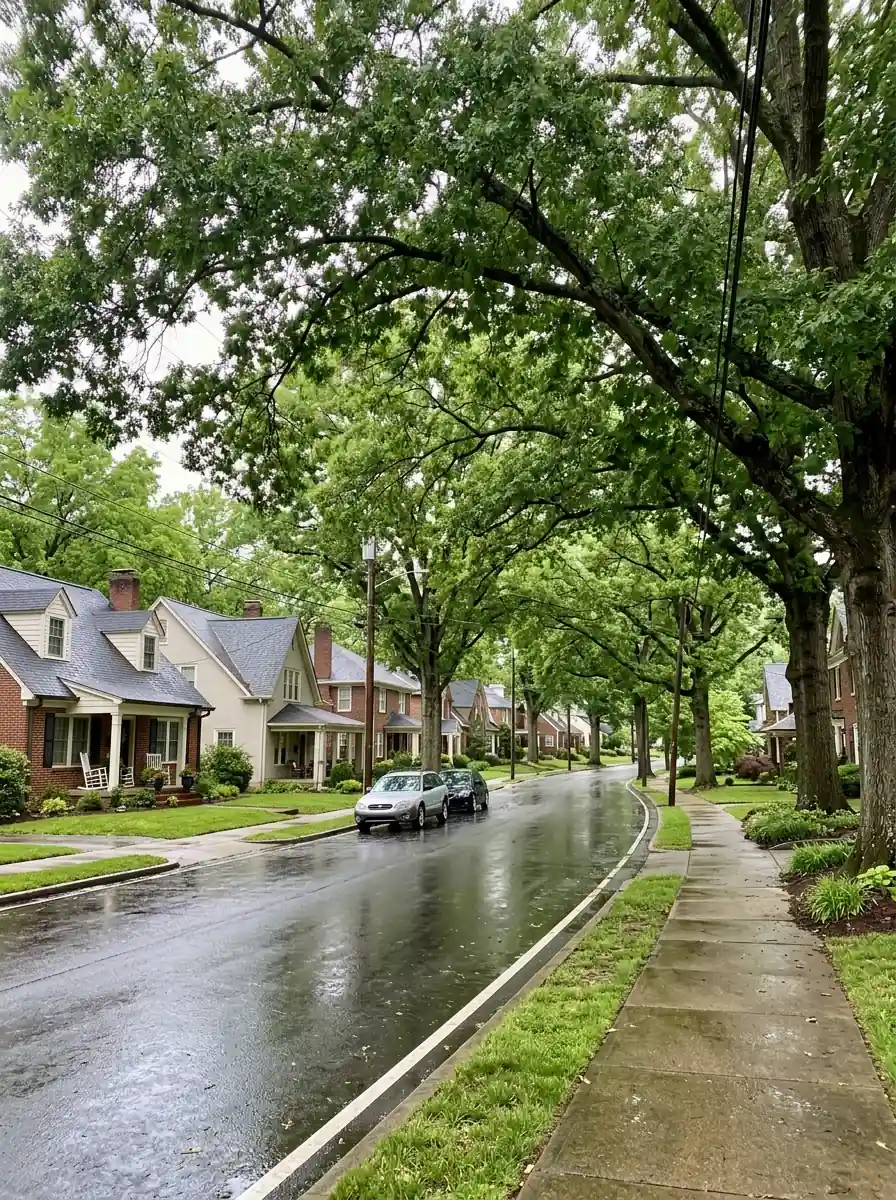
The housing is 1900 to 1935 frame bungalow above the south bank, on lots laid out long before the current pattern of development.
Redevelopment is active and ongoing. Infill building, commercial conversion and regrading are all happening among the older stock.
That makes the surroundings a variable rather than a constant. A drainage solution here has to account for ground that may not stay as it is.
What we deal with in 37920
Neighboring lots regraded
Ground that used to fall away may now fall toward you.
New hard surfaces nearby
Paving sheds water instead of absorbing it.
Water arriving from a new direction
The existing arrangement was designed for the old one.
Construction silt in troughs
Building work next door puts material on your roof.
Older houses beside new floor levels
New building often sits higher than the original stock.
Established drainage now undersized
What coped before is now receiving more.
Gutter work we do most in Old Sevier
Yard Drainage Correction
Reshaping ground to handle water arriving from a new direction.
Underground Downspout Drainage
Routing your roof water away from where the new water arrives.
French Drain Installation
Intercepting surface flow coming from an adjacent lot.
Gutter Cleaning Service
Clearing construction silt that arrived from next door.
Downspout Installation
More capacity where the catchment has effectively grown.
Gutter Inspection Service
Documenting what changed and when, which is worth having.
Gutter Replacement Service
Replacement where the system is now genuinely undersized.
Drainage that worked until the ground moved
The thing to establish first on these properties is whether anything has actually changed, because the symptom often appears long after the cause. A regrade next door last spring produces a wet corner this winter.
Hard surfacing is the most common trigger. Ground that absorbed a share of what fell on it now sheds nearly all of it, and the total arriving at the boundary can double without anyone building anything.
Floor levels are the second. New building here frequently sits higher than the original stock, and a lot raised to suit a new house sends surface water toward whatever is lower, which is usually a bungalow from 1915.
Your roof water becomes more important in that situation rather than less. You cannot control what arrives from next door, but you can stop adding to it, and routing your own discharge away from the affected side is the part you control.
Intercepting is the other half. Where surface water is genuinely arriving across a boundary, a collecting drain along that side catches it before it reaches the house, and that is a separate job from anything to do with the roof.
Documenting the change is worth doing while it is fresh. Photographs and dates of what the ground looked like before and after are useful if the conversation ever becomes a formal one, and we will record what we observe even though we are not the people to advise you on it.
Water arriving from next door?
Intercepting surface flow at the boundary is separate work from anything on the roof.
Why Old Sevier homeowners call us back
We ask what changed nearby
The symptom often appears a season after the cause.
Your contribution removed first
You cannot control the neighboring lot but you can control your own discharge.
Observations recorded with dates
Useful later, though we are not the people to advise on it.
Old Sevier gutter questions
Often because something nearby changed. A regrade, new paving or a raised building platform sends water toward you that never used to arrive.
Yes. Ground that absorbed a share of the rainfall now sheds nearly all of it, so the total reaching the boundary can double.
Intercept it with a collecting drain along that side, and make sure your own roof water is not adding to it. Those are the parts you control.
It is worth doing while it is fresh. We will record what we observe, though advising you on it is not our role.
Arrange an Old Sevier survey
Tell us what has been built or regraded nearby and we will look at where the water is now arriving from.