Photograph it before you tidy up
The instinct after a storm is to clear up and deal with the paperwork later. That order costs people money more often than anything else we see.
Written by Marla Whitehurst, Service Coordinator. Reviewed by Boyd Kessinger, Installation Supervisor. Last updated 2026-08-12.
Short answer
Keep people away from anything hanging, then photograph everything before you move it. Insurers work from evidence of the damage as it occurred, and a photograph of a torn section lying where it fell is worth considerably more than a description given a week later once everything is tidy. Then call. Securing a hanging section is same day work where conditions allow; the permanent repair follows in daylight.
The first hour
Move people and vehicles out from under anything hanging. A section still attached at one end is the dangerous case, because wind finishes the job at an unpredictable moment.
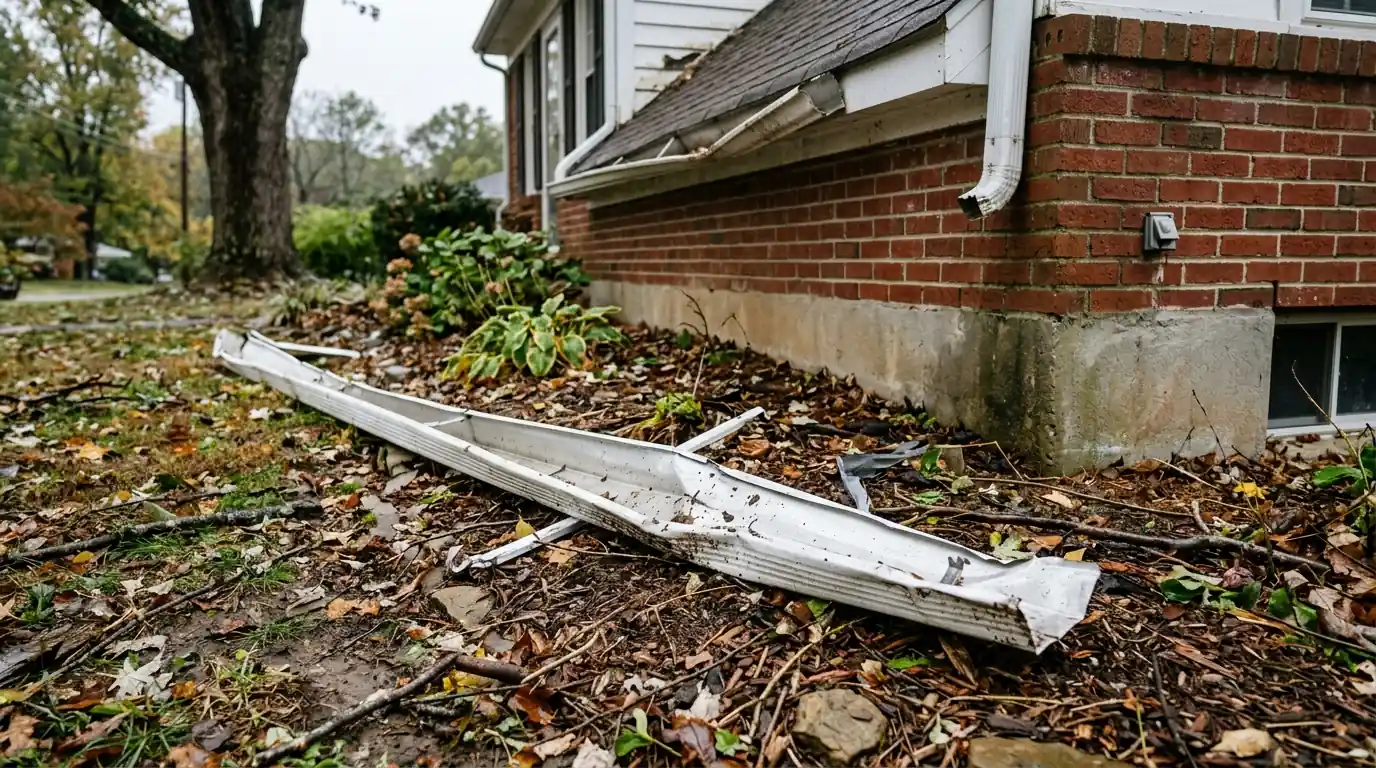
Photograph everything before touching it, including the ground where material has landed. Wide shots and close shots both help, and the date on the file is part of the value.
If water is coming inside, put something down and photograph that too. Interior damage grows faster than the gutter problem that caused it.
What a first visit is actually for
It removes risk rather than completing a repair. Loose sections are secured or taken down, ground below is cleared, and water is diverted away from an opening where that is possible.
Careful work in bad weather is a bad trade. Forming trough needs daylight and dry surfaces, so a repair rushed in gusting wind gets done twice.
Lightning is the hard stop. Nobody goes up a ladder against a metal gutter in an active storm, and any company that says otherwise is telling you something about how it works.
Damage extends past the visible break
Wind that tore one section has almost always loosened fasteners either side of it. A scope covering only the obvious failure leaves the next storm an easy target.
That is why the whole elevation gets assessed rather than the gap. It also matters for a claim, because damage discovered three months later is harder to attribute than damage documented at the time.
Drip edge and fascia are worth checking in the same pass. Storm damage at the roof edge is easy to miss from the ground and expensive to leave.
Where our role stops
We supply photographs taken before anything moved and a written scope of what the repair requires. Those are yours to use however you need.
We do not advise on what your policy covers or how to present a claim. That is between you and your insurer, and pretending otherwise would not help you.
The underrated version of all this is a condition record before storm season. An inspection documenting a sound system in October makes later damage far easier to establish than arguing about pre existing wear afterward.
What counts as urgent and what does not
Three things genuinely need a call the same day: something hanging where people walk, water entering the house, and a downspout torn off while heavy rain is still falling.
A limb resting in a gutter is usually not one of them. If nothing is hanging and the weight is stable, it can wait a day or two, though it should not sit for weeks because the load keeps working on the hangers.
A dented section, a leaning downspout or a torn end cap can all wait for a scheduled visit. They will not get better, but they will not get dramatically worse either.
If you are not sure which you have, describe it on the phone. Half the calls we take after a storm turn out not to need a night visit, and being told so costs nothing.
What to take from this
- Move people and vehicles from under anything hanging first
- Photograph everything before you move it, including the ground
- Tidying up before recording is what weakens a claim
- A first visit removes danger rather than completing the repair
- Wind damage nearly always extends past the visible break
- We supply the record; the claim is between you and your insurer
- A condition record before storm season is worth having
Questions this raises
Photograph everything first. Clearing up before recording is the most common thing that weakens a claim.
The phone is answered around the clock. Whether a ladder goes up depends on lightning and wind rather than willingness.
That is the normal sequence. Removing the danger is same day work; the permanent repair follows once conditions allow it to be done once.
We provide photographs and a written scope. The claim itself stays between you and your insurer.
Services this relates to
Storm Damage Gutter Repair
Secured first, photographed, then repaired properly.
Emergency Gutter Repair
For anything hanging or water already inside.
Gutter Inspection Service
A condition record before storm season.
Gutter Hanger Replacement
Refastening either side of a break.
Fascia & Soffit Repair
Board damage found once the run comes off.
Call once it is photographed
Tell us what came down and whether water has reached the house.