What moves the price of a gutter job
Figures on a website are for budgeting rather than quoting. What they are useful for is understanding why two houses on one street get different numbers.
Written by Landon Crutchfield, Senior Estimator. Reviewed by Boyd Kessinger, Installation Supervisor. Last updated 2026-08-12.
Short answer
For planning, cleaning commonly runs $145 to $340, small repairs $165 to $480, seamless aluminum replacement $7.40 to $13.60 per linear foot installed, fitted guards $8.40 to $22.00 per foot, and buried downspout drainage $16 to $34 per foot. Those are ranges for budgeting, not quotations. The real figure follows the measured elevation, and the factors below are what move it within those bands.
Footage is the driver, but not the only one
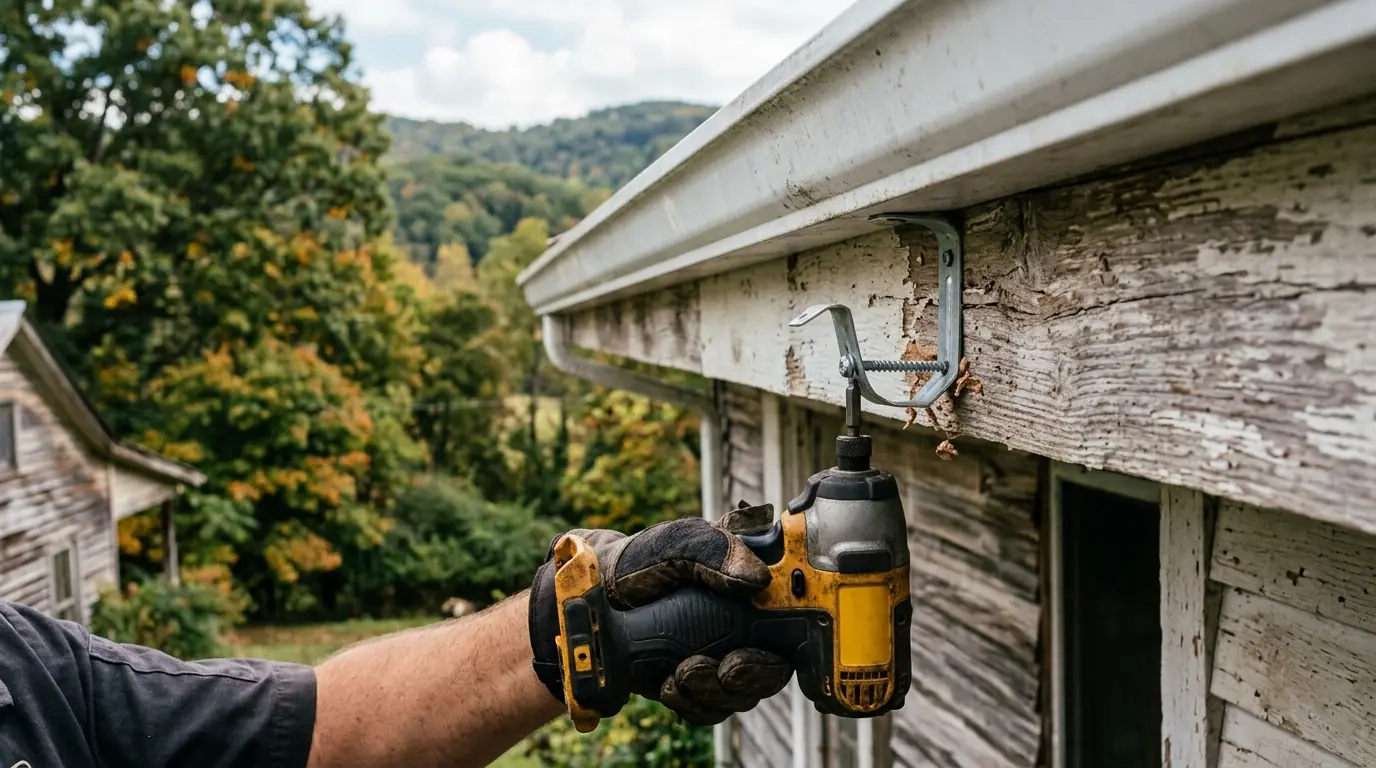
Linear feet is the main number on almost every job, and it is measured across every elevation being covered rather than estimated from the footprint.
Height is the second. A single story ranch, a two story house and a three story elevation are progressively slower to stage safely, and that time is real rather than padding.
Access is the third and it is the one people underestimate. Steep grade behind a house, a banked front yard, tight side yards or a long private drive all add time before any work has happened.
What genuinely costs more, and why
Trough and leader size. Six inch trough with three by four inch downspouts costs more per foot than five inch, and on large roofs it is the right specification rather than an upsell.
Material. Aluminum sits at the low end, steel above it, copper several times both. Copper is a considered architectural choice rather than a performance upgrade for most houses.
Corner and outlet count. Every miter and every outlet is hand work at height, so a complicated roofline costs more than a simple rectangle of the same footage.
The variable nobody can quote in advance
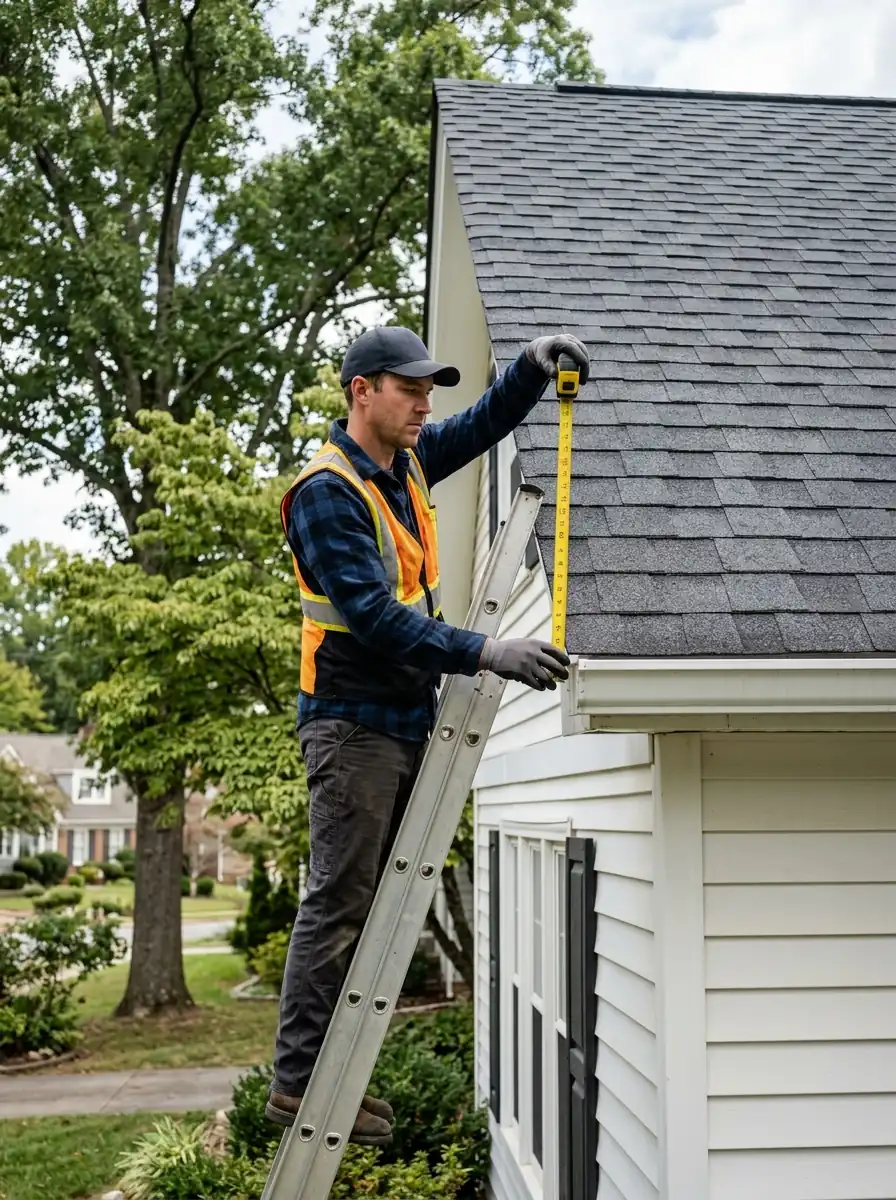
Fascia condition is the honest unknown on any older house. Nothing behind a gutter can be assessed until the run comes off, so board work is quoted separately when it is found.
That is why a figure can change mid job on a house with history. What should not happen is a change without a conversation, and anything found gets described before the work continues.
On recent construction this barely arises. Board on modern houses is generally sound, which is part of why upsizing a newer system is a cleaner and more predictable job.
Where money is genuinely saved
Combining work in one visit is the largest saving available. Once ladders are up and the crew is on site, adding the clearing or the inspection to a repair costs very little compared with a second trip.
Doing several properties together, on a terrace, a block or a portfolio, spreads the setup cost the same way and is worth raising with neighbors.
Acting before failure is the quiet one. Refastening a run costs a fraction of replacing it, and replacing board before decay reaches the rafter tails costs a fraction of the structural version.
Comparing quotes fairly
The most useful thing to check is whether two quotes are describing the same work. Trough size, leader count and leader size are the three items that most often differ, and they change both the price and the outcome.
A cheaper figure with five inch trough and two downspouts is not a better deal than a higher one with six inch and four, on a roof that needs the second. It is a different specification for a different result.
Ask what happens if the fascia is worse than expected. A quote that has simply not considered it will change on the day; one that names it as a possibility is being honest about an unknown nobody can see.
Ask what proves the work at the end too. A run that gets flushed with the discharge watched is a job somebody stands behind.
What to take from this
- Website figures are budgeting ranges, never quotations
- Footage, height and access set the base before anything else
- Six inch trough with larger leaders costs more and is often correct
- Every miter and outlet is hand work, so complexity costs
- Fascia condition cannot be quoted until the run comes off
- Combining jobs into one visit is the biggest saving available
- Acting before failure costs a fraction of acting after it
Questions this raises
Because footage, height, access and roof geometry all move the figure, and a number given without them is either wrong or padded to be safe.
Different roof area, pitch, corner count or access. On mixed era streets two adjacent houses genuinely need different systems.
It can where board condition is worse than it looked, because nothing behind a gutter is visible until it is off. You hear that before work continues, not afterward.
Usually much cheaper. Most of the cost of a small job is getting set up, and that is shared once the ladders are already there.
Services this relates to
Gutter Inspection Service
A documented condition report before deciding anything.
Gutter Replacement Service
The largest single job and the one worth planning.
Gutter Repair Service
Where a repair does the same work for less.
Gutter Cleaning Service
The routine visit that prevents the expensive ones.
Gutter Maintenance Plans
Predictable annual cost instead of reactive calls.
Get a figure for your actual roof
Tell us the elevations and the access and we will measure rather than estimate.