Gutter Services in Deane Hill (37919)
Gutter installation, repair and drainage across Deane Hill, 37919, on the midcentury streets across the old country club grounds.
The blockage nobody can see
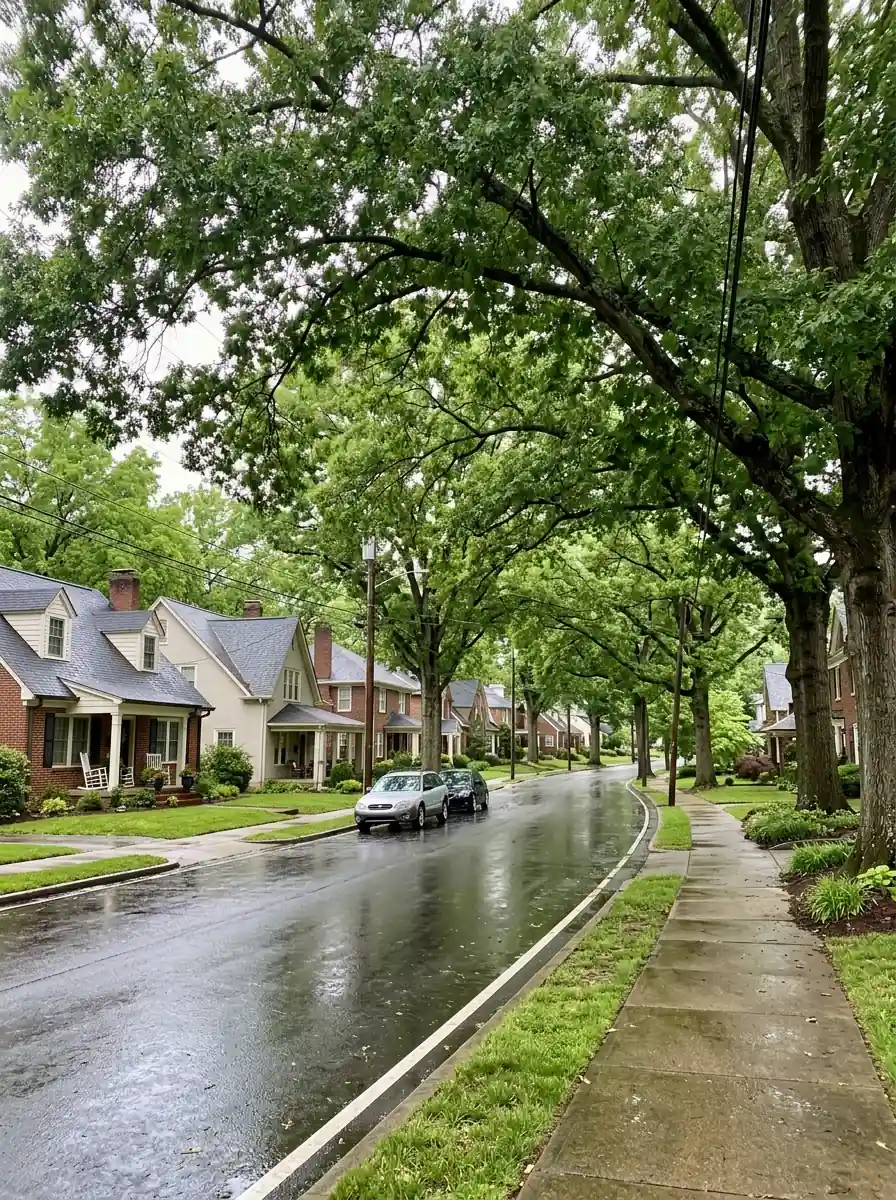
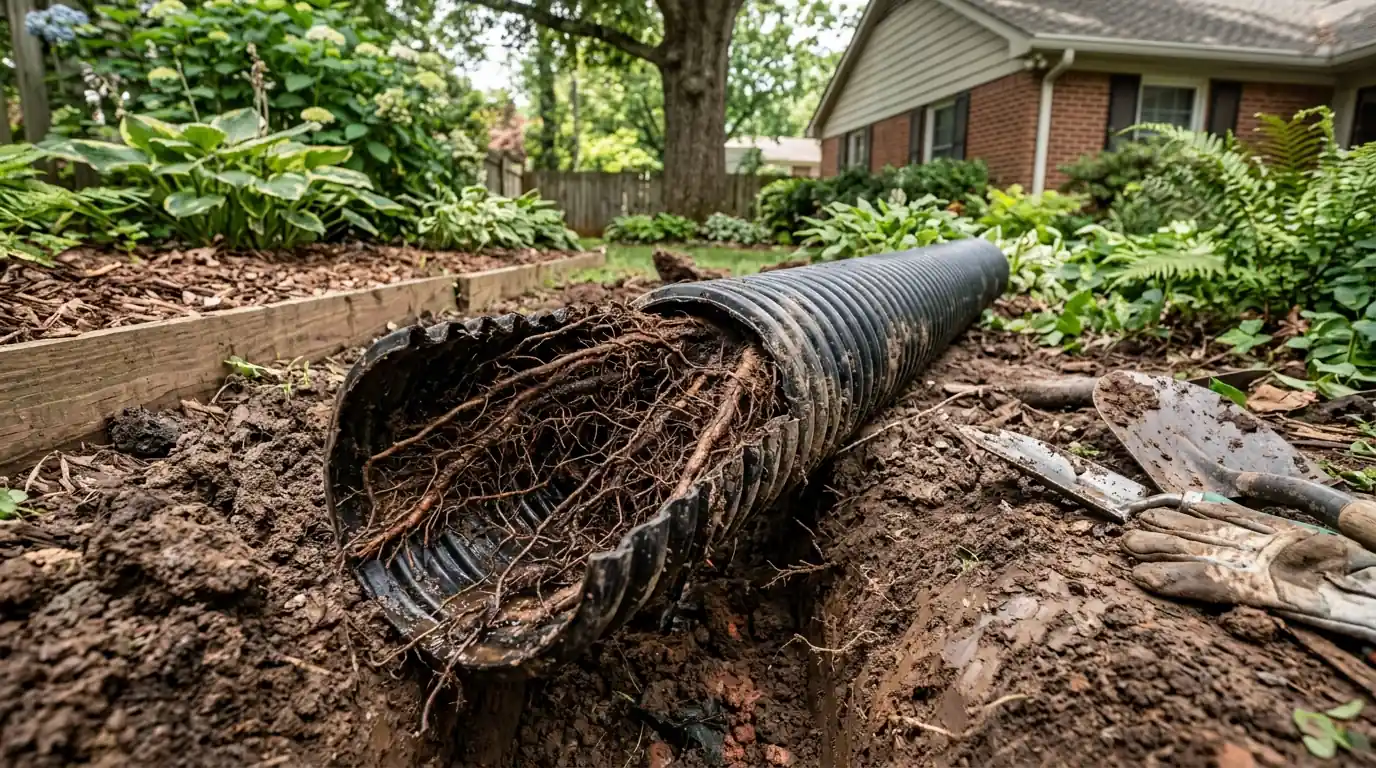
Deane Hill, 37919, was laid out across former country club grounds with generous planting, and seventy years later those trees are mature and their root systems are everywhere. Where a previous owner buried a downspout line, roots find it, enter at the joints and grow inside the pipe. The gutter above is perfect, the leader is clear, and the water still has nowhere to go.
Mature planting on midcentury lots
The housing is 1950s and 1960s midcentury ranch on generous lots with long front setbacks.
The planting is the defining feature and it is mature. Street trees and specimen planting from the original development are now at full size.
Buried drainage is common here. Enough owners have routed downspouts underground over the decades that root intrusion is a routine finding rather than an occasional one.
What we deal with in 37919
Roots entering buried lines at joints
Pipe joints are where roots find a way in.
Blockage with no visible cause
The trough and leader are clear and it still backs up.
Lines with no cleanout access
Older buried runs were frequently laid without any.
Unknown routes
Nobody has a record of where a line laid in 1985 actually goes.
Sweetgum and maple debris above
Mature planting delivering a heavy seasonal load.
Long setbacks
Buried runs here are longer than on a modern lot.
Gutter work we do most in Deane Hill
Underground Downspout Drainage
Relaying a buried line with cleanouts so it can be serviced.
Downspout Repair Service
Proving the leader before assuming the buried section is at fault.
Clogged Gutter Repair
Finding whether the blockage is above ground or below it.
Gutter Cleaning Service
Clearing the load mature planting delivers each season.
Yard Drainage Correction
Where a failed buried line is better replaced by surface routing.
Gutter Inspection Service
Establishing what buried drainage a property actually has.
Downspout Extension Installation
The simple option where relaying a line is not worth it.
Roots, buried lines and how they meet
Root intrusion is the most frustrating blockage type because everything visible is working. The gutter is clear, the leader runs freely when you pour water into the top, and yet during real rain the whole system backs up.
The reason is that a leader passes a hose test comfortably while failing under storm volume. A root mass inside a buried pipe leaves enough of a channel for a trickle and not nearly enough for a downpour.
Roots get in at the joints. A buried line is not a continuous tube; it is sections joined together, and every joint is a place where moisture escapes into the surrounding soil. Roots follow that moisture, find the gap, and grow toward the water inside.
Cleanouts are what make this manageable, and older buried runs here almost never have them. With access points a line can be rodded like a downspout. Without them the only way to clear an intrusion is to dig the line up and find it.
That is why relaying rather than clearing is often the honest recommendation. A line that has been invaded once will be invaded again from the same trees, and putting in a new run with proper joints and accessible cleanouts costs less over ten years than excavating twice.
The unknown route is the other practical problem. Buried lines laid decades ago rarely come with a record, so part of the work is establishing where the pipe actually goes before deciding anything about it.

Gutter clear and still backing up?
If the visible system is fine, the buried section is the next place to look.
Why Deane Hill homeowners call us back
Buried lines proved under real volume
A root mass passes a hose test and fails a storm.
Cleanouts fitted as standard
A line without access can only be cleared by digging it up.
Relaying offered where it is honest
A line invaded once will be invaded again from the same trees.
Deane Hill gutter questions
If you have a buried downspout line, roots are the usual answer. A root mass passes a hose test and blocks completely under storm volume.
Through the joints. Every joint leaks a little moisture into the soil, roots follow it, and they grow toward the water inside.
With cleanouts, yes, by rodding. Without them the line has to be excavated, which is why older runs here are often better relaid than cleared.
Not until we look. Lines laid decades ago rarely come with a record, so establishing the route is part of the work.
Get the buried line surveyed
Tell us whether the visible system looks clear and still backs up, and we will find out what is happening underground.