Gutter Services in Westmoreland (37919)
Gutter installation, repair and drainage across Westmoreland, 37919, on the wide brick ranch streets off Westmoreland Boulevard.
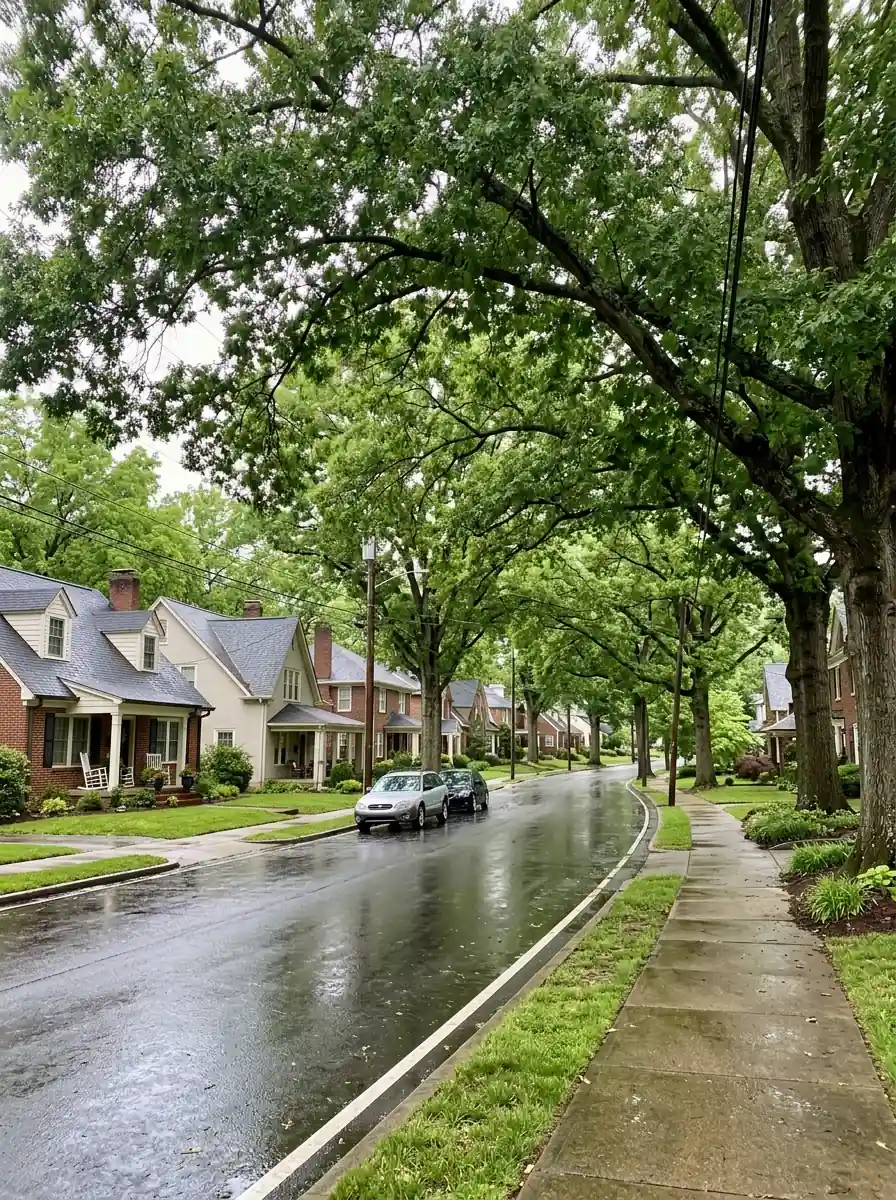
Water that arrives too gently
Westmoreland, 37919, is wide low pitched brick ranch, and that shallow roof produces a counterintuitive problem. Water arrives at the trough slowly and gently rather than with force, which sounds like an advantage and is not. Slow flow does not carry debris along a gutter. It leaves it where it lands, and the run silts up from the middle outward rather than blocking at the outlet.
Wide ranches with shallow roofs
The housing is 1955 to 1975 brick ranch, single story with wide frontages and long uninterrupted eaves.
The pitch is shallow by modern standards. These roofs shed water gently across a large area rather than concentrating it.
The gutter consequence is transport rather than capacity. There is rarely too much water; there is rarely enough velocity to move what is in the trough.
What we deal with in 37919
Debris settling where it lands
Gentle flow does not carry material to the outlet.
Silting from the middle of the run
The blockage forms away from the opening rather than at it.
Long uninterrupted eaves
A wide frontage means a long distance to any outlet.
Shallow pitch limiting the fall
Less roof drop to work with when setting the gutter.
Carports tight to the side eave
Access along one side is restricted on most of these houses.
Standing water in the flat sections
What settles holds moisture against the trough.
Gutter work we do most in Westmoreland
Gutter Slope Correction
Fall matters more where the water arrives without force.
Gutter Cleaning Service
Clearing a run that silts rather than blocks.
Downspout Installation
More outlets so material has less distance to travel.
Gutter Guard Installation
Keeping the load out where flow will not move it.
Gutter Hanger Replacement
Refastening where settled debris has taken the line.
Gutter Replacement Service
Replacement where the run has lost its shape entirely.
Gutter Maintenance Plans
A schedule set by silting rather than by leaf drop.
Why slow flow leaves debris behind
Steep roofs are self clearing to a useful degree. Water arrives fast, it carries stems and grit along the trough, and much of what lands ends up at the outlet whether anyone cleans it or not.
A shallow roof does none of that. The same rainfall arrives spread out and slow, and it has barely enough energy to move itself, let alone the material sitting in the trough.
So the fault here looks different. Rather than a packed outlet with a clear run behind it, you get a gutter with a low ridge of settled debris part way along, water pooling behind it, and an outlet that is perfectly clear.
That makes the fall genuinely critical. On a steep roof a slightly lazy pitch is masked by the velocity of the water. On these roofs the pitch is doing all the work, so a run that has dropped even slightly stops moving anything at all.
More outlets help more than a bigger trough would. Halving the distance material has to travel is worth more on a low pitch roof than increasing the capacity it is traveling through, which is the opposite of the advice most large roofs need.
Guards are worth considering for the same reason. Where flow will not clear what lands, keeping material out of the trough in the first place addresses the mechanism rather than the symptom.
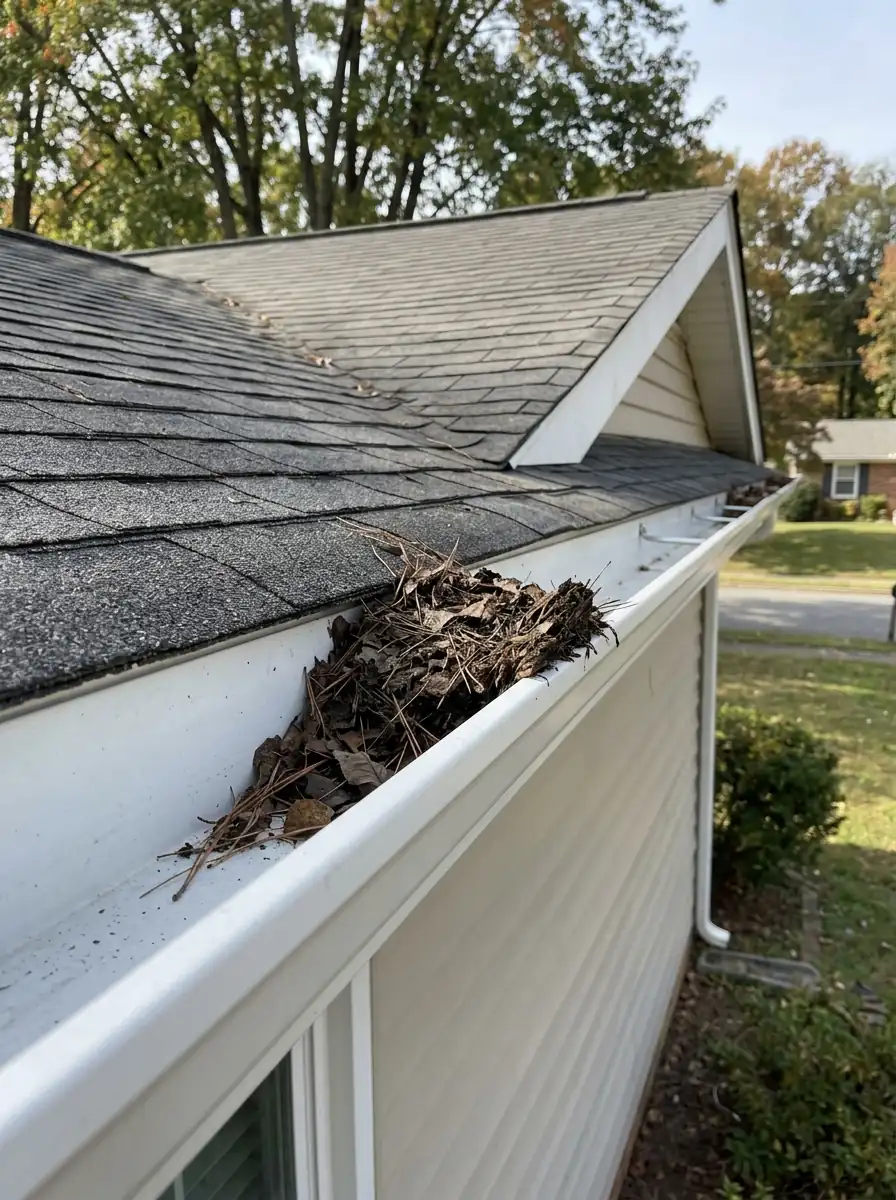
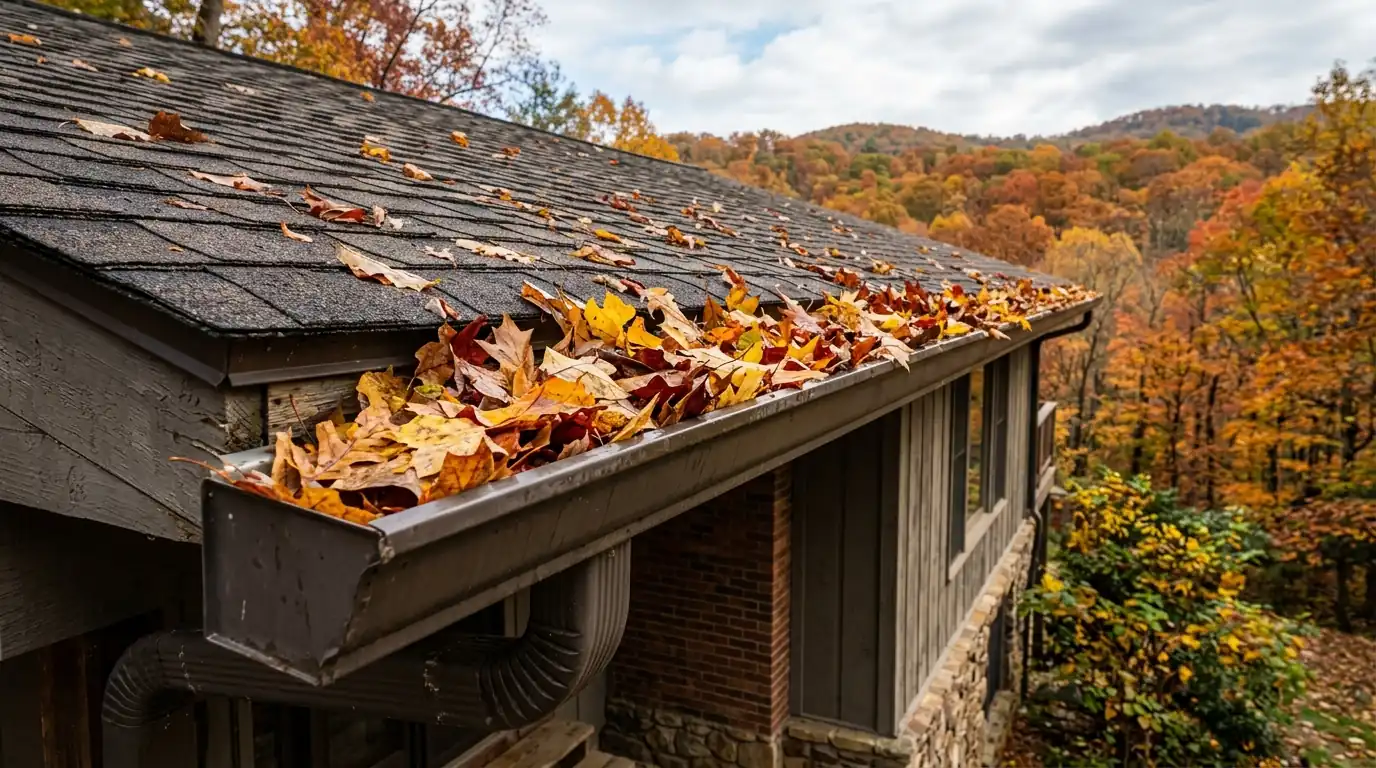
Outlet clear and still pooling?
On a shallow roof the fall is doing all the work, and a slight drop stops it moving anything.
Why Westmoreland homeowners call us back
Fall measured, not eyeballed
On a low pitch roof the pitch is doing all the work.
Outlets added rather than trough upsized
Shorter travel beats bigger capacity on these roofs.
Silting understood as the fault
The blockage forms mid run rather than at the opening.
Westmoreland gutter questions
Because a shallow roof delivers water too gently to carry debris along the trough. The run silts up part way rather than blocking at the opening.
Usually less than another outlet would. On a low pitch roof, shortening the distance material has to travel matters more than capacity.
Because there is no velocity to mask a lazy pitch. On these roofs the fall is doing all the work by itself.
Often yes, for an unusual reason. Where flow will not clear what lands, keeping it out addresses the actual mechanism.
Book a Westmoreland visit
Tell us whether the water pools away from the outlet and we will measure the fall along the whole run.