Gutter Services in Marble City (37921)
Gutter installation, repair and drainage across Marble City, 37921, on the streets around the old marble yards off Sutherland Avenue.

Deposit rather than debris
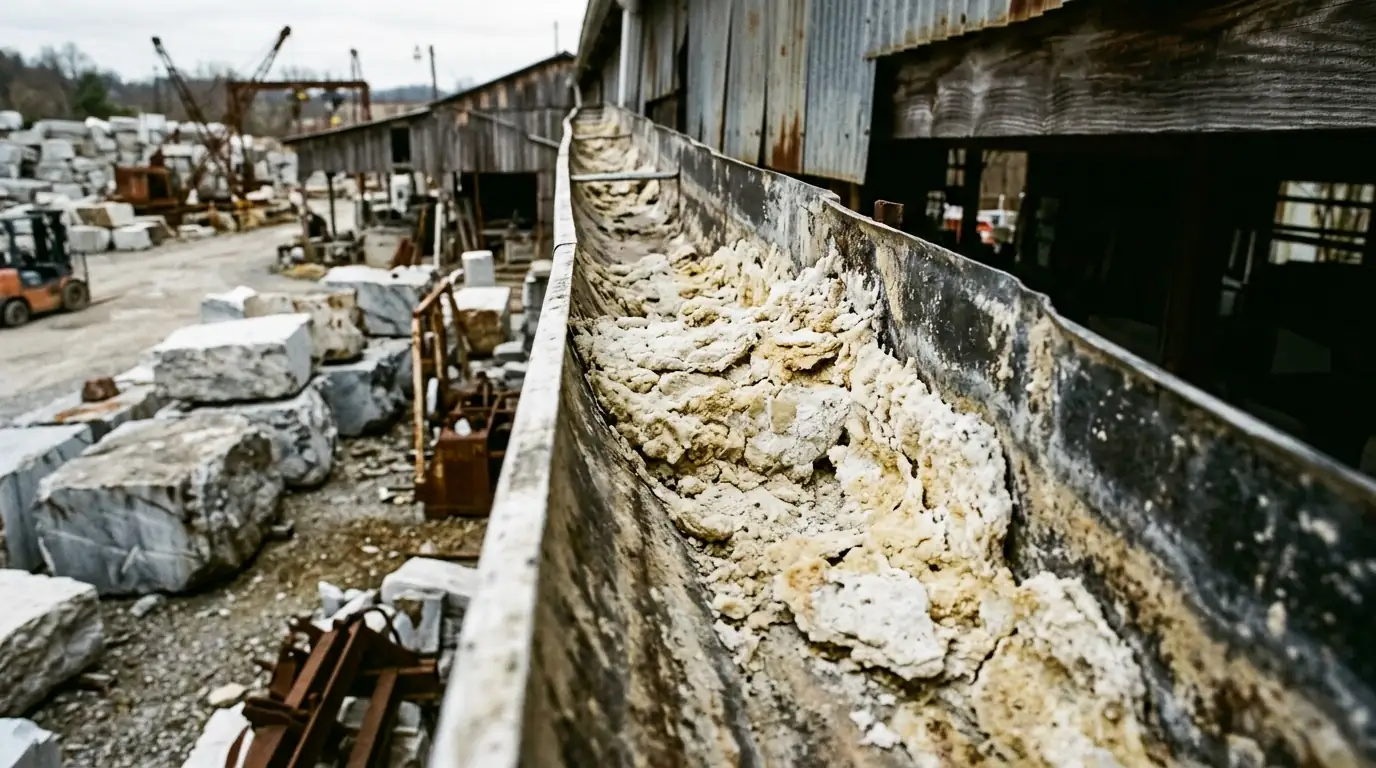
Marble City, 37921, took its name from the limestone quarries that worked here, and the legacy shows up in gutters in a way most people do not expect. Fine limestone dust does not behave like leaf debris. It goes into suspension, settles as a pale film, and over years builds a hard mineral crust on the inside of a trough that brushing does not remove.
Houses built around the quarries
The housing is 1915 to 1945 small frame homes built for and around the quarry and yard operations.
The mineral legacy is local and specific. Limestone fines from working and haulage settled across these streets over decades.
The deposit is chemical rather than organic. It does not rot down, wash away or compress, which makes it a different maintenance problem from anything seasonal.
What we deal with in 37921
Hard mineral crust inside the trough
Deposit that brushing will not shift.
Pale film on the metal
Visible scaling rather than a debris layer.
Reduced effective capacity
A scaled trough carries less than its nominal size.
Deposit at outlets and elbows
Where flow slows the crust builds fastest.
Abrasion during clearing
Aggressive removal damages the coating underneath.
Older frame houses with modest fascia
Century old board behind the runs.
Gutter work we do most in Marble City
Gutter Cleaning Service
Clearing that addresses deposit rather than just debris.
Gutter Inspection Service
Establishing how far the scaling has progressed.
Gutter Replacement Service
Replacement where the crust has taken the capacity.
Downspout Repair Service
Elbows scale up first where the flow slows.
Gutter Maintenance Plans
A schedule based on deposit rather than leaf drop.
Gutter Repair Service
Repairs where scaling has masked another fault.
Gutter Slope Correction
Standing water accelerates the deposit considerably.
Why mineral deposit behaves differently
Organic debris and mineral deposit are different problems and they need different handling. Leaves rot, compress and wash. Limestone fines do none of those things; they bond to the metal and build up.
The practical effect is a gutter that looks clean and performs like a smaller one. A trough with a few millimeters of crust along its base has genuinely lost capacity, and no amount of clearing debris restores it.
Removal has to be careful rather than aggressive. Scraping hard enough to shift a mineral crust also shifts the coating underneath, and on a steel run that is the beginning of a corrosion problem worse than the deposit was.
Outlets and elbows scale first because that is where flow slows and dwells. The result is a narrowing at exactly the point that was already the restriction, and it happens gradually enough that nobody notices until a heavy storm.
Standing water accelerates all of it. A run that drains fully carries the fines through; a run that ponds gives them somewhere to settle and bond, so fall correction is part of the answer here rather than a separate job.
Where scaling is well advanced, replacement is often more honest than repeated clearing. The metal has usually served a long time by then, and a new run with correct fall gives the deposit far less opportunity to establish.
Downspouts deserve the same attention as the trough on these properties, and they are routinely forgotten. A leader is a narrow vertical pipe where flow is fast at the top and slow at the bottom elbow, so the scaling concentrates exactly where the section is already smallest. Rodding a leader here clears deposit rather than debris, and it is worth doing on a schedule rather than waiting for it to stop passing water altogether.
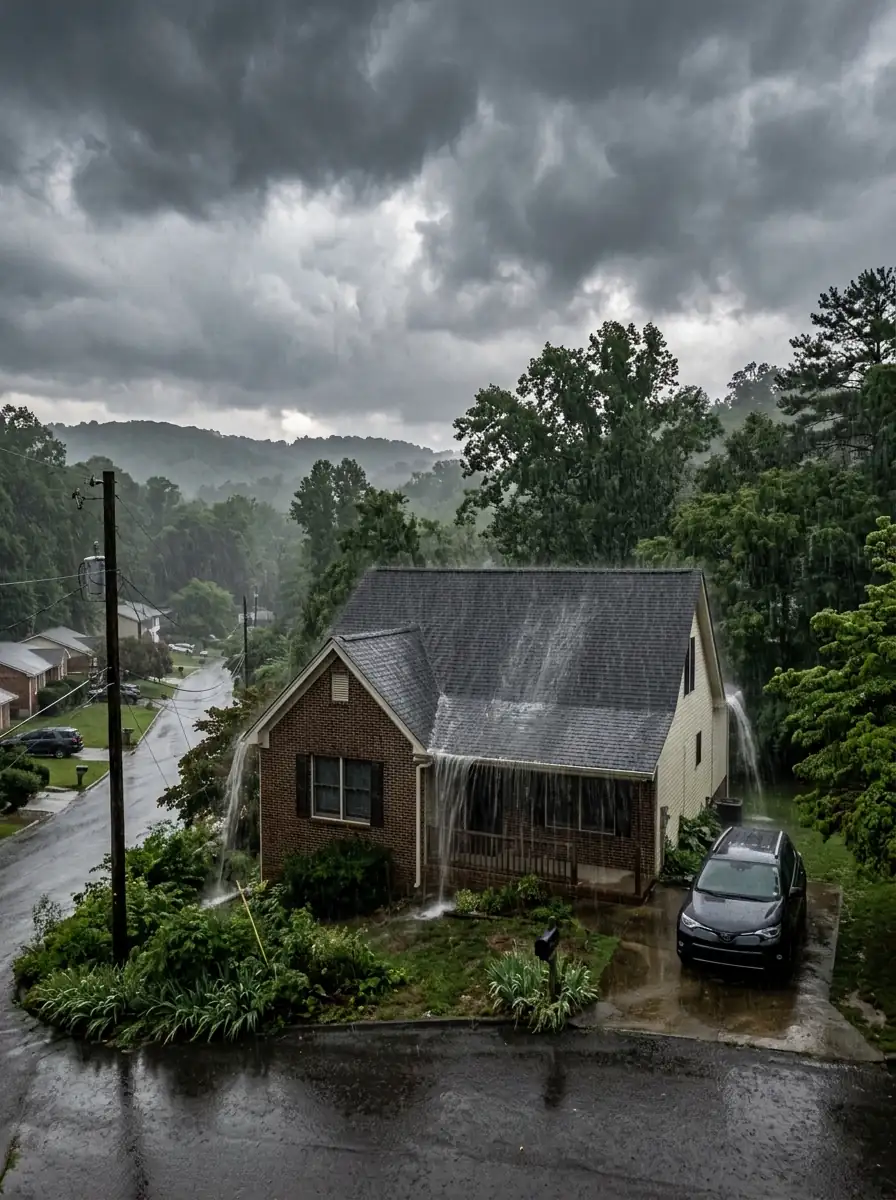
Gutter looks clean and still overflows?
Scaling reduces capacity without looking like a blockage, and clearing debris does not restore it.
Why Marble City homeowners call us back
Deposit treated differently from debris
Mineral crust does not rot, compress or wash away.
Removal kept careful
Scraping hard enough to shift crust also removes the coating beneath.
Fall corrected as part of the answer
Standing water is what lets fines settle and bond.
Marble City gutter questions
Mineral deposit, most likely limestone fines. It bonds to the metal rather than washing through, and it does not behave like leaf debris.
Carefully. Scraping hard enough to shift a mineral crust also removes the coating underneath, which causes a worse problem on steel.
It reduces effective capacity, so a trough performs like a smaller one. Outlets and elbows narrow first, which is where it shows up.
Keep the run draining fully. Standing water is what gives fines the chance to settle and bond, so correcting fall genuinely helps.
Arrange a Marble City visit
Tell us whether you are seeing pale deposit inside the run and we will look at capacity as well as debris.